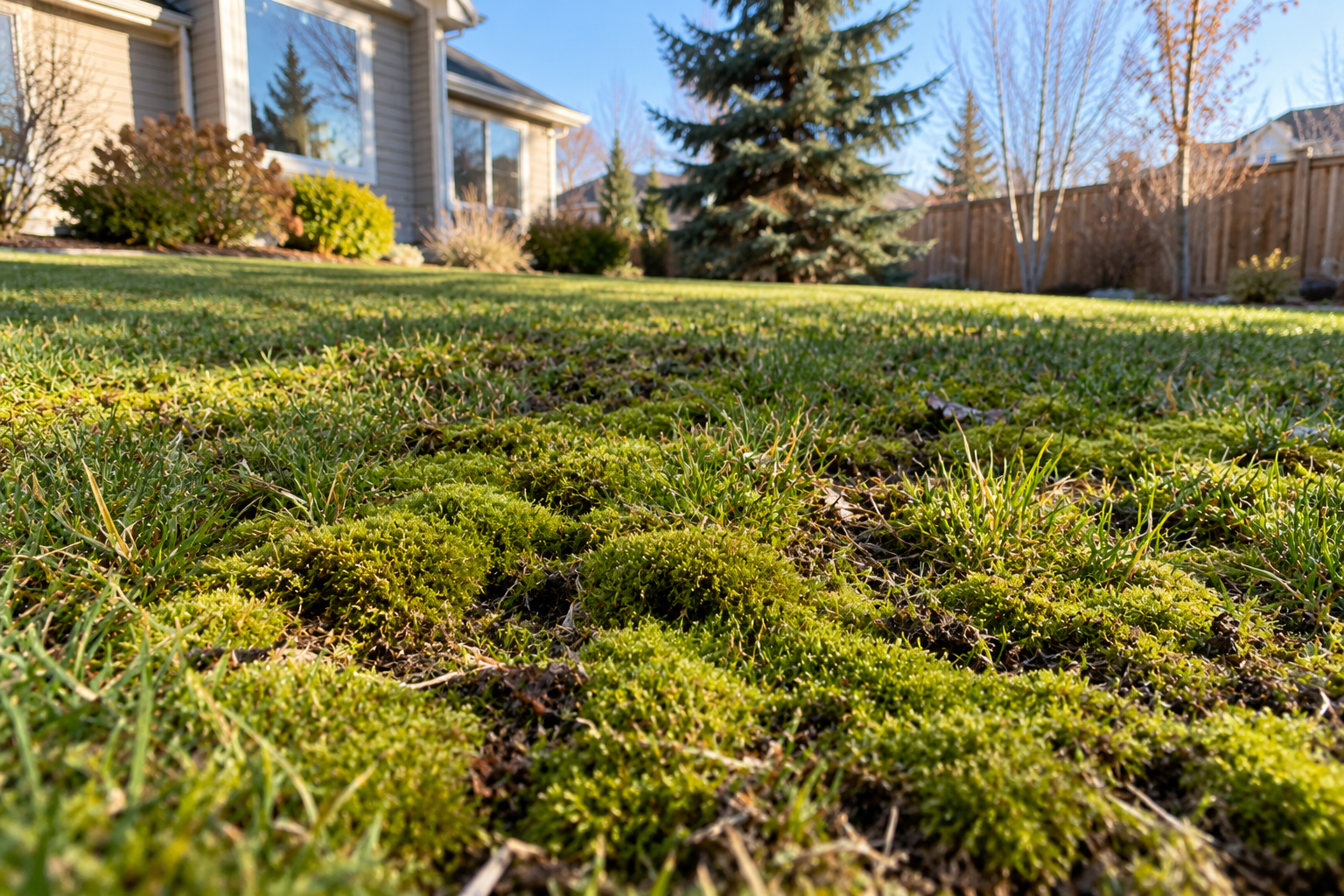


Seeing moss on the lawn can be frustrating, especially when the rest of your yard looks healthy. Moss tends to take advantage of areas where grass is struggling. Shady spots, excess moisture, compacted soil, and thin turf can all give moss the opportunity to spread.
The important thing to know is that moss is often a sign of an underlying lawn problem. Simply removing what you can see may not solve the issue for good. If the conditions that favour moss remain, it can come back.
For Calgary homeowners, understanding why moss develops is the first step toward getting your lawn back to thicker, healthier growth.

Limited spots available!
Transform your lawn today

Limited spots available!
Transform your lawn today
Why Is There Moss in Your Lawn?
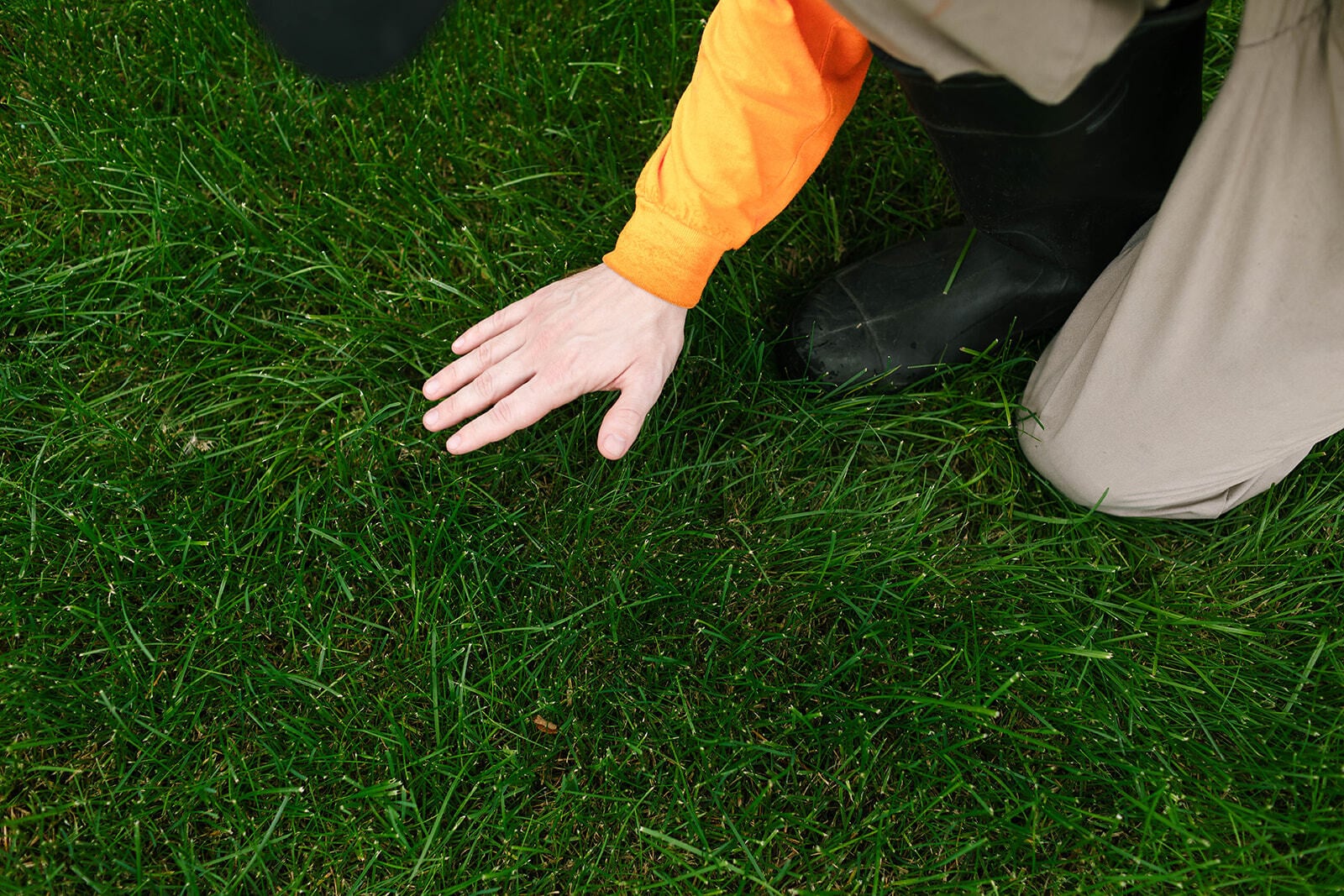
Moss does not compete well with dense, vigorous grass. Instead, it tends to establish itself where lawn growth is weak or where conditions are difficult for turf.
Several factors can contribute to moss in lawn areas:
- Shade: Areas that receive little direct sunlight can stay damp and provide conditions moss prefers.
- Excess moisture: Water that remains on or near the soil surface for too long can encourage moss growth.
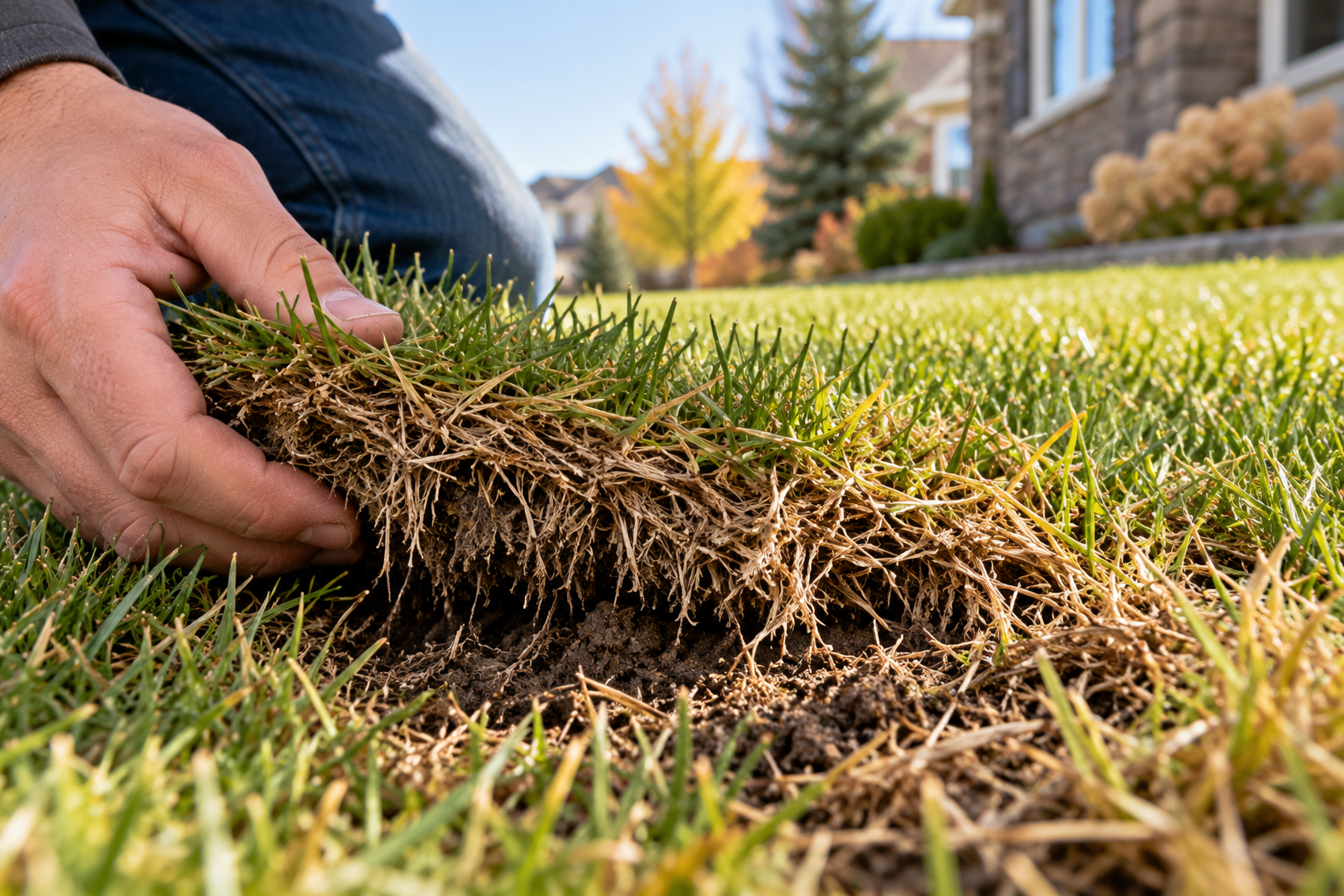
- Compacted soil: Heavy foot traffic and regular use can reduce the movement of air and water through the soil.
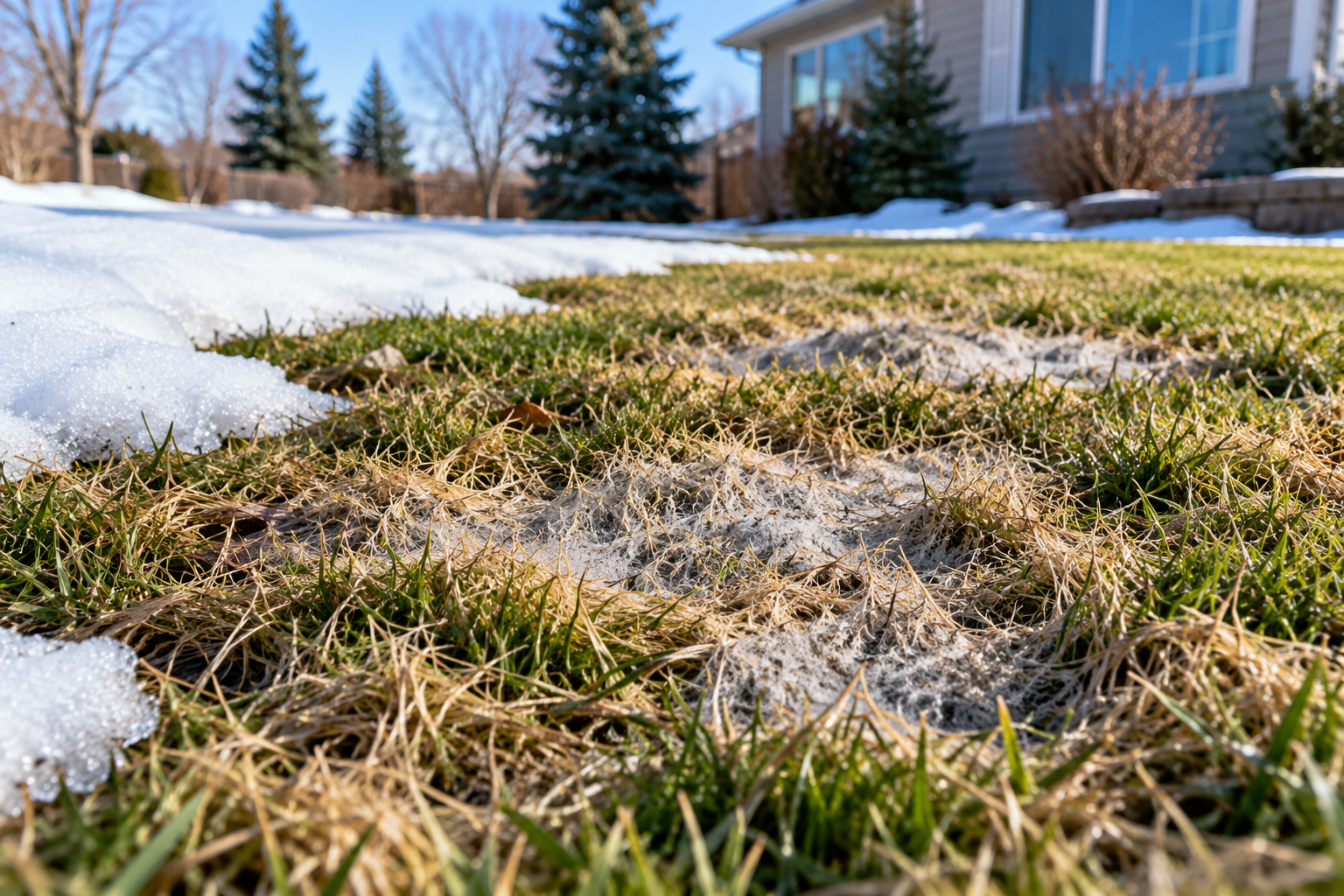
- Thin or weak grass: Bare and sparse areas give moss more room to establish itself.
- Poor growing conditions: When grass does not receive the support it needs to grow densely, moss can become more noticeable.
These factors often work together. For example, a shaded part of your Calgary lawn may already struggle to dry out. If the soil is also compacted, grass has an even harder time growing while moss has an easier opportunity to spread.
How Does Moss Spread?
Moss is different from typical lawn weeds. It does not establish deep roots like turfgrass, and it can reproduce through spores that are carried by the wind. Small pieces can also spread into nearby areas.
Moss can spread more easily when:
- The lawn has exposed soil or bare patches.
- Grass coverage is too thin to compete for space.
- Moisture remains near the surface for extended periods.
- Shaded areas do not dry quickly after rain or watering.
This makes an established patch worth paying attention to. If your lawn has several thin or bare areas, moss may gradually occupy those spaces.
That is why the goal should not only be removing visible moss. The stronger approach is to improve the conditions that help grass grow.
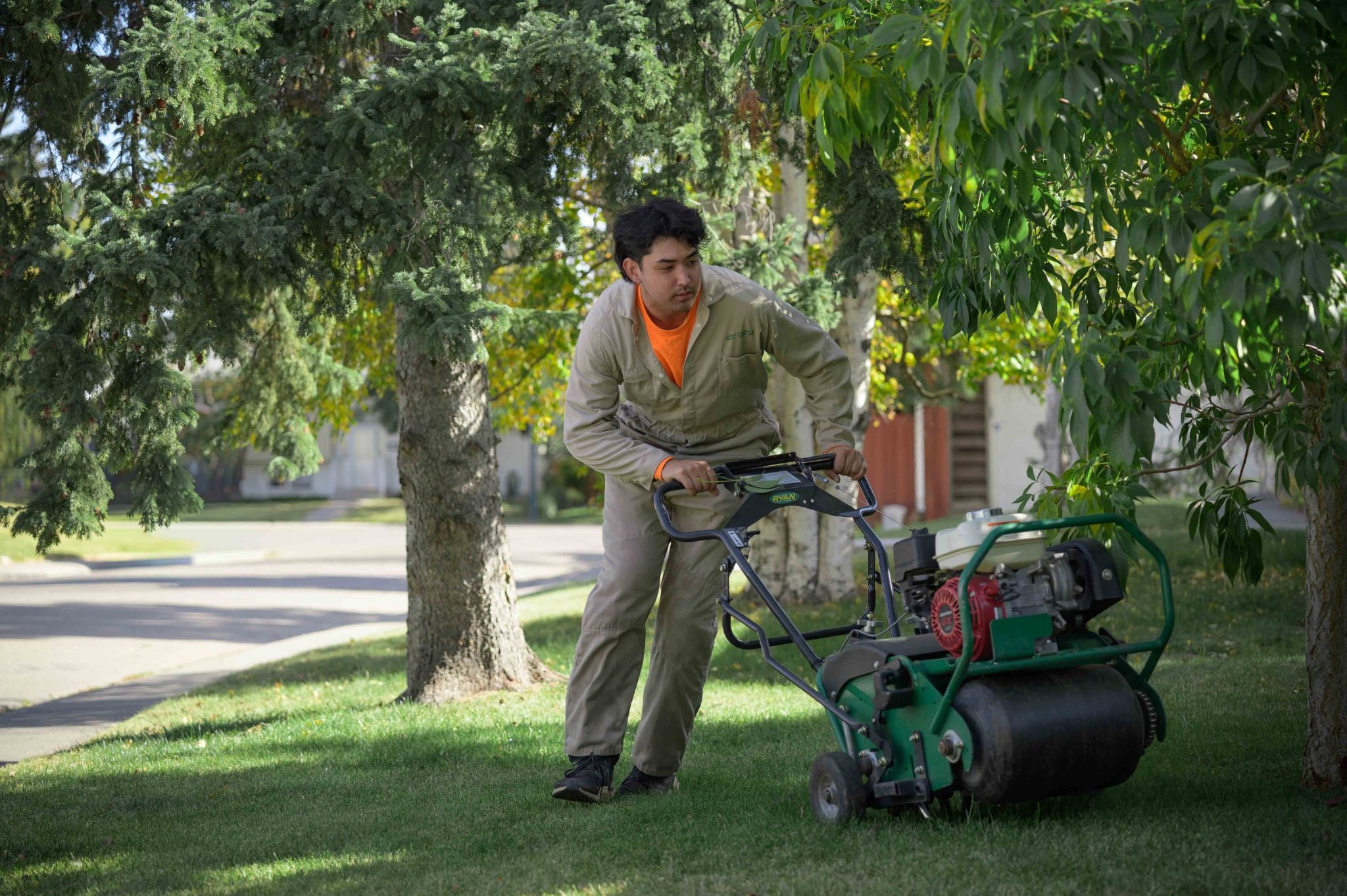
Can Lawn Aeration Help With Moss?
Compacted soil can make it harder for your lawn to get the air, water, and nutrients it needs. Moss can tolerate these conditions better than struggling grass, which is one reason compacted areas may become vulnerable.
Aeration creates small openings through the soil and can improve the movement of air and water around the grass roots. For lawns affected by compaction, this can be an important part of improving overall growing conditions.
Yard Dawgs provides mechanical aeration as part of our lawn care services in Calgary. Learn more about lawn aeration and how it can support healthier turf.
For some lawns, liquid aeration is another option. The right approach depends on the condition of your lawn and the problems it is experiencing.
Aeration may be especially useful when:
- The soil feels hard or difficult to penetrate.
- Water pools on the lawn after rain.
- Grass growth is weak despite regular care.
- High-traffic areas have become thin or compacted.
How Do You Kill Moss in a Lawn?
If you're wondering how do you kill moss in a lawn, it is important to separate immediate removal from long-term lawn improvement.
The competitor guidance recommends physically removing established moss after treatment and addressing the conditions that allowed it to grow. It also identifies aeration and improving thin areas as useful parts of a longer-term strategy.
Yard Dawgs does not list a dedicated moss-killing treatment among our services. Instead, our lawn care services can address some of the conditions that leave grass weak and allow moss to become established.
A practical lawn improvement plan may involve:
- Identifying areas with excessive moisture, shade, or compaction.
- Improving soil conditions through appropriate aeration.
- Supporting stronger grass growth with fertilizer.
- Filling thin areas so grass can become denser and compete more effectively.
This approach focuses on building a healthier lawn rather than simply treating what is visible on the surface.
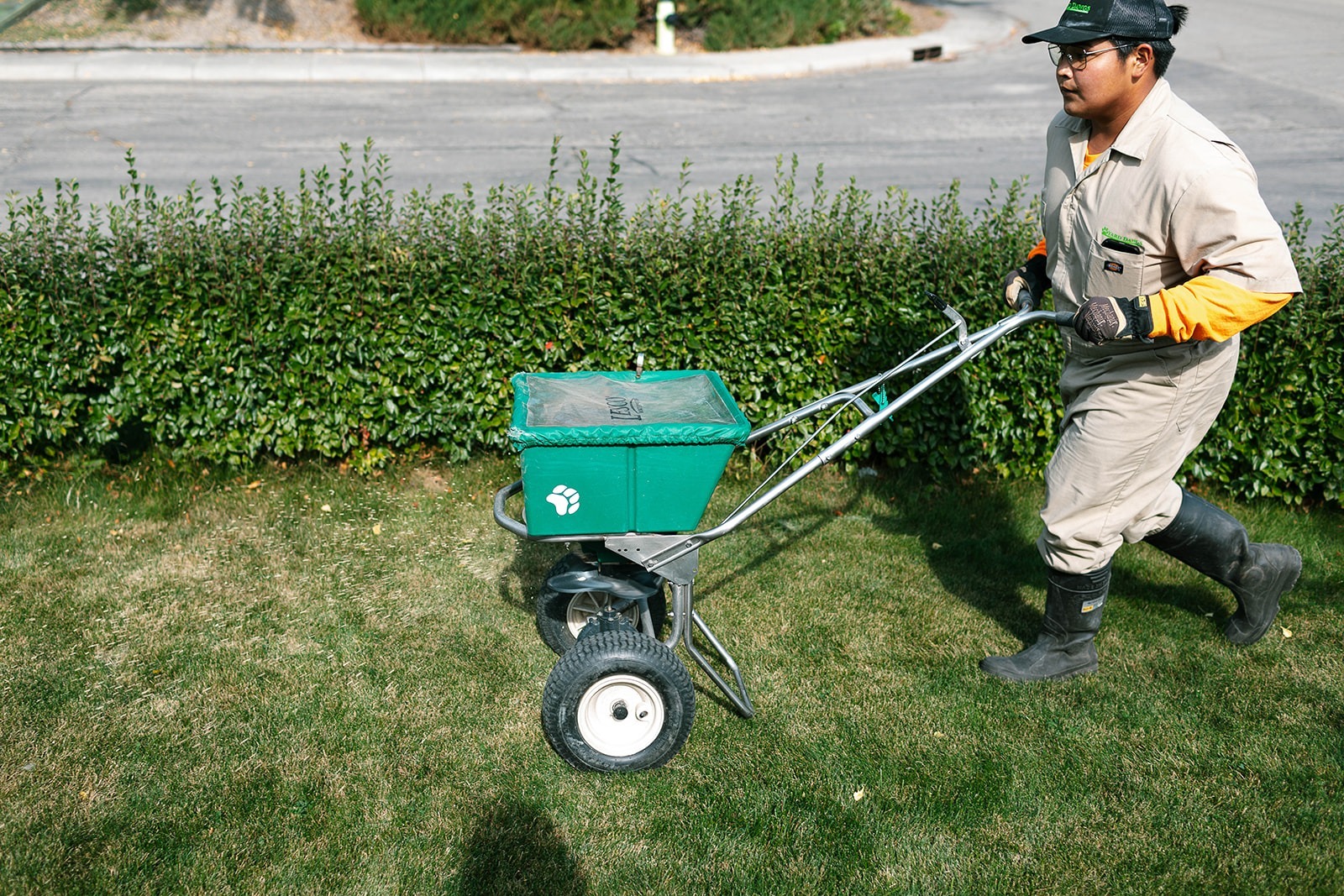
Support Thicker, Healthier Grass With Fertilizer
Healthy grass is one of your best defences against moss taking over weak areas. When turf is thin, moss has more exposed space in which to establish itself.
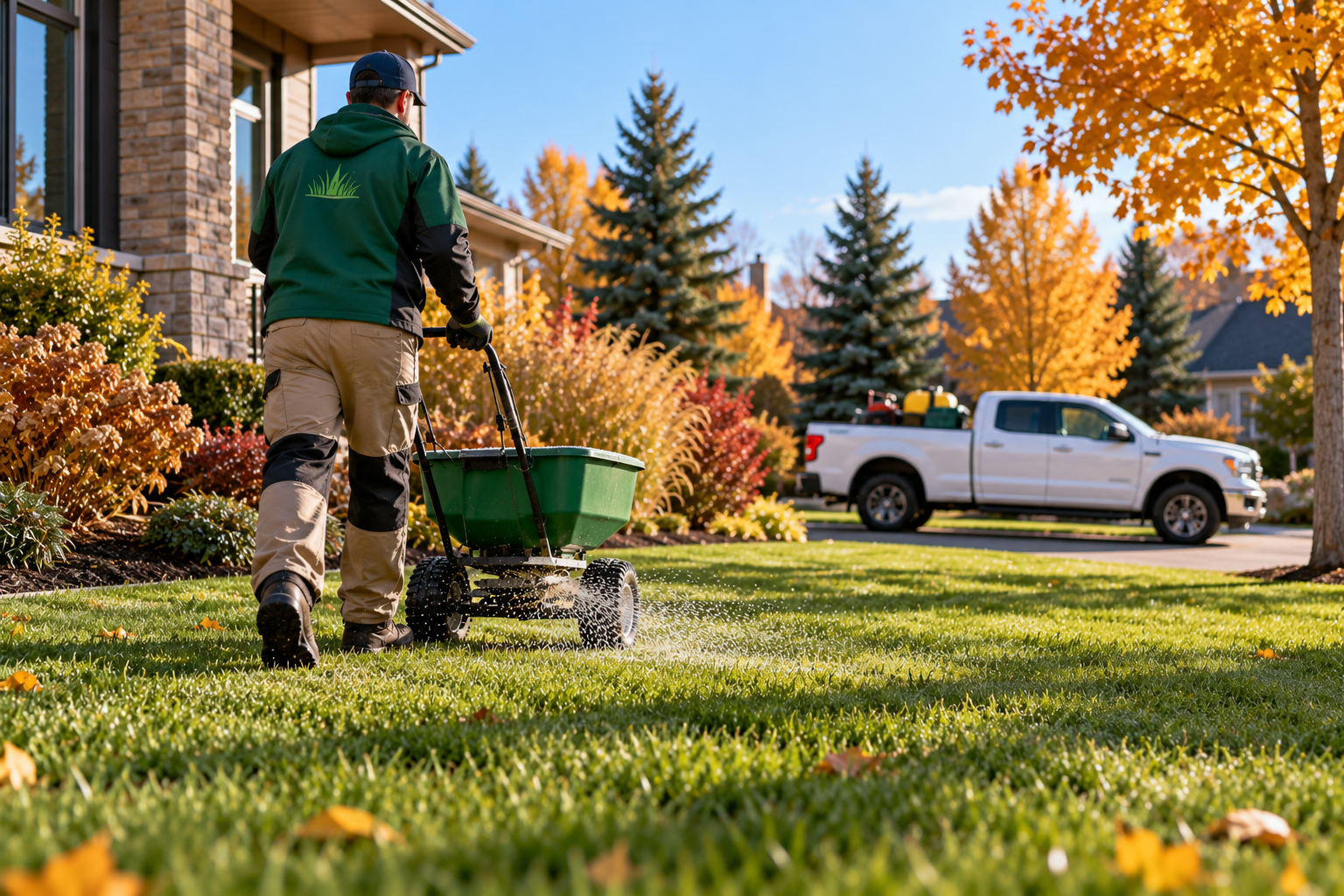
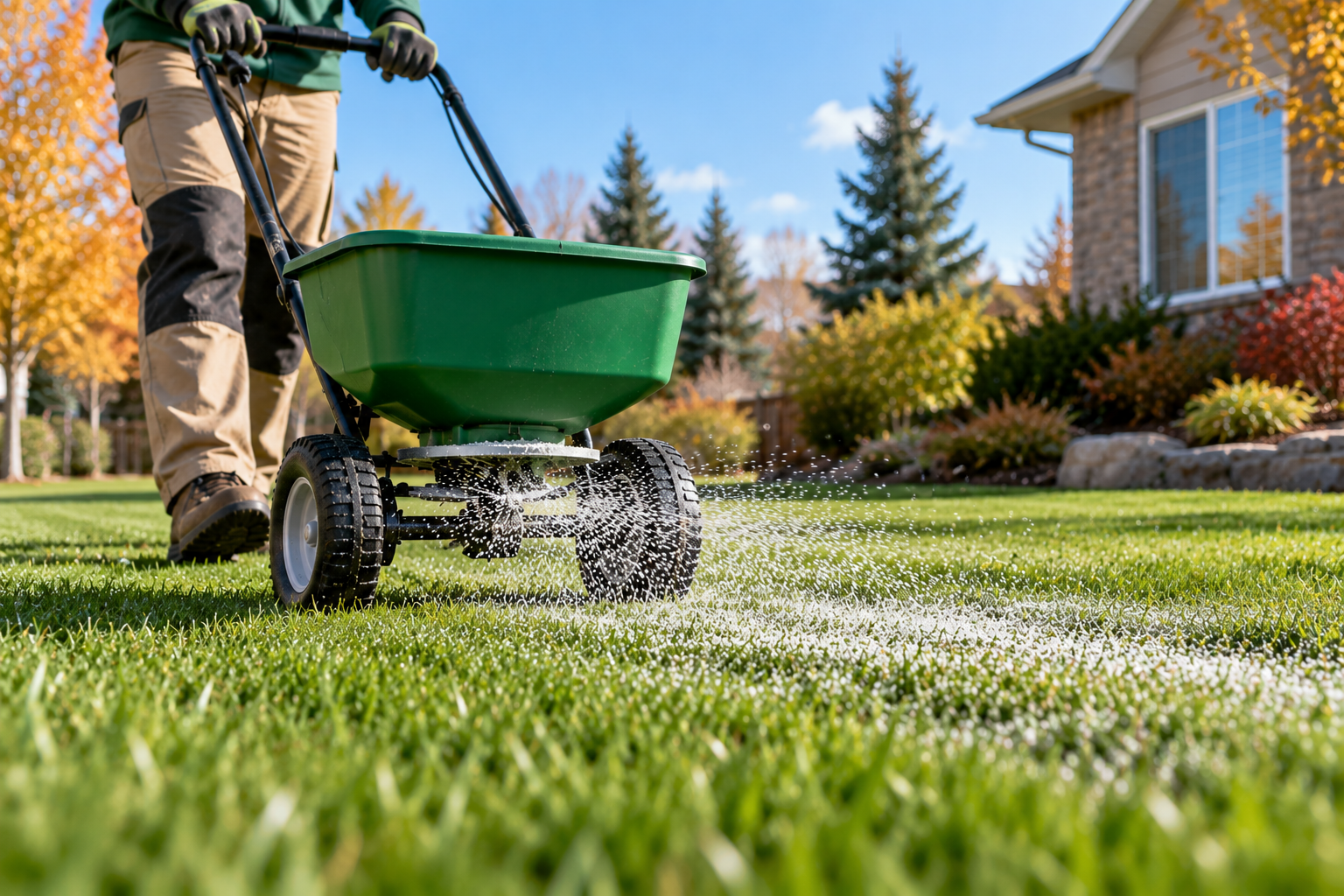
Fertilizer supplies nutrients that support lawn growth and can help your grass develop into a thicker, healthier turf when applied appropriately.
We provide lawn fertilizer services in Calgary as part of our lawn care program. Consistent lawn care can help keep your turf in better condition throughout the growing season.
Sea kelp is also one of our available lawn care services. It can be incorporated into a broader lawn care approach when your lawn needs additional support.
A healthy fertilization plan can help your lawn by:
- Supporting stronger root development.
- Improving grass colour and density.
- Helping thin areas recover more effectively.
- Giving turf a better chance to compete with moss.
What If Moss Has Left Bare or Thin Areas?
Removing moss can reveal another problem: there may not be enough healthy grass underneath it.
A lawn with thin coverage is more vulnerable because there is less grass competing for space. Filling those areas can help restore a more uniform lawn and reduce the open spaces where moss can establish itself.
We provide slit-seeding, which is designed for establishing grass in existing lawn areas. This can be particularly relevant when moss has been associated with sparse or weak turf.
Slit-seeding may be worth considering when:
- Large patches of grass have disappeared.
- The lawn looks thin even after regular mowing.
- Moss has occupied previously bare areas.
- You want to improve lawn density without replacing the entire lawn.
The goal is to help your lawn become dense enough that there is less opportunity for unwanted growth to take over.
Why Calgary Lawn Conditions Matter
Calgary lawns have to deal with changing conditions throughout the year. Moisture, shade, soil compaction, and periods of weaker grass growth can all affect how well turf performs.
If moss repeatedly appears in the same part of your yard, look beyond the moss itself. A recurring problem may point to an area that stays wetter, receives less sunlight, or has soil that needs better air and water movement.
When investigating a recurring moss problem, consider:
- Whether nearby trees or structures block sunlight.
- Whether water drains away from the area properly.
- Whether the soil has become compacted from foot traffic.
- Whether the grass is thin because of poor growing conditions.
Addressing those conditions is more useful than repeatedly dealing with the visible moss alone.
How to Prevent Moss From Coming Back
Once you have improved the conditions that favour healthy turf, consistent lawn care becomes important. A strong lawn is better positioned to fill thin areas and resist the conditions that allow moss to spread.
For homeowners looking at a broader lawn care plan, our Calgary lawn care services include fertilizer, weed control, aeration, slit-seeding, sea kelp, and other treatments we provide as part of our lawn care services.
To help reduce the chance of moss returning:
- Keep the lawn growing densely with appropriate fertilization.
- Address compacted soil with suitable aeration.
- Improve thin areas through slit-seeding when needed.
- Monitor shaded or damp areas for recurring problems.
- Maintain consistent lawn care throughout the growing season.
The key is consistency. Moss often takes advantage of weak areas, so keeping your lawn healthy throughout the season gives it a better chance of staying dense and resilient.
Give Your Calgary Lawn the Support It Needs
Moss can be a sign that your grass is struggling with the conditions around it. Shade, excess moisture, compacted soil, and thin turf can all create opportunities for moss to establish itself.
Rather than focusing only on the moss you can see, focus on helping the grass become healthier and denser. Aeration can help with compacted soil, fertilizer can support grass growth, and slit-seeding can help restore thin areas.
At Yard Dawgs, we provide continuous lawn care in Calgary with a dedicated team that gets to know your property and its history. If something is not working for your lawn, we are here to help adjust your care and keep working toward a lawn that looks its best.