

If your Calgary lawn feels unusually spongy underfoot, looks uneven after mowing, or seems slow to respond to water and fertilizer, lawn thatch could be part of the problem.
A thin layer is normal and can even benefit your grass. The trouble starts when organic material builds up faster than it breaks down. So, what is lawn thatch, and when should Calgary homeowners be concerned about it? Understanding how thatch forms can help you make better decisions about lawn care throughout the growing season.

Limited spots available!
Transform your lawn today

Limited spots available!
Transform your lawn today
What Is Lawn Thatch?
Lawn thatch is a layer of living and dead organic material that develops between the green grass above and the soil below. It can contain grass stems, roots, crowns, and other plant material that has not fully decomposed.
Some thatch is a natural part of a healthy lawn. A thin layer can help protect the soil surface, retain some moisture, and provide a little cushioning underfoot.
The problem is not thatch itself. It is excessive thatch. When the layer becomes too thick, it can interfere with the movement of water, air, nutrients, and fertilizer into the soil. Your grass may then struggle even when you are otherwise taking good care of it.
What Does Thatch on Grass Look Like?
Thatch is not usually obvious when you look across your lawn. Instead, you may notice changes in how the grass feels and performs.
A lawn with excessive thatch may feel soft or springy when you walk across it. You might also notice that the mower seems to bounce or that the grass does not respond to watering and feeding as expected.
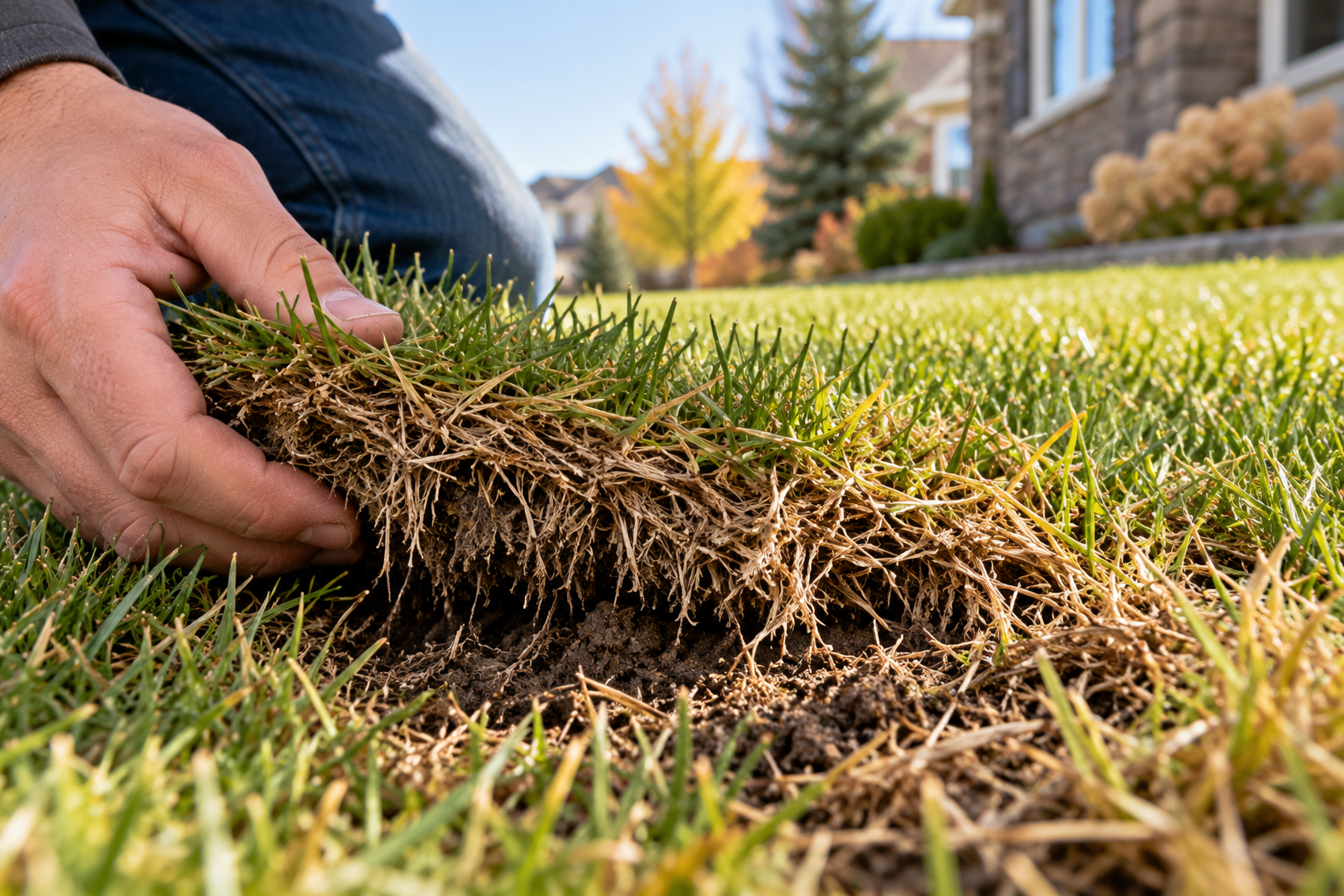
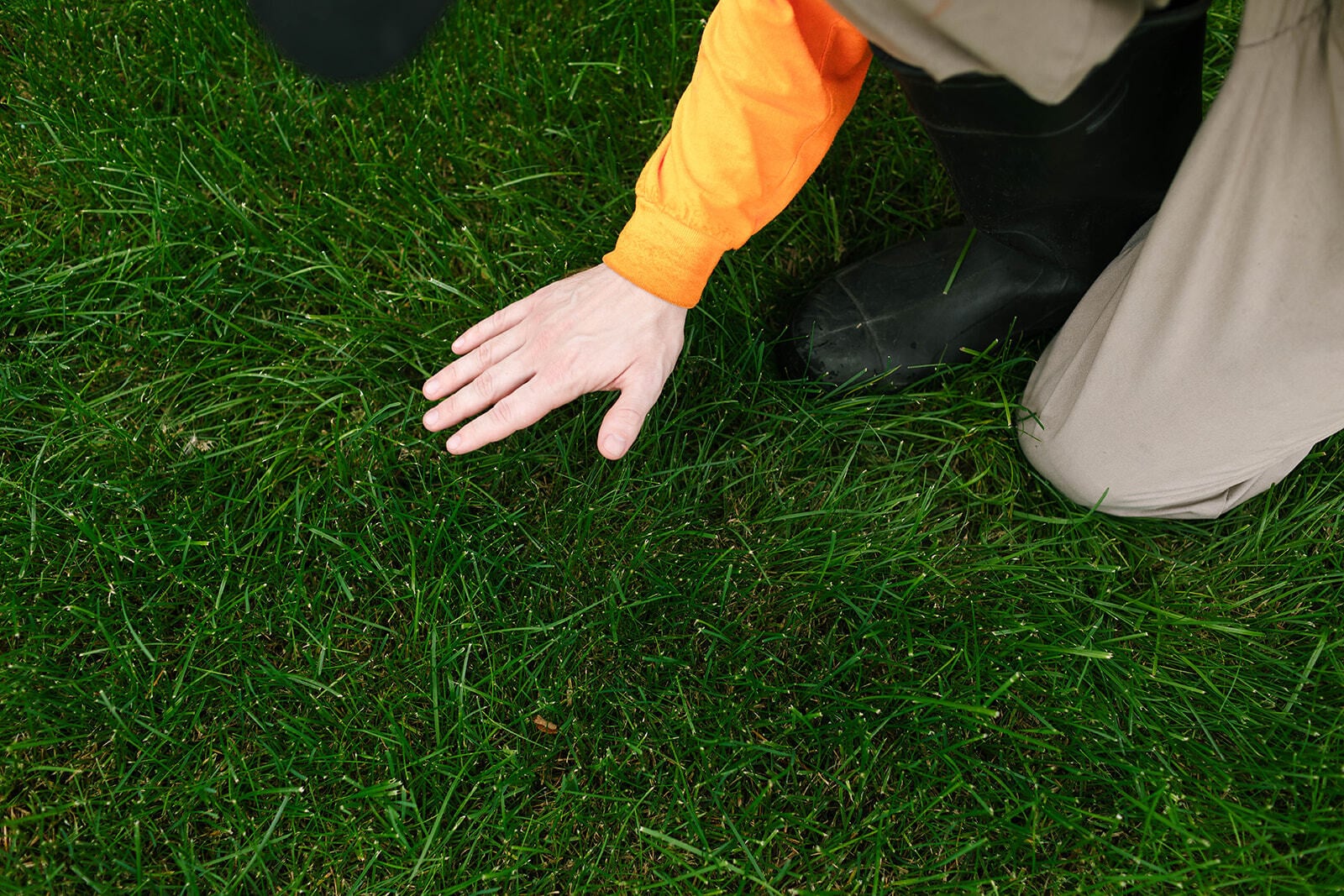
To see what is happening below the surface, look at a small section of turf. You should be able to distinguish the green grass, the soil, and the brownish layer of organic material between them.
A thin layer is generally not a reason for concern, while a dense, noticeably thick layer deserves closer attention.
How Does Thatching Grass Create a Problem?
Grass naturally produces roots, stems, and other organic material as it grows. Soil organisms break much of this material down, but thatch becomes a problem when new material accumulates faster than it can decompose.
Several lawn conditions can contribute to faster buildup:
- Overfertilization can encourage very vigorous growth and create more plant material.
- Compacted soil can make it harder for grass and soil organisms to function properly.
- Inconsistent watering can contribute to weak roots and uneven lawn growth.
- Improper mowing can place additional stress on the turf.
- Poor overall lawn health can slow the natural breakdown of organic material.
For Calgary homeowners, seasonal conditions are another important consideration. Your lawn has to recover from cold winters and then handle the rapid growth that comes during the warmer months. Keeping the turf healthy throughout this cycle is one of the best ways to reduce the risk of problems.
Is Lawn Thatch Always Bad?
No. A small amount of lawn thatch is completely normal.
A thin organic layer can help moderate soil temperature, retain some moisture, and provide a softer surface for foot traffic. It becomes an issue when it grows thick enough to act as a barrier between your grass and the soil.
Think of it as a balance. Your lawn needs some organic material, but it also needs good contact between its roots and the soil. This is why simply trying to eliminate every bit of thatch is not the goal.
The goal is to maintain a lawn where organic material can break down naturally and the roots have access to the resources they need.
How Can You Tell If Your Lawn Has Too Much Thatch?
There are several signs that may point to excessive thatch buildup:
- The lawn feels unusually spongy or bouncy when you walk on it.
- Water seems to sit near the surface instead of moving into the soil.
- Fertilizer does not seem to produce the response you expect.
- The grass develops thin or weak areas despite regular care.
- Your mower seems to bounce across the turf.
- The layer between the grass and soil looks noticeably thick when you inspect a small section.
These signs do not automatically mean thatch is the only problem. Soil compaction, watering issues, nutrient deficiencies, and other lawn conditions can create similar symptoms.
That is why it is worth looking at the overall condition of your turf before deciding what it needs.
What Is Thatch in Lawn Care, and How Does Aeration Help?
If you are wondering what is thatch in lawn care and how it relates to aeration, the key connection is the soil beneath the turf.
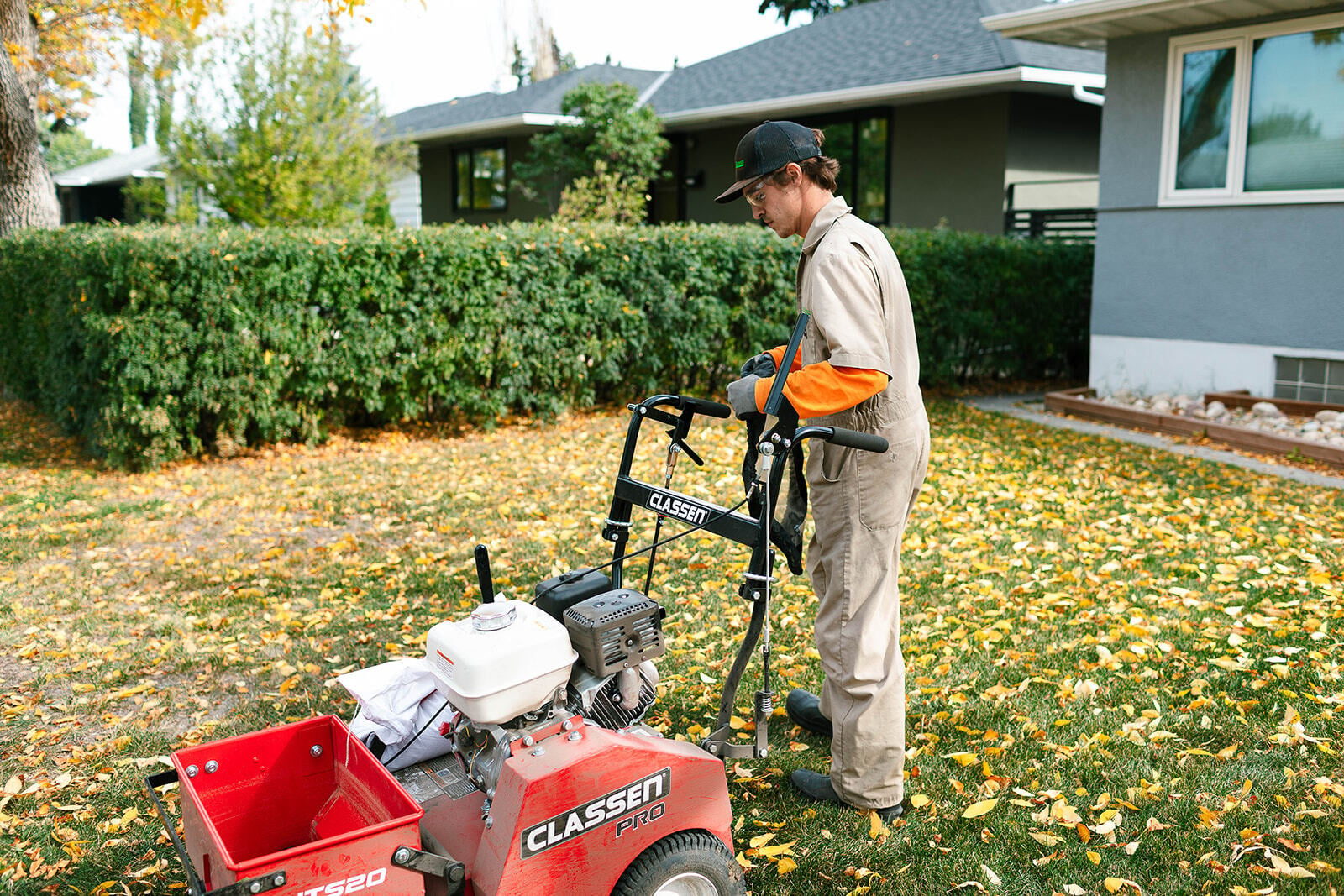
Mechanical aeration creates openings in compacted soil, helping improve the movement of air, water, and nutrients into the root zone. It is particularly useful when the soil has become compacted from regular foot traffic or other pressure.
For Calgary lawns, regular aeration can be an important part of maintaining healthier growing conditions. Yard Dawgs offers mechanical aeration as part of its lawn care services.
Aeration does not mean every lawn has a thatch problem, and it is not a substitute for diagnosing a thick thatch layer. Instead, it supports healthier soil and root conditions, which can help your lawn manage organic material more effectively.
Can Fertilizer Make Thatch Worse?
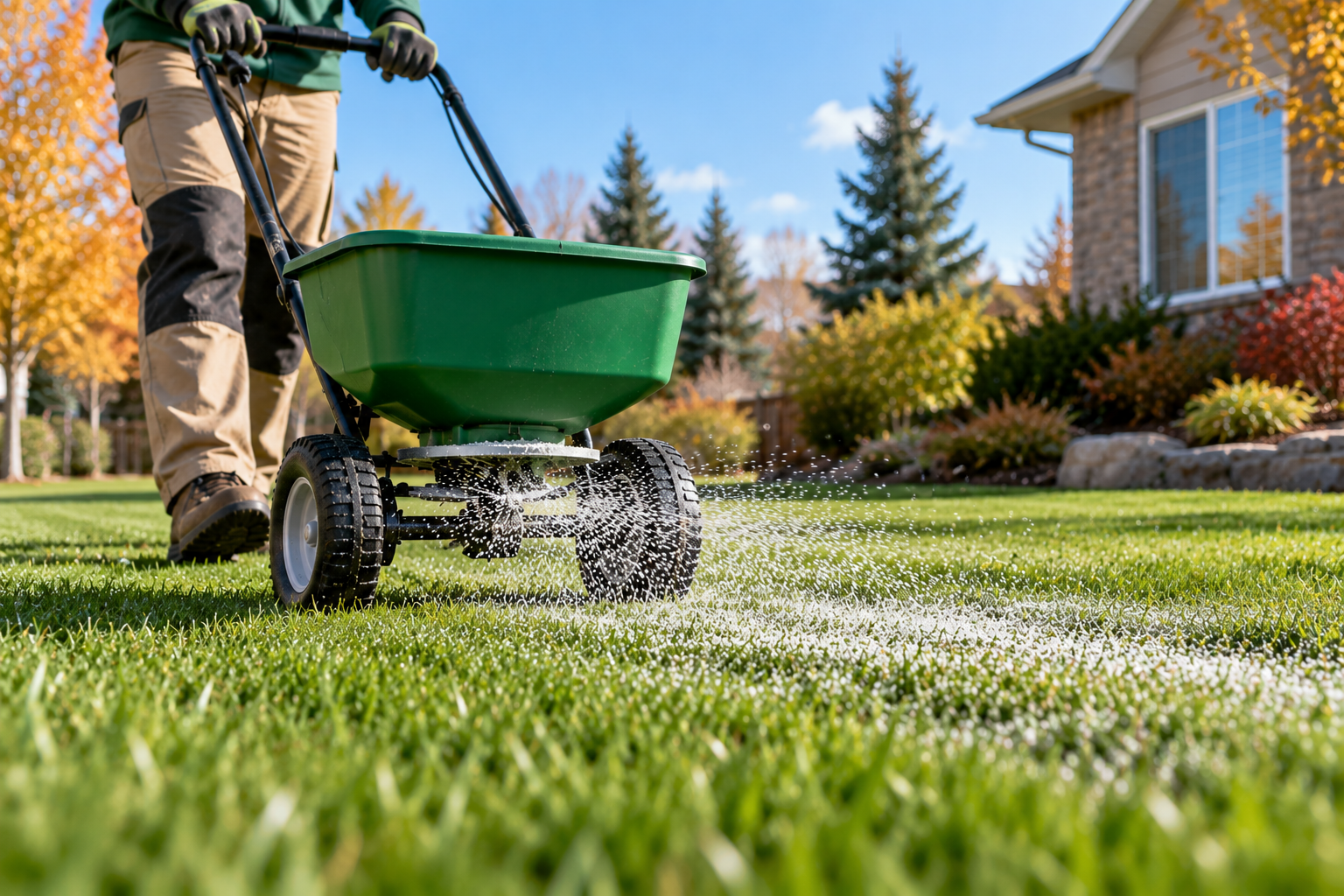
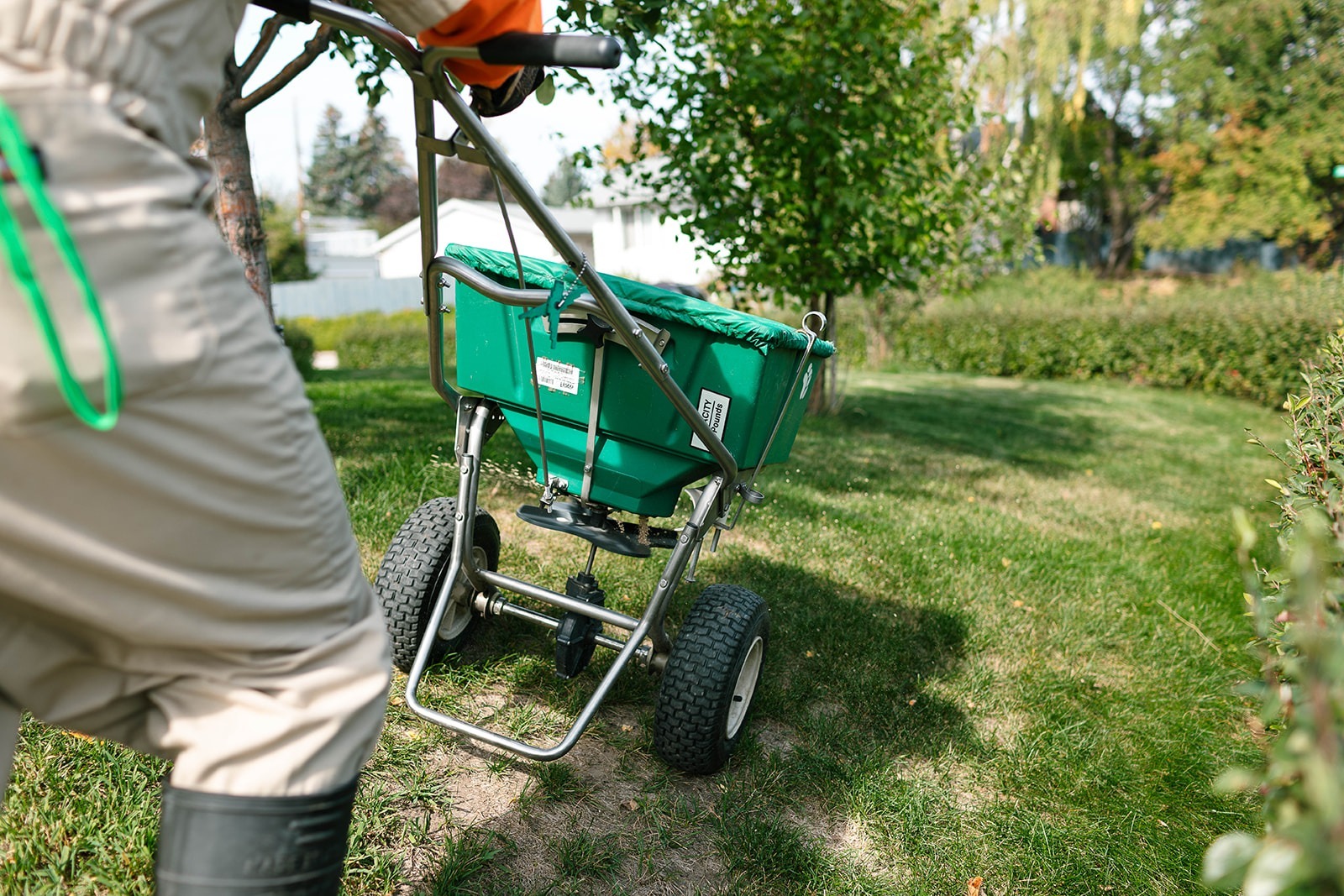
Fertilizer is important for maintaining healthy grass, but more is not always better. Applying excessive nutrients can encourage rapid grass growth, which means the lawn produces more stems, roots, and other organic material.
If that material accumulates faster than it decomposes, the thatch layer can gradually become thicker. The answer is not to avoid fertilizer. It is to use it appropriately for the lawn's needs.
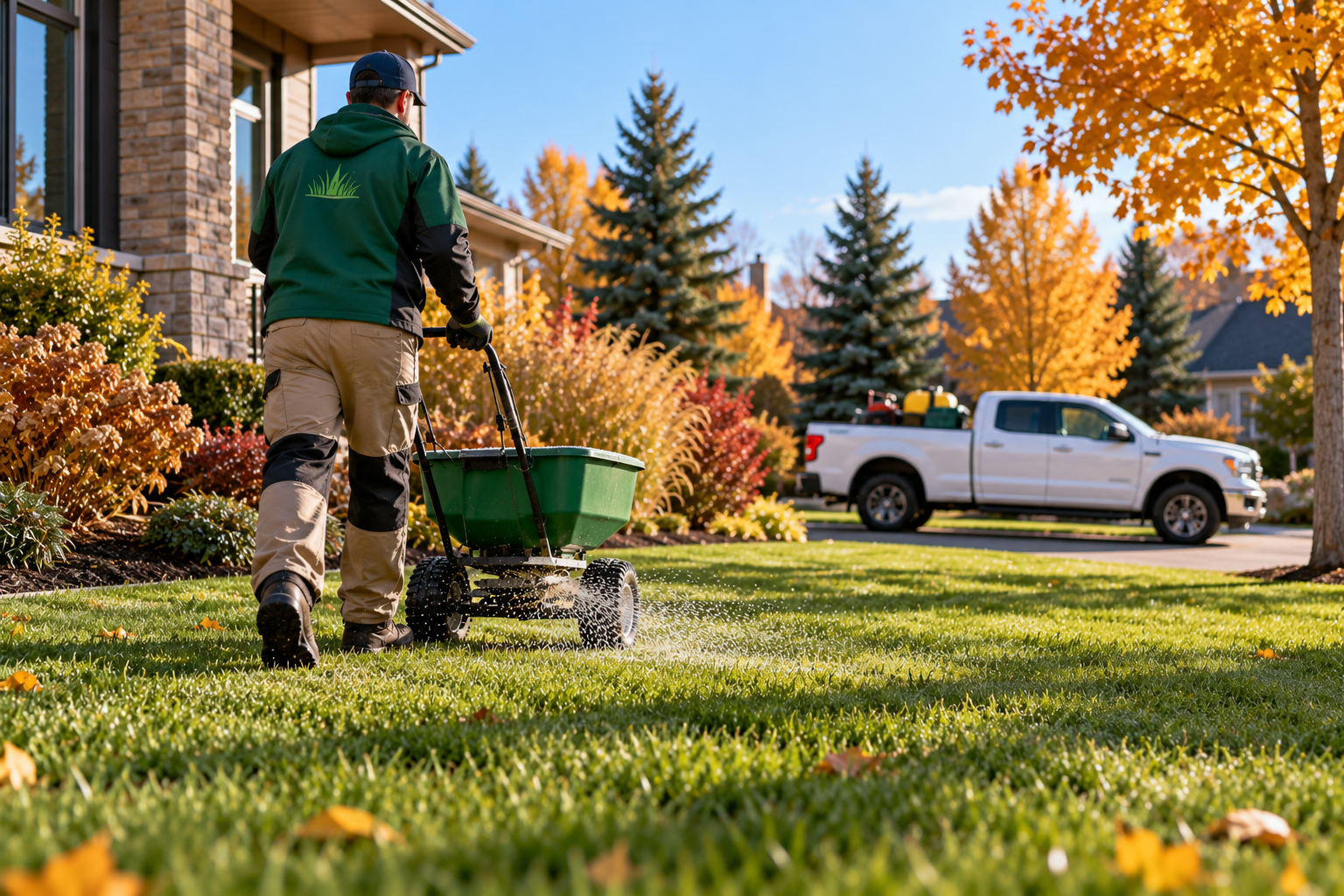
Yard Dawgs provides fertilizer services for Calgary homeowners who want consistent lawn nutrition as part of their ongoing lawn care.
A properly maintained lawn has a better chance of producing strong, healthy growth without unnecessarily encouraging excessive buildup.
What Can Calgary Homeowners Do About Thatch?
Start by looking at the condition of the entire lawn rather than focusing on one symptom. If the turf feels spongy, inspect the area and consider whether compaction, nutrition, or other lawn conditions could also be involved.
Consistent lawn care is important. Avoid treating your lawn more aggressively than it needs. Instead, focus on keeping the grass growing steadily and maintaining healthy soil conditions.
Calgary homeowners can support healthier lawn conditions by focusing on the following:
- Water deeply and consistently rather than relying on frequent, shallow watering.
- Avoid applying more fertilizer than your lawn needs.
- Keep mower blades sharp to reduce unnecessary stress on the grass.
- Limit heavy foot traffic when the soil is wet or compacted.
- Monitor thin, weak, or spongy areas throughout the growing season.
- Consider aeration when compacted soil is affecting water and nutrient movement.
Aeration can be especially useful when compacted soil is part of the problem. Yard Dawgs also offers Aeration Plus, giving Calgary homeowners another lawn care option when their turf needs additional attention.
For lawns that need help recovering and establishing stronger coverage, slit-seeding is another service Yard Dawgs provides. It can be considered when the main concern is thin or struggling turf rather than simply assuming thatch is responsible.
When Should You Be Concerned About Thatch?
There is no need to panic over a small amount of organic material in your lawn. Thatch is part of the natural lawn ecosystem.
The concern is when the layer becomes thick enough to interfere with the conditions your grass needs to grow. A spongy surface, poor water movement, and weak lawn performance are good reasons to take a closer look.
You may want to investigate further if your lawn has several of these conditions at the same time:
- Water runs off or remains on the surface instead of soaking in.
- Grass stays thin even after regular watering and fertilizing.
- The lawn feels noticeably softer than nearby turf.
- Bare or weak patches continue to expand.
- The soil beneath the grass appears difficult to reach.
- Routine lawn care produces little visible improvement.
It is also important not to assume that every unhealthy-looking lawn has a thatch problem. A professional assessment can help distinguish between thatch, compacted soil, nutrient issues, and other causes.
Keep Your Calgary Lawn Healthy
Understanding what is lawn thatch helps you recognize that not all thatch is harmful. Your lawn needs some organic material, but excessive buildup can interfere with the relationship between the grass and the soil.
The best approach is consistent lawn care that supports strong growth and healthy soil conditions. That includes appropriate nutrition and services such as mechanical aeration when your lawn needs them.
Yard Dawgs provides ongoing lawn care services in Calgary, with continuous service that can be cancelled anytime. The company backs its lawn care services with a satisfaction guarantee and assigns a dedicated team to your property, so your lawn receives consistent attention throughout the season.
For homeowners who want to give their lawn the right care without constantly trying to diagnose every change themselves, a consistent lawn care plan can make maintaining healthy turf much easier.