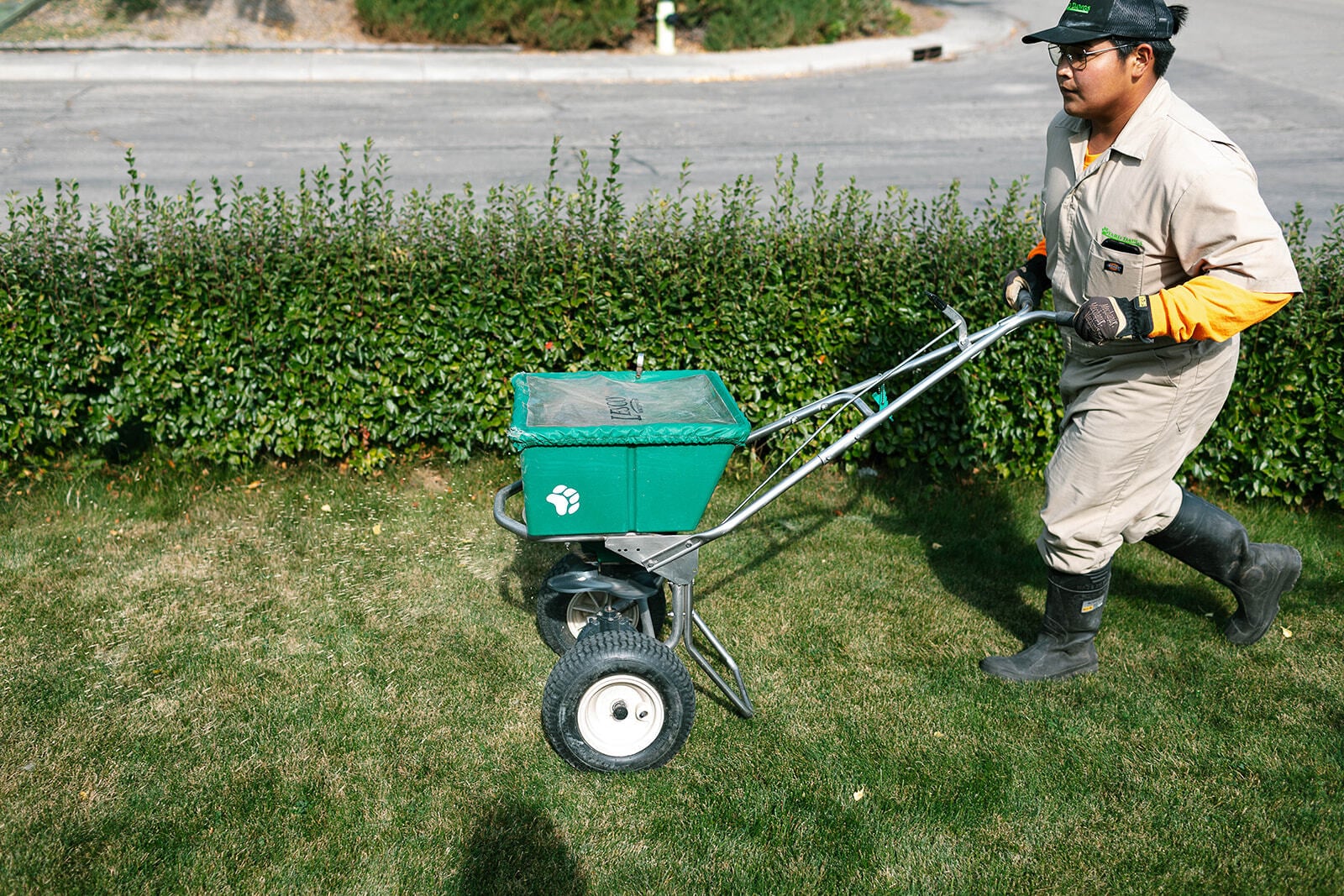
Fall is one of the best opportunities to improve a thin or patchy lawn before Alberta's winter arrives. Cooler temperatures can reduce stress on new grass, while the soil may still be warm enough for seed to establish.
But timing matters.
If you are wondering about fall overseeding, the goal is not simply to wait until September and spread seed. New grass needs enough time to germinate and establish before temperatures become too cold. In Calgary, Edmonton, Red Deer, and Saskatoon, the best window can vary depending on the weather and condition of your lawn.
For most Alberta lawns, overseed while the soil is still warm, daytime temperatures are cooling, and the existing grass is actively growing.

Limited spots available!
Transform your lawn today

Limited spots available!
Transform your lawn today
What Is Fall Overseeding?
Overseeding means adding new grass seed to an existing lawn rather than starting completely from scratch.
It is useful when a lawn is mostly healthy but has become thin, uneven, or patchy. Instead of removing the existing turf, overseeding adds new grass plants where the lawn needs more density.
Fall grass overseeding can benefit lawns affected by summer stress, heavy foot traffic, or gradual thinning.
Common signs include:
- Thin areas where soil is visible
- Small bare patches
- Uneven grass density
- Grass that has struggled to recover from summer stress
- Areas that look weaker than the rest of the lawn
If only a few small areas are affected, the entire lawn may not need treatment. Assessing the cause of the thinning first can help determine whether overseeding is appropriate.
Why Is Fall a Good Time to Overseed in Alberta?
Fall can offer favourable conditions for establishing new grass.
Summer heat is fading, reducing stress on developing seedlings, while the soil may retain warmth from summer. The existing lawn is also still growing during much of early fall, allowing new seedlings to establish alongside mature grass.
The timing becomes less favourable as winter approaches. If seed is applied too late, it may not have enough time to germinate and establish before sustained cold arrives.
That is why overseeding lawn in fall should be planned around conditions rather than a fixed date.
When Should You Overseed Your Lawn in Alberta?
For many Alberta lawns, late summer to early fall is the most practical period to consider overseeding.
The exact window varies each year. A warm September can provide more time for establishment, while an early cold spell can shorten the opportunity.
Look for these conditions:
- The soil is still warm enough for seed to germinate.
- Daytime temperatures are cooler than summer.
- The existing lawn is still actively growing.
- The ground is not frozen or excessively wet.
- There is enough time for new grass to establish before winter.
Earlier is generally better than waiting until conditions are already cold. Once consistent freezing conditions arrive, fall overseeding is no longer practical.
Calgary vs. Edmonton vs. Other Alberta Cities
Alberta does not have one universal overseeding date.
Calgary, Edmonton, Red Deer, and Saskatoon can experience different weather patterns. Conditions can also vary between properties. A sunny lawn may stay warmer than a shaded lawn, while wind exposure can affect soil moisture.
|
Location |
What to consider |
|
Calgary |
Watch for cooling nights and an early fall cold snap. |
|
Edmonton |
Plan around active grass growth and allow enough time for seed to establish. |
|
Red Deer |
Use local weather and lawn conditions rather than a fixed date. |
|
Saskatoon |
Pay attention to shortening growing conditions and approaching frost. |
The most important question is not simply, "What month is it?"
It is, "Can new grass still establish successfully before winter?"
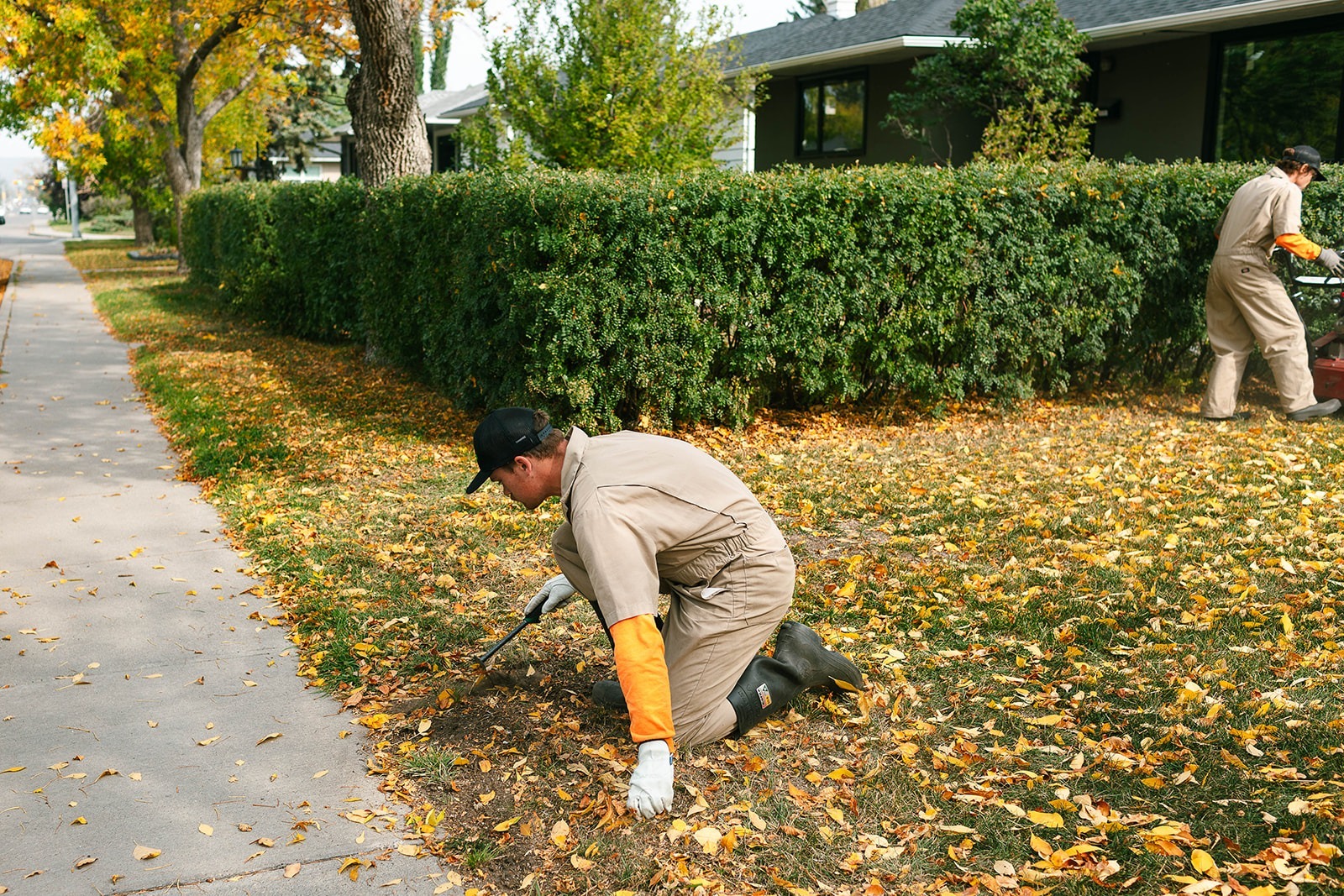
How to Prepare Your Lawn for Overseeding
Good seed-to-soil contact is important. Grass seed needs access to the soil rather than sitting on existing grass or debris.
Before overseeding, assess conditions that could interfere with establishment. Dense turf, compacted soil, or thick organic material can make it harder for seed to reach suitable soil.
Preparation can include:
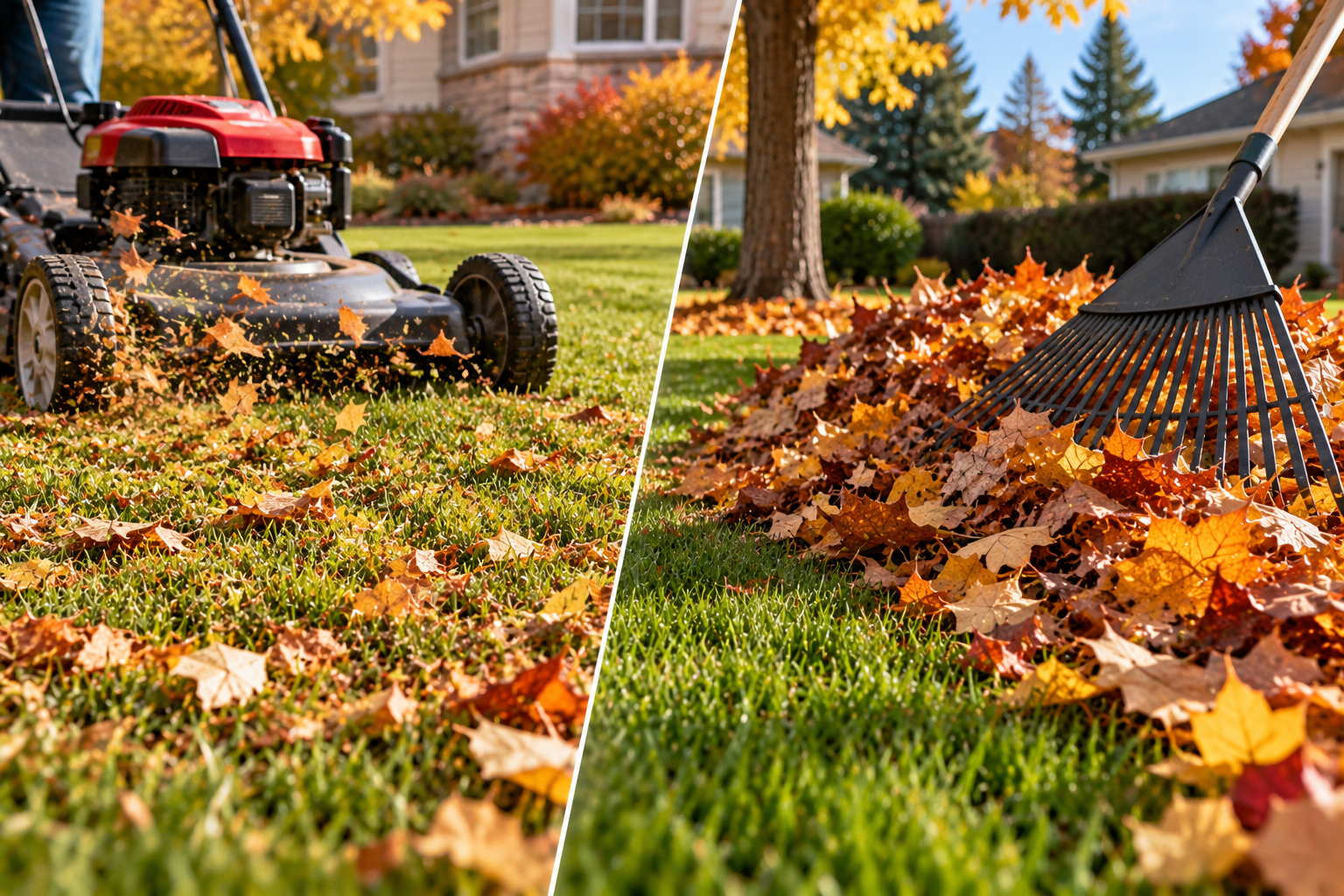
- Removing leaves and debris
- Keeping existing grass at an appropriate height
- Focusing on thin and bare areas
- Improving seed-to-soil contact where needed
- Maintaining adequate moisture without saturating the soil
Avoid aggressively disturbing the lawn. The goal is to create suitable conditions without unnecessarily damaging established turf.
Does Aeration Help With Overseeding?
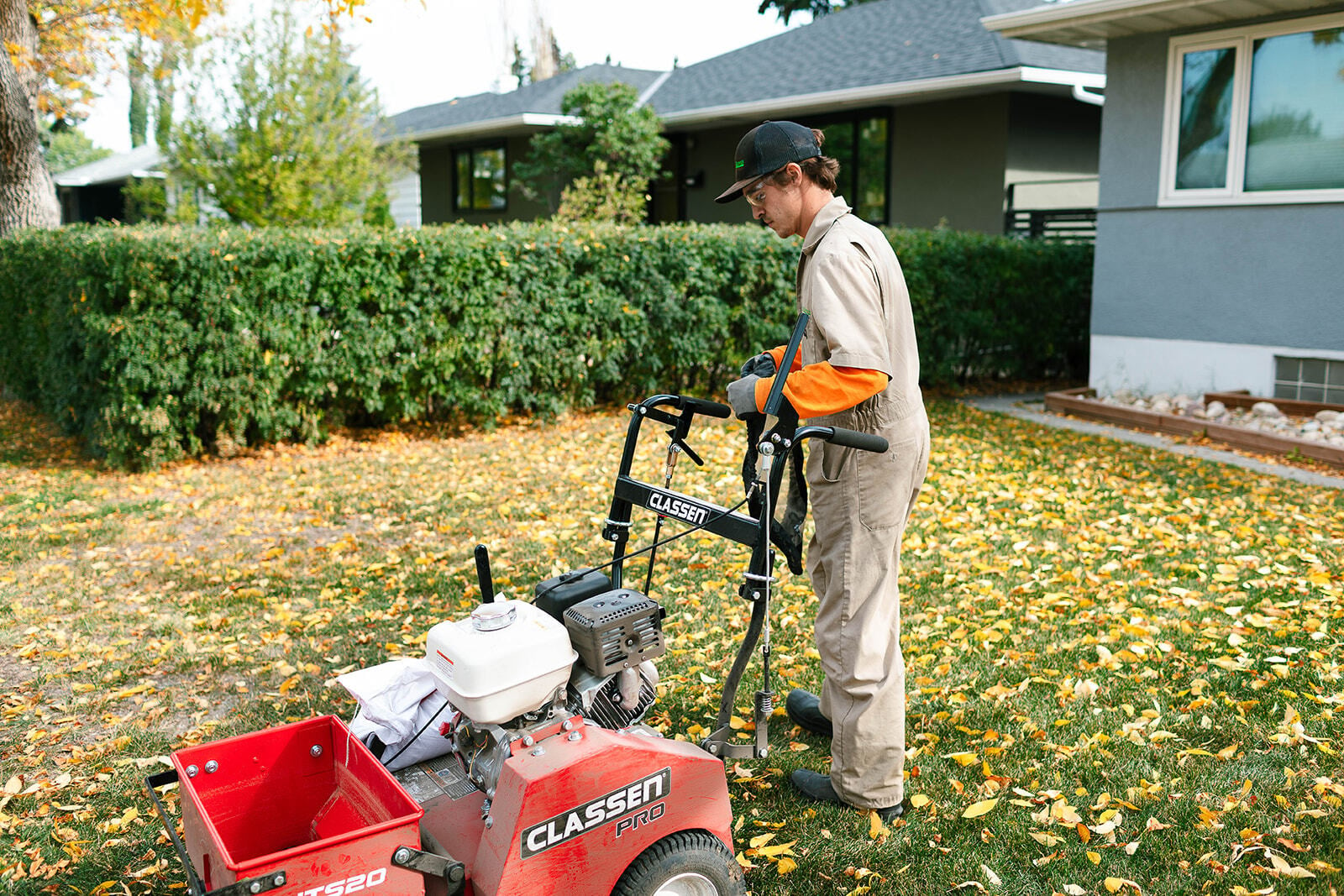
Aeration and overseeding can work well together when soil compaction limits new growth.
Compacted soil has fewer spaces for air and water to move through, making it harder for roots to access the conditions they need.
Yard Dawgs offers mechanical aeration, which may help when compaction is part of the problem. Their Aeration Plus service is another available option.
Aeration is not automatically required before every overseeding project. If your soil is already in good condition, an additional treatment may not be necessary.
What About Fertilizer?
New grass needs suitable growing conditions, and nutrition can be part of a broader lawn care approach.
Yard Dawgs offers fertilizer treatments, which can provide nutrients as part of an ongoing lawn care program.
However, fertilizer should not be applied simply because you are overseeding. The appropriate treatment depends on the lawn's condition, existing nutrient supply, and application timing.
Overfertilizing can create problems. The goal is to give the lawn what it needs rather than applying more product than necessary.
How to Care for New Seed After Overseeding
Once seed has been applied, consistent moisture is important for germination and early establishment.
Keep the soil moist without leaving it continuously saturated. Watering needs depend on weather, soil conditions, and how quickly the surface dries.
During warm or windy periods, seeded areas may dry out faster. Cooler, wetter weather can reduce the need for additional moisture.
New grass also needs time to establish, so avoid treating newly seeded areas like mature turf.
What If Your Lawn Has Weeds or Other Problems?
Overseeding can improve lawn density, but it will not solve every cause of lawn decline.
If weeds are competing with your grass, Yard Dawgs offers weed control. If you notice insect damage, they also provide chinch bug control.
Other Yard Dawgs services include liquid aeration, hardscape weed control, Super Juice, and sea kelp.
The right combination depends on what is affecting your lawn. Addressing the underlying issue can make overseeding more worthwhile.
Common Fall Overseeding Mistakes
Watch out for:
- Waiting too long: Seed needs time to establish before winter.
- Poor seed-to-soil contact: Seed on dense grass or debris may struggle.
- Ignoring compacted soil: Compaction can limit root development.
- Letting soil dry out: New seed needs consistent moisture.
- Using too much fertilizer: More product does not necessarily mean better results.
- Ignoring the underlying problem: New seed cannot correct every lawn issue.
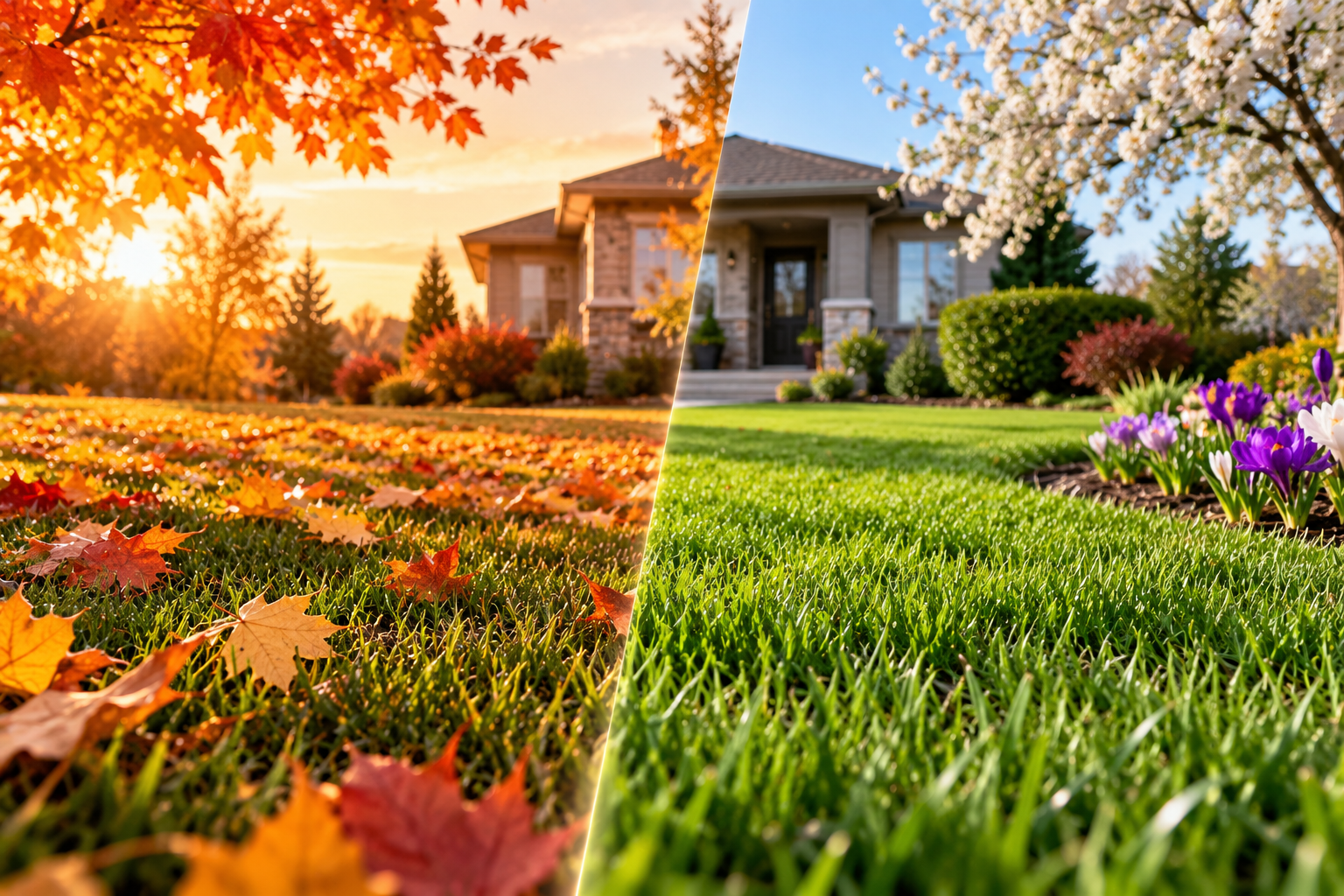
Is Fall Overseeding Better Than Spring Overseeding?
Both seasons can support new grass, but fall has several advantages for Alberta lawns.
Summer heat is decreasing, while the soil may still retain enough warmth for germination. Existing grass is also active during much of the fall.
Spring can work too, but rising temperatures and increased weed growth can create additional competition.
If your lawn has thin or bare areas, fall can be a valuable opportunity to address them before winter.
Fall Overseeding FAQs
Can I overseed after the first frost?
A light overnight frost does not automatically end the season, but repeated freezing conditions indicate that the window is closing.
New seed needs suitable soil temperatures and enough time to establish. If winter is approaching, waiting until spring may be more practical.
Can I overseed the entire lawn?
Yes, but you may not need to.
If thinning is limited to specific areas, focusing on those sections may be more appropriate than treating the entire lawn.
Should I aerate and overseed at the same time?
It can make sense when compacted soil is affecting your lawn. Aeration creates openings that give seed better access to suitable growing conditions.
However, not every lawn requires aeration before overseeding.
How do I know if it is too late to overseed?
If the lawn has stopped actively growing, the soil is consistently cold, or freezing conditions are becoming established, it is likely too late for fall overseeding.
Focus on whether new grass has enough time to establish before winter rather than choosing a date based only on the calendar.
Give Your Lawn a Stronger Start Before Winter
Fall overseeding can improve a thin or patchy Alberta lawn, but timing makes a difference.
For homeowners in Calgary, Edmonton, Red Deer, and Saskatoon, the best opportunity is generally while the soil is still warm, the existing grass is actively growing, and there is enough time for seedlings to establish before winter.
Identify thin areas, consider whether compaction or weeds may be contributing to the problem, and choose treatments based on what your lawn needs.
With the right timing and preparation, overseeding lawn in fall can help your lawn enter winter with stronger, more consistent coverage.