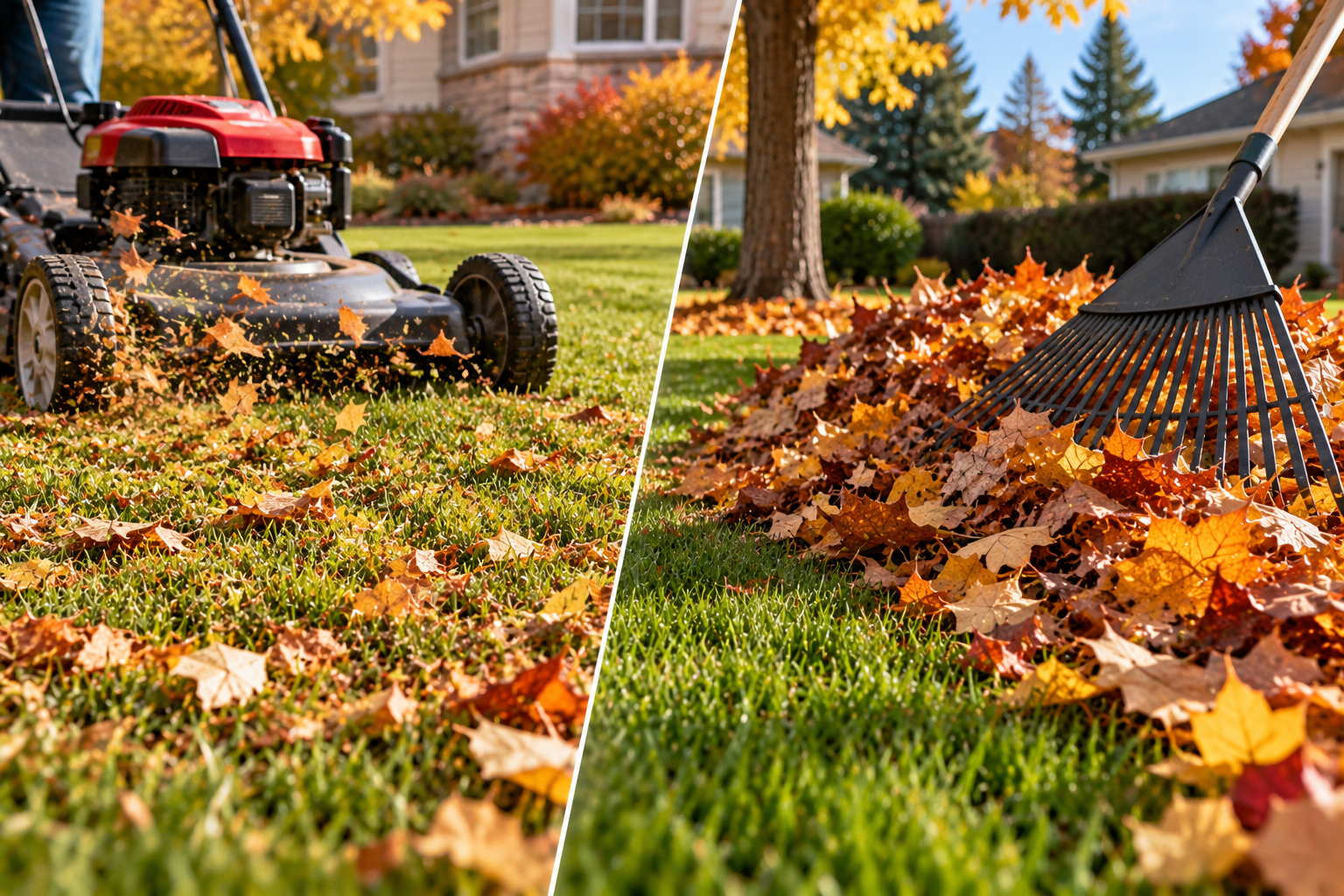
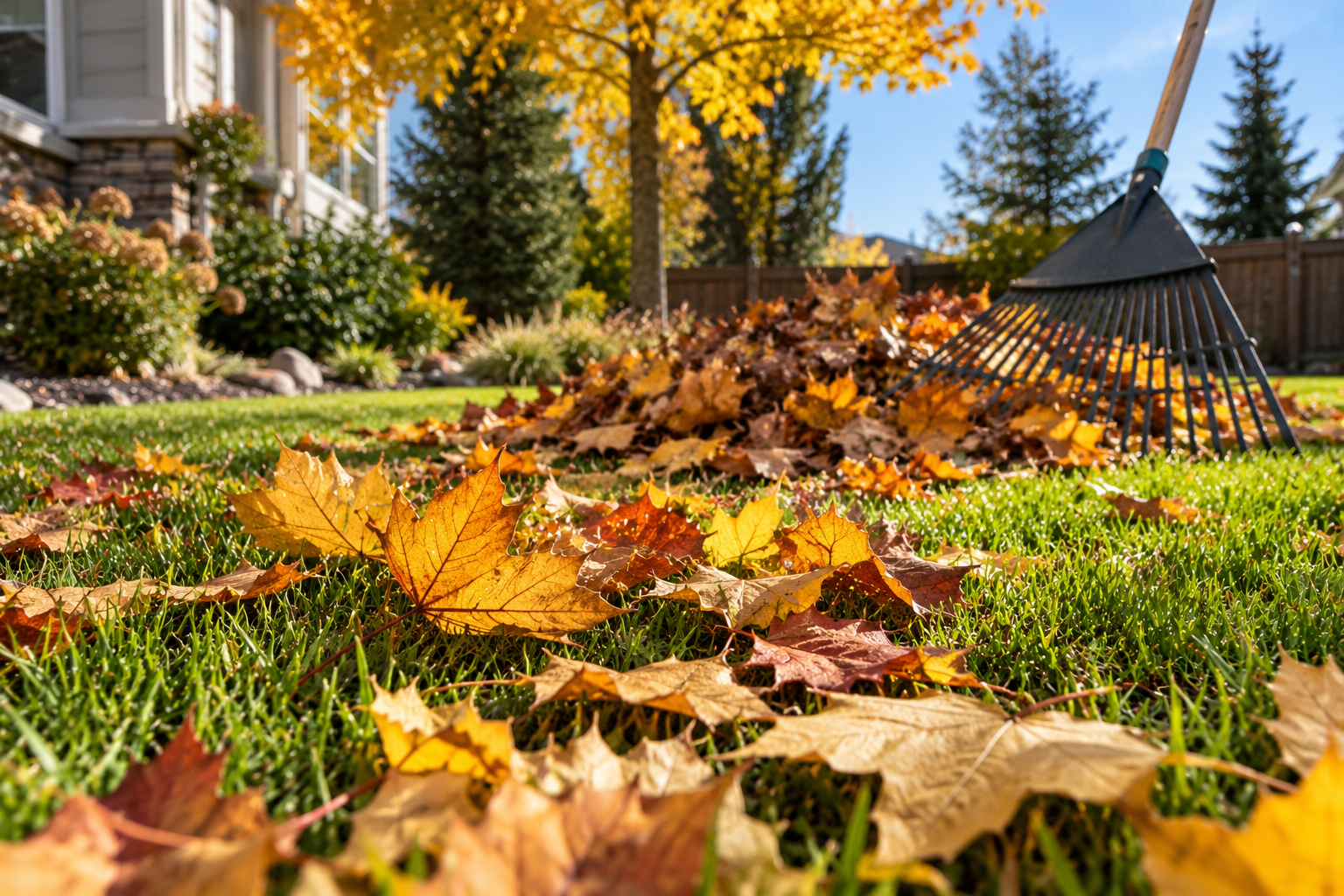
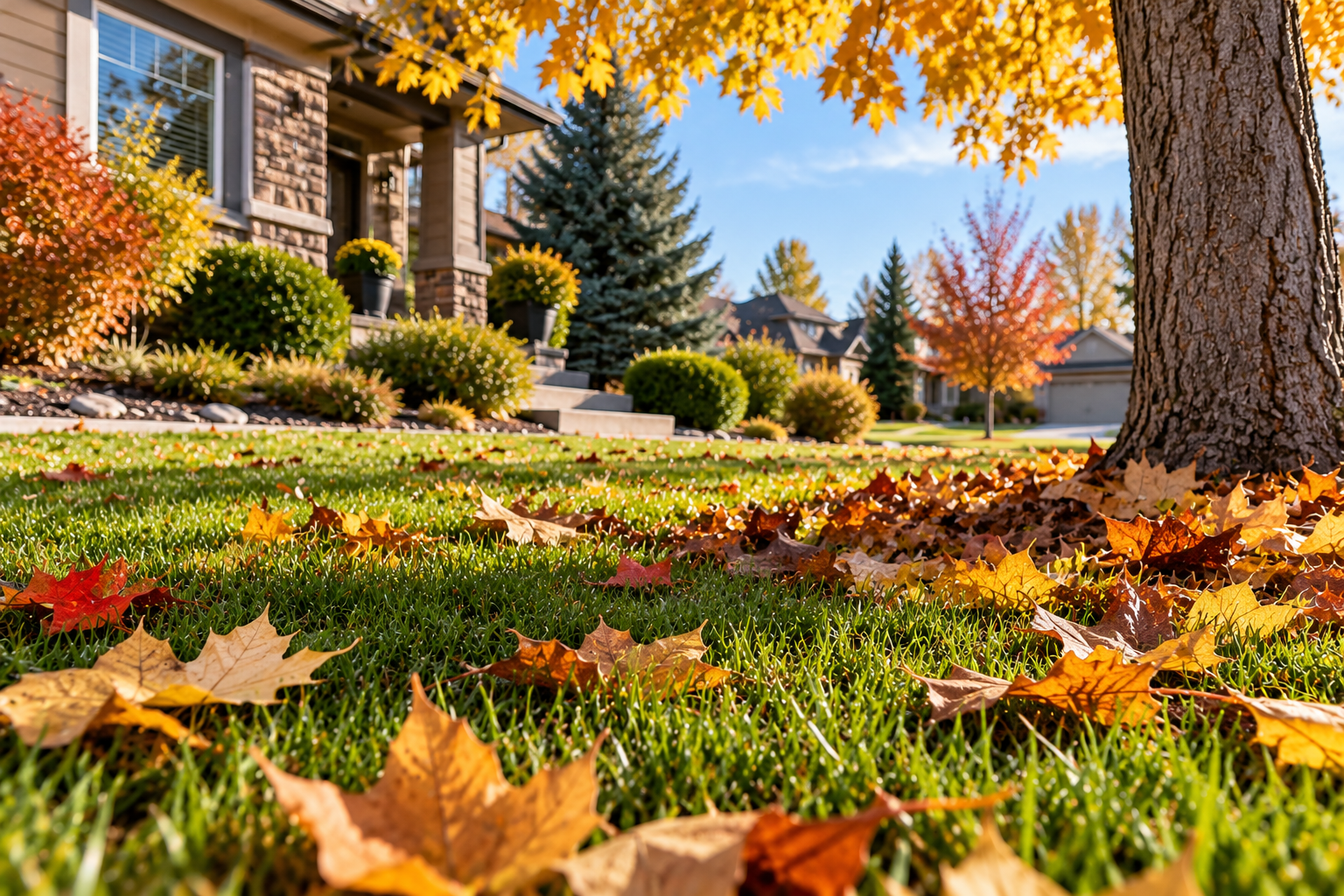
When fall arrives in Calgary, leaves can quickly cover your lawn. While some leaf material can benefit the soil, a thick, wet layer can block light and air from reaching the grass.
So, are leaves good for grass?
In small amounts, fallen leaves can add organic material, help retain moisture, and provide habitat for insects. However, heavy accumulation can create damp conditions and interfere with healthy turf growth.
The key is balance. You do not need a completely leaf-free lawn, but you should avoid leaving a dense layer on the grass for an extended period.

Limited spots available!
Transform your lawn today

Limited spots available!
Transform your lawn today
Are Leaves Good for Grass?
Yes, but only in reasonable amounts.
As leaves decompose, they return organic material to the soil. A light layer can help protect the soil surface and retain moisture.
However, grass still needs light and airflow. When leaves form a thick covering, leaves in grass can become a problem rather than a benefit.
A few scattered leaves are very different from a layer that completely covers the turf.
What Happens When Leaves Stay on the Lawn?
Wet leaves can become heavy and compacted. This reduces sunlight, limits airflow, and keeps the lawn surface damp for longer.
Heavy leaf coverage may:
- Block sunlight from reaching the grass
- Reduce airflow around the turf
- Create consistently damp conditions
- Hide thin or damaged areas
- Interfere with healthy grass growth
The issue is not that leaves are inherently harmful. The problem is excessive accumulation, particularly during Calgary's cool, wet fall weather.
What About the Nutrients in Fallen Leaves?
Fallen leaves contain organic material that can eventually return nutrients to the soil as they decompose.
That does not mean leaves can replace a complete lawn nutrition program. A lawn's needs depend on its condition, soil, grass growth, and other factors.
If your lawn needs additional nutritional support, Yard Dawgs offers fertilizer treatments as part of its lawn care services.
Think of decomposing leaves as one natural source of organic material rather than a substitute for appropriate lawn care.
Should You Remove All the Leaves From Grass?
Not necessarily.
If your lawn has only a light scattering of leaves, there may be no need to remove every individual leaf. The situation changes when leaves form a thick layer over the turf.
Pay attention to the amount of coverage. If you can still clearly see the grass, the lawn is in a different situation from one that is completely buried.
This is especially important in Calgary, where autumn weather can shift quickly. Avoid leaving the lawn covered with a dense layer as winter approaches.
Leaves in Grass vs. Leaves Around the Yard
Where leaves accumulate also matters.
Leaves in garden beds or around trees are not necessarily a problem. These areas can benefit from natural organic material breaking down over time.
Grass is different because it needs light and airflow across the surface. If your property has many trees, leaf accumulation may be heavier, making coverage more important to manage.
The goal is to protect the grass while allowing leaves to provide natural benefits where appropriate.
What Should Calgary Homeowners Do With Fallen Leaves?
The right approach depends on how much leaf material is present and where it is accumulating.
A light layer may be acceptable, but thick coverage should be reduced. Pay particular attention to:
- Leaf depth: A thick layer is more concerning than scattered leaves.
- Moisture: Wet leaves can form a dense covering over the turf.
- Grass visibility: If you can no longer see the grass, coverage may be excessive.
- Timing: Do not wait until winter if the lawn is already heavily covered.
The goal is not to make the lawn perfectly bare. It is to prevent excessive buildup while allowing natural material to benefit the surrounding soil and landscape.
Can Leaves Cause Lawn Problems?
Leaves are not usually the only cause of lawn problems, but heavy coverage can contribute to poor turf conditions.
If your lawn looks thin, weak, or uneven after heavy leaf accumulation, do not automatically assume leaves are responsible. Other factors include weeds, compacted soil, insects, and nutrient availability.
Yard Dawgs offers services that can address these concerns, including weed control, mechanical aeration, liquid aeration, fertilizer, sea kelp, Super Juice, and chinch bug control.
The right treatment depends on what is actually affecting your lawn.
What If Leaves Are Covering a Thin Lawn?
Heavy leaf coverage can make it harder to assess the grass underneath.
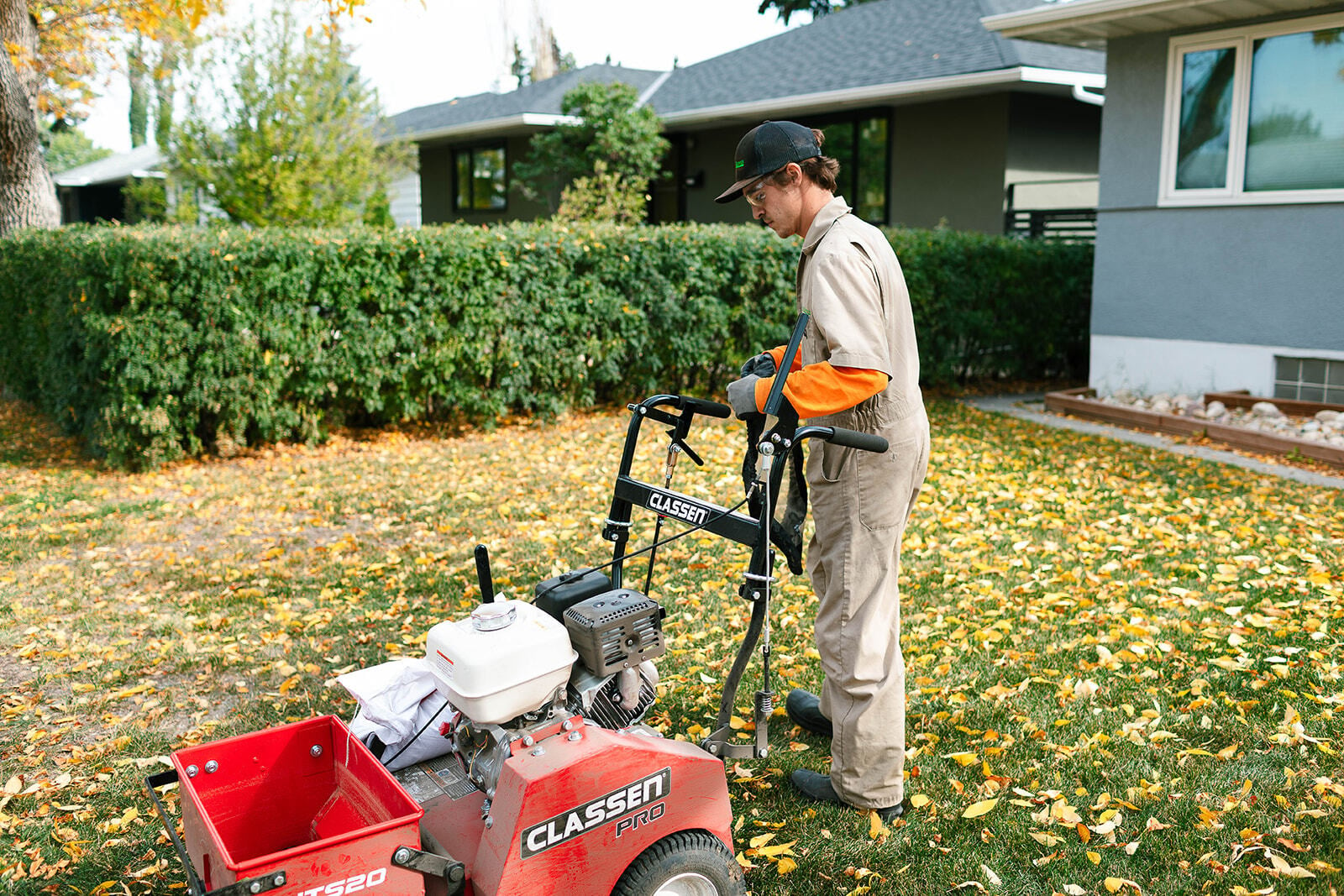
If your lawn already has thin or bare areas, reduce the leaf cover before deciding what treatment is needed. Compacted soil, for example, can affect grass growth. Yard Dawgs offers mechanical aeration for lawns where compaction is an issue.
If the lawn needs greater density, slit-seeding may also be appropriate depending on its condition and timing.
The important thing is to identify the underlying problem rather than assuming leaves are the cause.
Do Leaves Affect Fall Lawn Care?
They can, especially when a lawn is heavily covered.
Fall is an important time to prepare Calgary lawns for winter. A thick layer of leaves can make it harder to assess the turf and determine whether it needs fertilizer, weed control, aeration, or another treatment.
Base lawn care decisions on the condition of the grass rather than simply the time of year.
Are Leaves Good for Grass Over Winter?
A light amount of leaf material can provide some natural cover, but a thick layer left over winter can create unfavourable conditions for the turf underneath.
Calgary winters already expose lawns to freezing temperatures and changing moisture conditions. If leaves have accumulated heavily before winter, reducing that coverage can help keep the lawn surface in better condition.
What About Leaves in Grass in Spring?
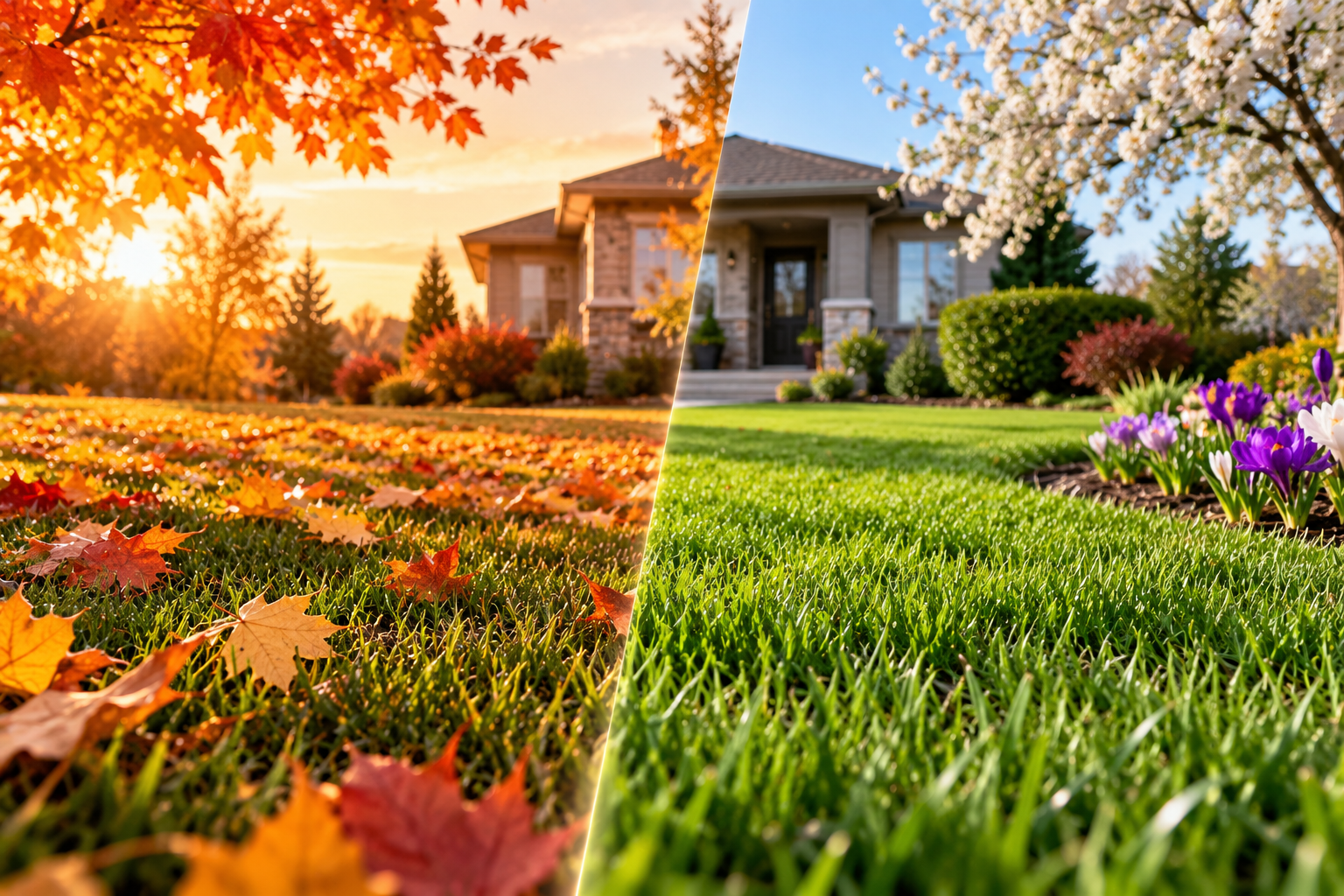
You may notice the effects of heavy fall leaf coverage once the lawn begins growing again.
Areas that were heavily covered may appear thinner or slower to recover, although other factors could also be responsible. Spring is a good time to assess the lawn and identify what needs attention.
If leaves in grass were a concern during fall, look for areas that remain thin or uneven after winter. Depending on what you find, treatments such as weed control, fertilization, aeration, or slit-seeding may be considered.
Calgary Leaf Management: The Bottom Line
So, are leaves good for grass in Calgary?
A light amount can be beneficial, but a thick layer should not be left covering the lawn.
Leaves provide organic material and support natural soil processes as they decompose. But grass still needs light and airflow, and heavy accumulation can interfere with both.
The best approach is to manage excessive coverage while allowing leaves to provide natural benefits where appropriate.
For homeowners looking for lawn care in Calgary, we can help assess your lawn and determine which treatments make sense for the season.
A healthy lawn does not need to be perfectly spotless. It needs the right balance of natural material, healthy turf, and appropriate care.