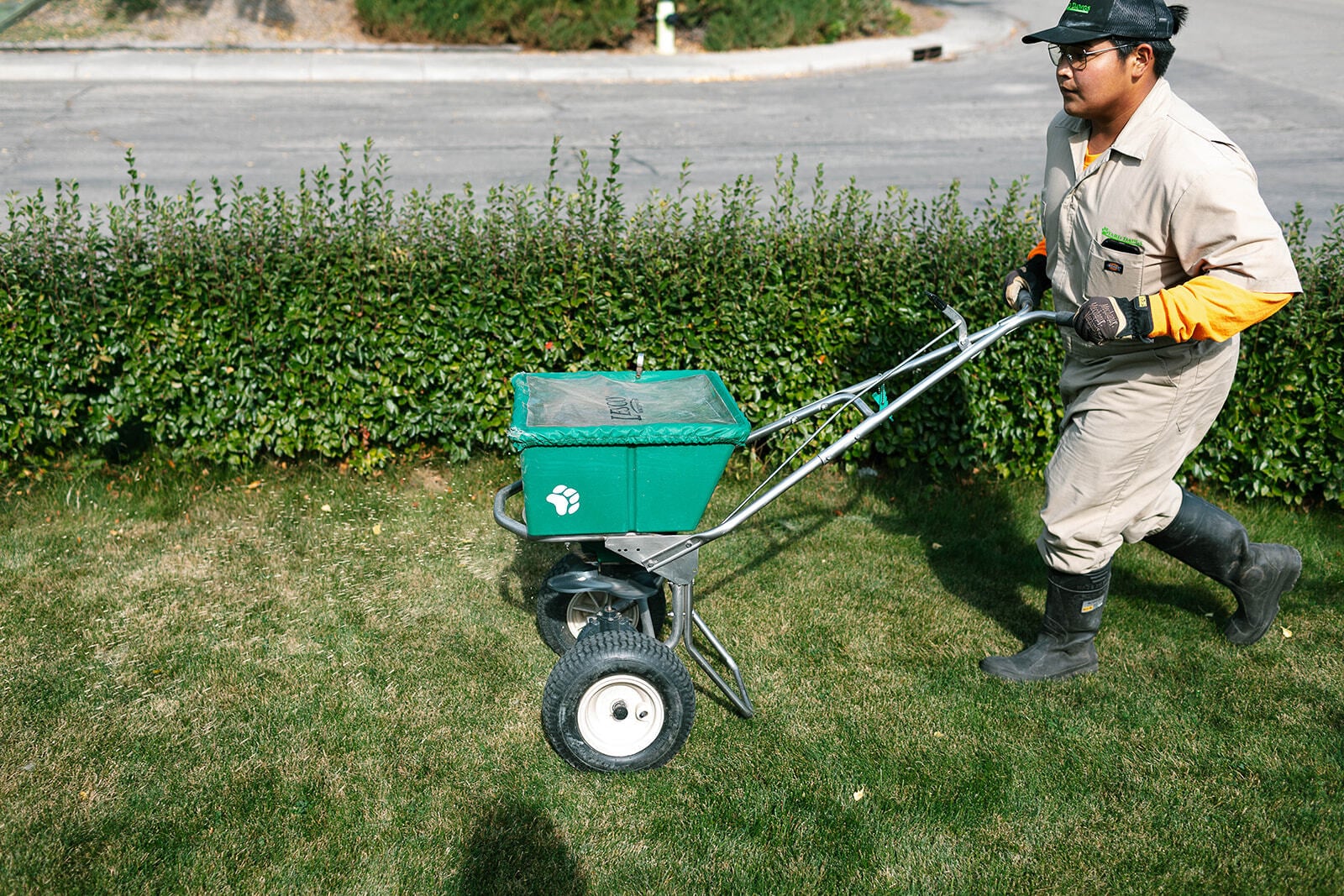
If you are deciding whether fall lawn care or spring lawn care matters more, the answer depends on your lawn’s condition. Both seasons are important, but they serve different purposes.
Spring is when your lawn comes out of winter dormancy and begins actively growing again. It is a good time for us to assess winter damage, address weeds, and support new growth.
Fall is the final major opportunity to prepare your lawn before Alberta’s winter arrives. Cooler temperatures and slowing growth make it a useful time to address summer damage and prepare for the next growing season.
For homeowners in Calgary, Edmonton, Red Deer, and Saskatoon, we recommend treating lawn care as a year-round process.
If you had to prioritize one, fall often deserves more attention because what we do before winter can affect how well your lawn comes back in spring.

Limited spots available!
Transform your lawn today

Limited spots available!
Transform your lawn today
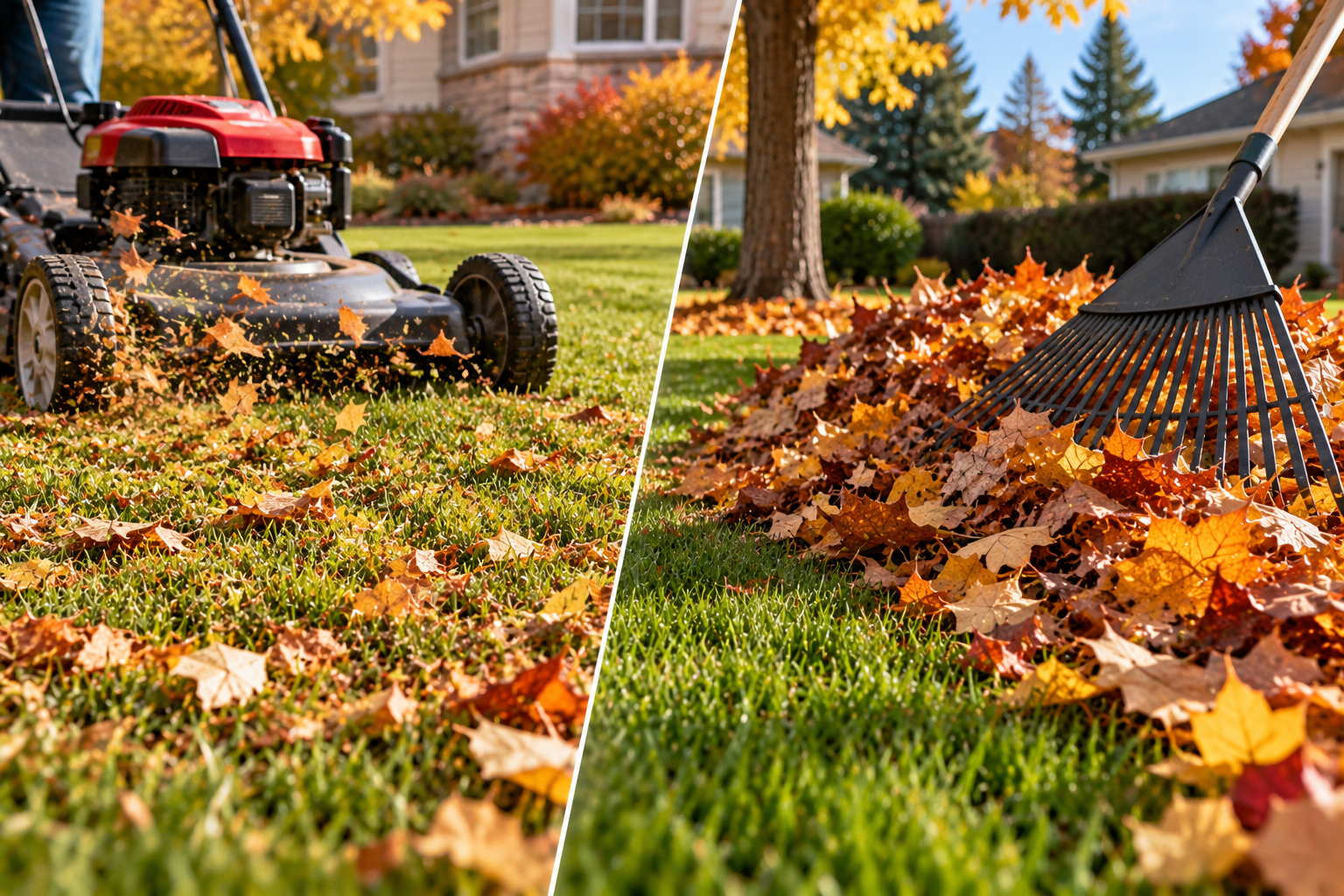
Why Is Fall Lawn Care Important?
Summer can be hard on Alberta lawns. Heat, drought, foot traffic, weeds, insects, and compacted soil can leave turf looking thinner or weaker.
Fall gives us an opportunity to address these problems while your lawn can still respond to treatment.
The main goals of fall lawn care include:
- Supporting healthy grass before winter
- Addressing active weeds
- Improving compacted soil
- Repairing thin or bare areas
- Providing nutrients when appropriate
- Preparing for the next growing season
Our goal is to support healthy turf while avoiding unnecessary late-season growth.
What Is Spring Lawn Care For?
Spring lawn care focuses on helping your lawn return to active growth and identifying issues that need attention.
After winter, we assess your lawn rather than immediately applying every treatment. Some areas may have recovered well, while others may show thinning, weeds, or winter damage.
A spring assessment may look for:
- Thin or bare areas
- Emerging weeds
- Uneven growth
- Signs of insect activity
- Compacted soil
- Winter damage
Addressing problems early can prevent them from becoming more difficult to manage later.
Fall vs. Spring Lawn Care: What Is the Difference?
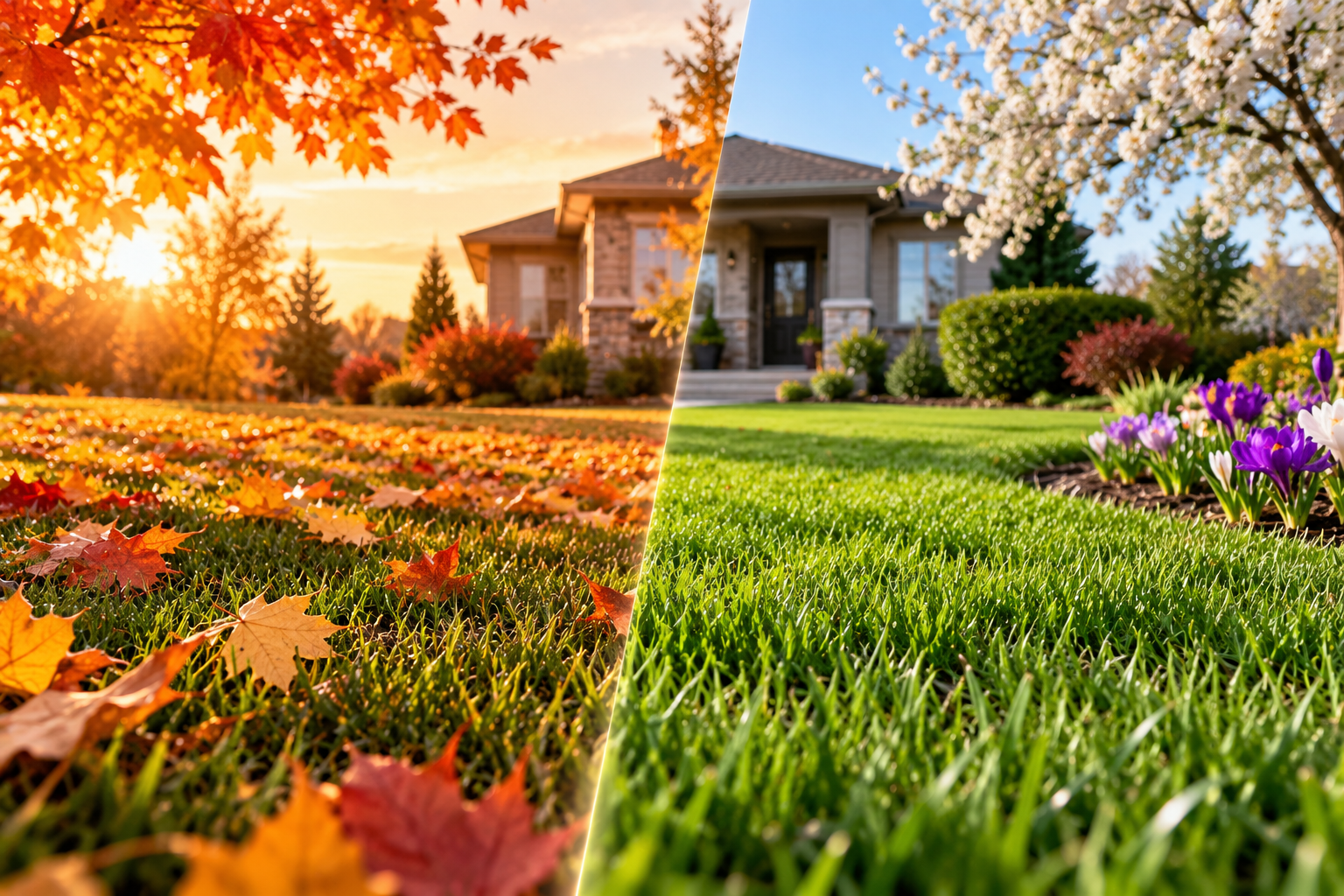
The biggest difference is preparation versus recovery.
Fall lawn care prepares your lawn for winter and addresses problems that appeared during the growing season. Spring lawn care assesses winter damage and supports renewed growth.
|
Fall lawn care |
Spring lawn care |
|
Prepares the lawn for winter |
Helps the lawn recover from winter |
|
Addresses summer stress |
Identifies winter damage |
|
Supports turf before dormancy |
Supports renewed spring growth |
|
Can address active weeds |
Addresses weeds as growth begins |
|
Can improve compacted soil |
Can reassess soil conditions |
|
Can address thin areas before winter |
Can address areas that remain thin |
Neither season replaces the other. We usually see the strongest results when lawn care is treated as a year-round process.
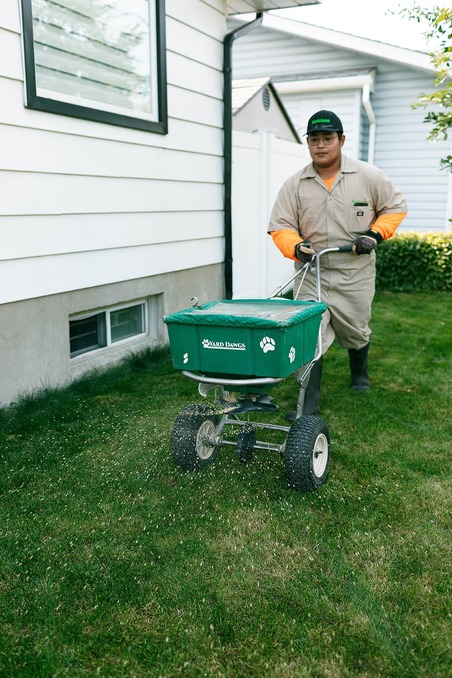
Is Fall or Spring Better for Fertilizing?
Fertilizer timing should depend on your lawn, the weather, and the treatment program rather than simply choosing spring or fall.
Fall fertilizer may support turf while it is still actively growing, but applying it too late can encourage growth when the lawn should be slowing down for winter.
Spring fertilizer can support active growth as your lawn comes out of dormancy, but applying too much too early is not necessarily better.
We offer fertilizer treatments as part of our lawn care services. A scheduled program can help us time applications appropriately.
Why Fall Can Be the Better Time for Lawn Repairs
Fall can be a good opportunity to address thin or damaged turf before winter.
If your lawn lost density during summer, waiting until spring means the problem will remain through winter and may still need attention when the next growing season begins.
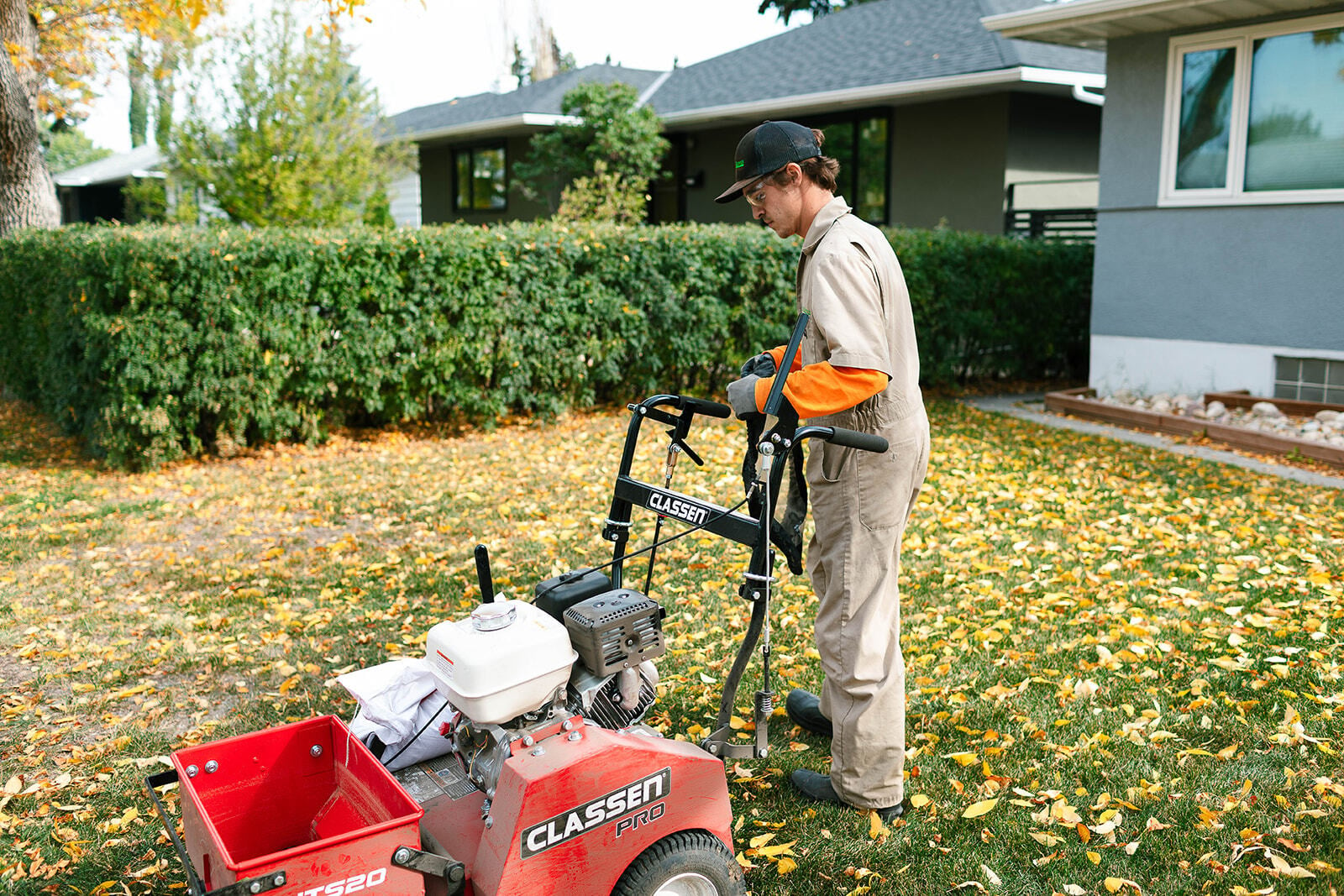
Compacted soil can restrict the movement of air, water, and nutrients. We offer mechanical aeration, which may be appropriate when compaction is affecting lawn health.
If your lawn has thin or bare areas, slit-seeding may also be considered when conditions allow enough time for new grass to establish.
The important point is to address the cause of the problem rather than simply treating the symptoms.
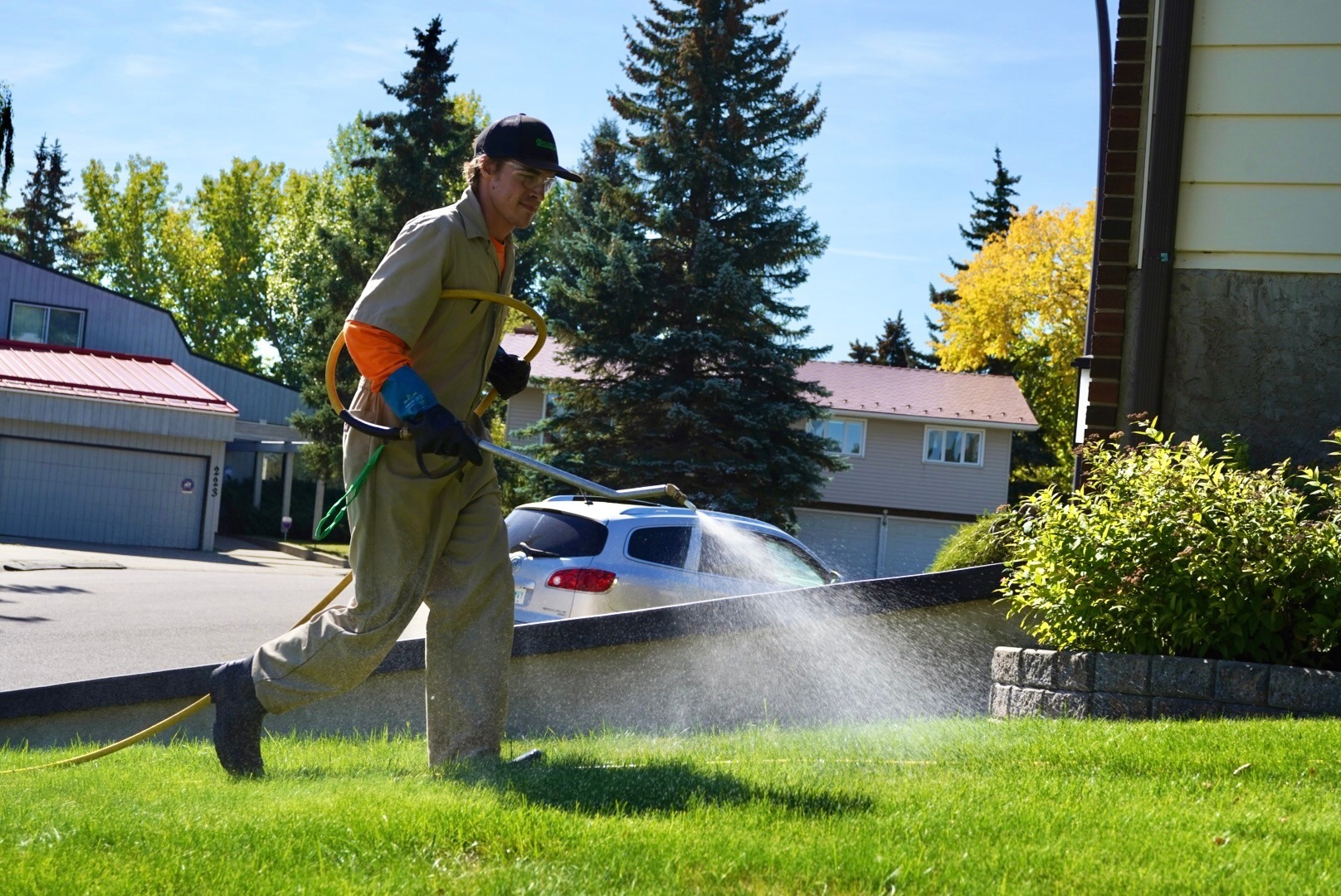
What About Weed Control?
Weeds can be a problem in both spring and fall, but timing depends on the weeds present and their stage of growth.
Spring is when many homeowners first notice weeds becoming active, making it an important time to assess weed pressure.
Fall can also be valuable for weed management while suitable weeds are still actively growing.
We provide weed control, which can be incorporated into a broader lawn care program.
Fertilizer and weed control serve different purposes. Fertilizing your lawn does not replace weed control, and controlling weeds does not provide the nutrients your grass may need.
What Should You Do in Fall?
If your lawn is generally healthy, fall does not need to become an overwhelming list of treatments.
We recommend assessing its condition and deciding what actually needs attention.
A practical fall lawn care checklist includes:
- Look for thin or bare areas. Determine whether they need slit-seeding or another treatment.
- Check for weeds. Identify areas where weed pressure remains.
- Assess soil conditions. Compaction can affect root growth and nutrient availability.
- Consider fertilizer needs. Apply nutrients based on lawn conditions and timing.
- Watch the weather. Complete treatments while the lawn is still actively growing.
Our goal is not to complete every treatment every fall. It is to give your lawn the care it needs.
What Should You Do in Spring?
Spring is a good time for us to inspect your lawn and establish priorities for the growing season.
We start by looking at what changed over winter. Some problems will be obvious, while others may become clearer as the grass begins growing.
A basic spring assessment can include:
- Checking for thin or bare areas
- Looking for new weed growth
- Assessing lawn colour and density
- Checking for insect problems
- Considering soil compaction
- Reviewing fertilizer needs
If a problem was identified in fall but could not be fully addressed before winter, spring is the next opportunity to reassess it.
Fall vs. Spring: Which One Should You Prioritize?
If you can only focus on one season, fall lawn care is often the better place to start.
Spring is essential for assessing your lawn after winter and supporting healthy growth. Fall gives us a chance to deal with problems before your lawn enters dormancy.
Think of it this way:
Fall = prepare.
Spring = recover and rebuild.
A lawn that enters winter healthy and free from significant problems has a better starting point when spring arrives.
How Calgary and Edmonton Lawns Differ by Season
The general principles of seasonal lawn care are similar across Alberta, but local weather can affect timing.
Calgary and Edmonton both experience relatively short growing seasons and significant temperature changes. The exact timing of lawn treatments can vary from year to year.
In Calgary and Edmonton, fall conditions can change quickly. A warm fall may extend active growth, while an early cold spell can shorten the window for certain treatments.
This is why a calendar date should not automatically determine when lawn care begins or ends.
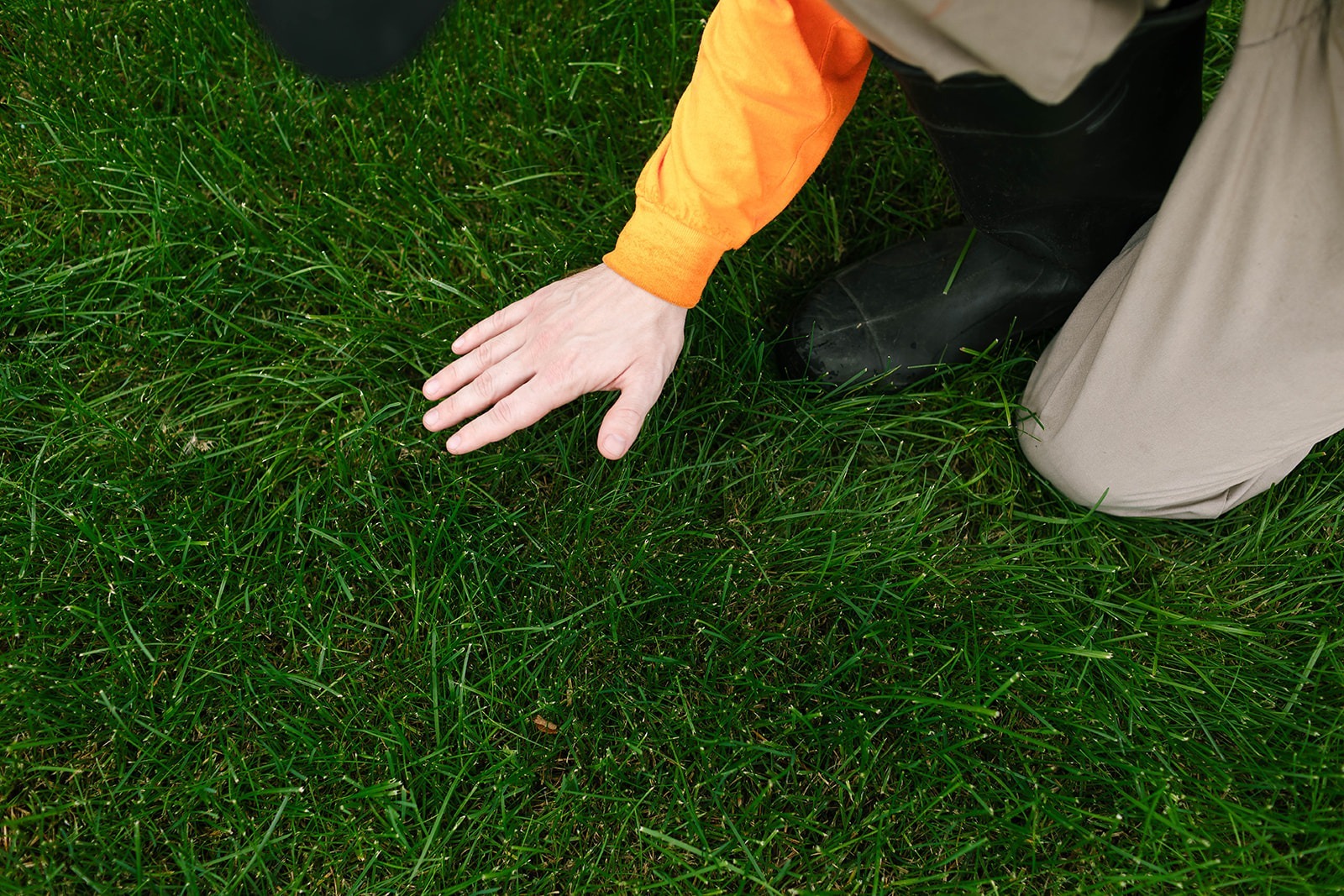
What If Your Lawn Needs More Than One Treatment?
Some lawn problems overlap. A thin lawn may be affected by compacted soil, weeds, summer stress, or several factors at once.
We offer services that can address different lawn concerns, including:
- Fertilizer
- Weed control
- Mechanical aeration
- Liquid aeration
- Sea kelp
- Super Juice
- Chinch bug control in Calgary
- Hardscape weed control
The right combination depends on what is affecting your lawn. More treatments do not automatically mean better results.
Fall vs. Spring Lawn Care FAQs
Is fall lawn care more important than spring lawn care?
Both seasons matter, but fall can have a greater impact on how prepared your lawn is for winter and the next growing season.
Should I fertilize in both spring and fall?
Not necessarily. Fertilizer timing and frequency depend on your lawn, the product, the weather, and the treatment program.
Is fall a good time to aerate?
Fall can be appropriate for mechanical aeration when soil compaction is affecting your lawn and conditions are suitable. However, not every lawn needs aeration.
Can I wait until spring to fix a thin lawn?
You can, but waiting means your lawn will enter winter with the same thin or bare areas. If conditions are suitable, addressing the problem before winter may be worthwhile.
What if I am not sure which season needs more attention?
Start with the condition of your lawn. Summer damage, thin areas, weeds, and compacted soil may make fall the better time to act. Problems that appear after winter should be reassessed in spring.
Build a Lawn Care Routine for Every Season
So, fall vs spring lawn care, which is more important?
Both have a role, but fall deserves special attention because it gives us an opportunity to prepare your lawn before winter and address problems left behind by summer.
Spring then becomes a chance to assess the results, support renewed growth, and address anything that developed over winter.
For homeowners looking for lawn care in Calgary or lawn care in Edmonton, the best approach is not to choose one season and ignore the other.
Instead, we recommend using fall to prepare, spring to reassess, and adjusting treatments according to what your lawn needs.
A consistent approach can help keep your lawn healthier through Alberta’s changing seasons and give it a stronger foundation for the year ahead.