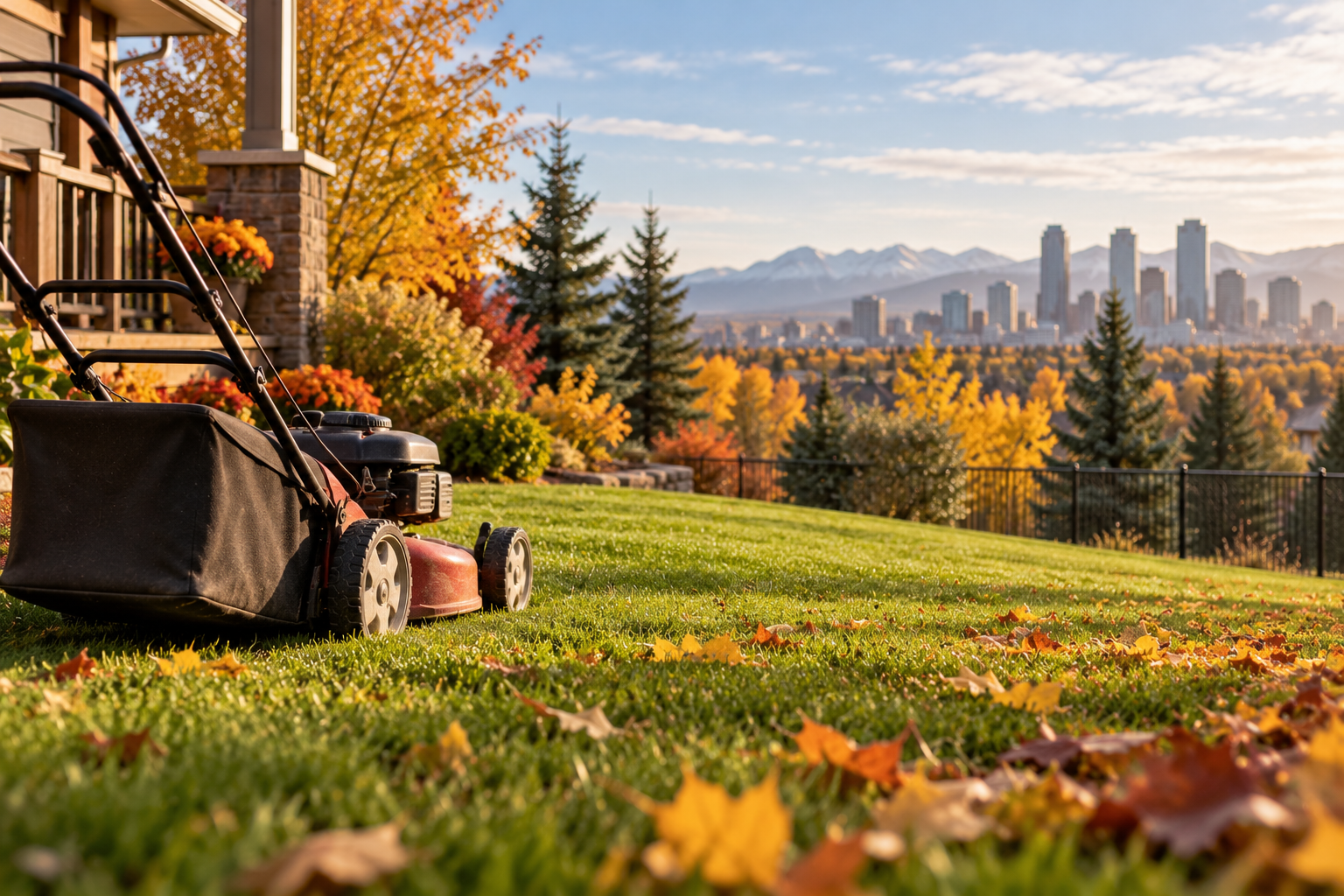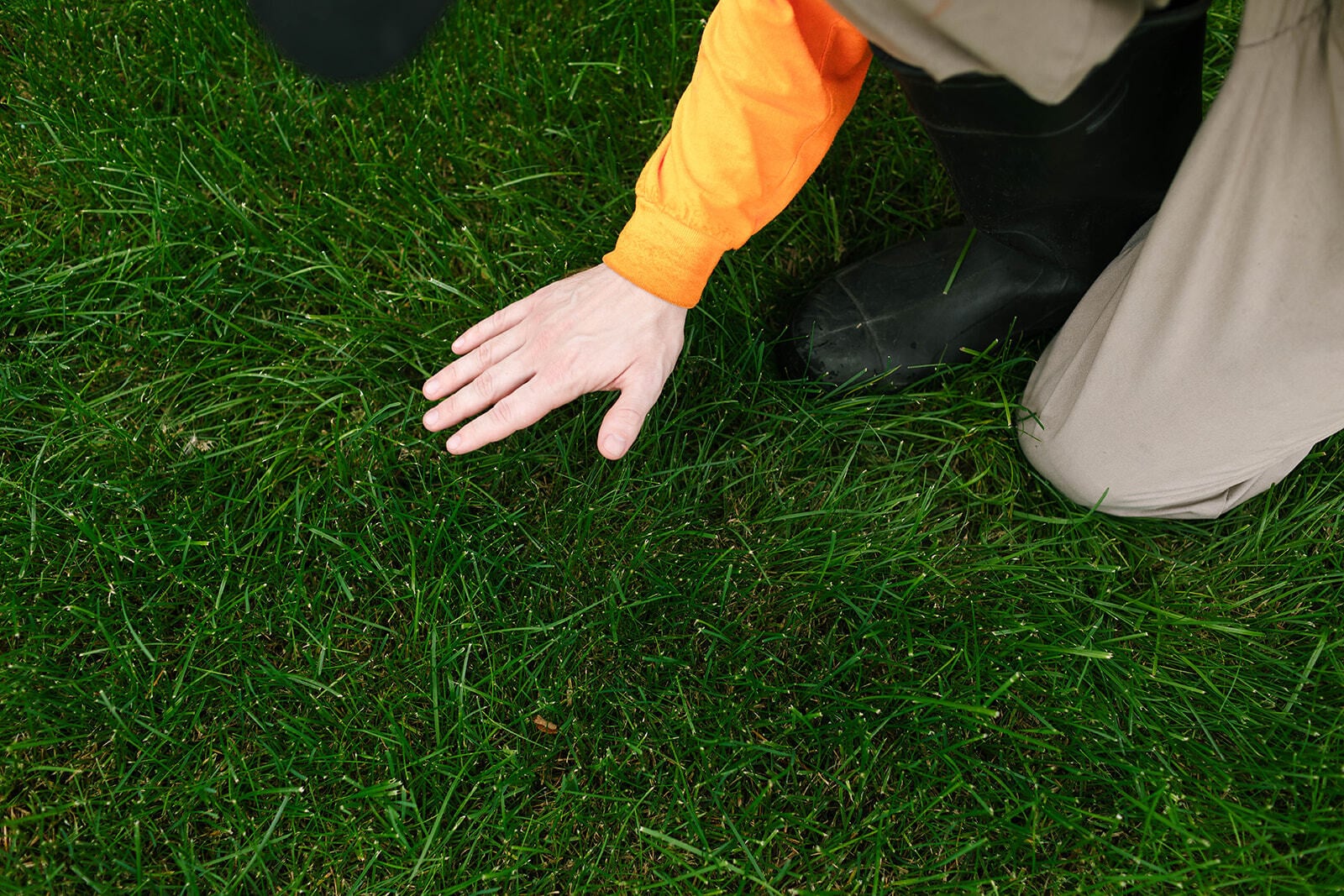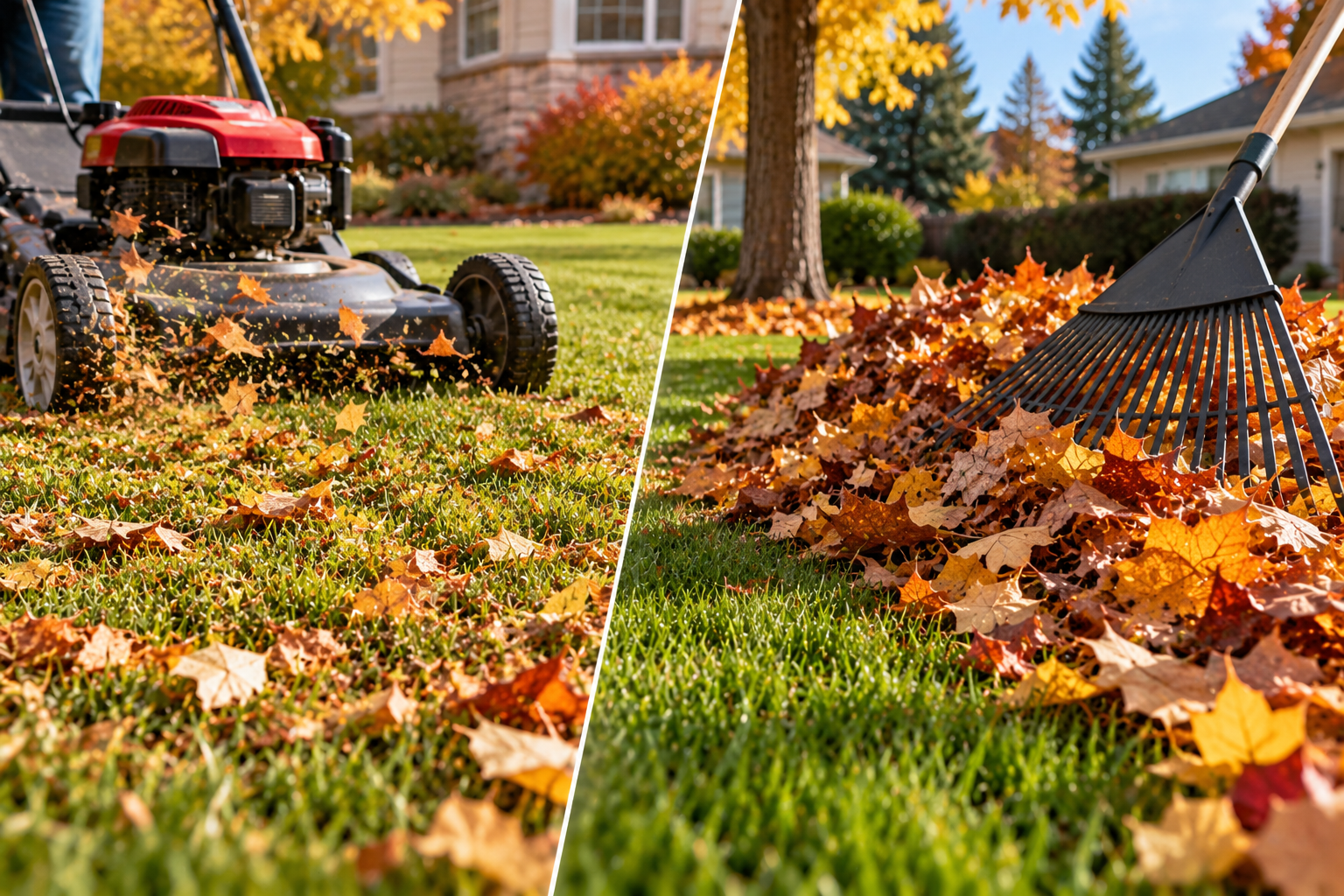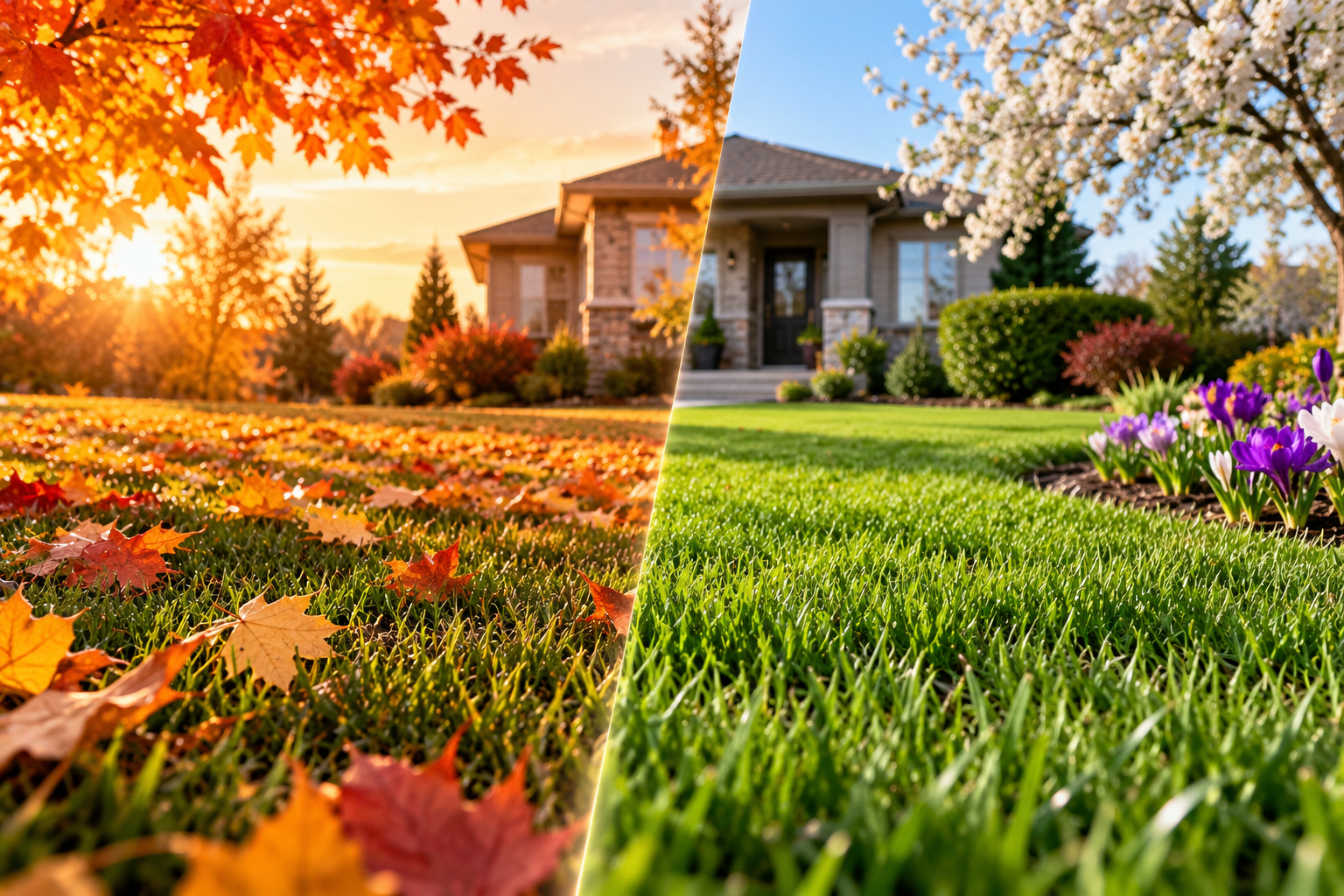


Knowing when to stop mowing lawn in Calgary and Edmonton is less about choosing a date on the calendar and more about watching what your grass is doing. As fall arrives, cooler temperatures slow grass growth, and eventually your lawn needs much less mowing than it did during summer.
In Calgary, the average first fall frost is around late September, while Edmonton's is also around the end of September based on long-term climate data. However, frost can arrive earlier or later from year to year, so these dates are useful guidelines rather than a deadline.
For most cool-season lawns in Alberta, the final cut will usually be sometime in late September or October. The key is to finish mowing while the grass is still in good condition, rather than waiting until the lawn is frozen or covered in snow.

Limited spots available!
Transform your lawn today

Limited spots available!
Transform your lawn today
When to Stop Mowing Lawn in Fall
So, when should you stop mowing your lawn before winter?
The simplest answer is: stop when grass growth has slowed significantly and the lawn is approaching dormancy, usually before consistent frost sets in.
Your lawn may still need an occasional cut in early fall. Cooler weather does not mean grass immediately stops growing. A warm spell, rainfall, sunlight, or a healthy lawn can keep growth going longer than expected.
Instead of relying on one specific date, look for these signs:
- Your grass is growing much more slowly than it did during summer.
- You are cutting very little off the top with each mow.
- Daytime temperatures are consistently cooler.
- Frost is beginning to appear in your area.
- The lawn is no longer recovering and growing quickly after mowing.
A practical rule is to continue mowing while the grass is actively growing, then stop once growth has nearly stopped and regular frost is approaching. Avoid leaving the lawn excessively long, but do not scalp it simply to complete one final cut.
Calgary vs. Edmonton: Is the Timing Different?
The general approach is similar in both cities because lawns in Calgary and Edmonton commonly contain cool-season grasses that can continue growing well into fall.
Calgary can see an early fall frost, with long-term climate data showing an average first fall frost around September 18 at Calgary International Airport. Edmonton's corresponding average is around September 25 at Edmonton City Centre. Local conditions can vary significantly, though, especially between neighbourhoods and individual properties.
That means there is no single "last mowing day" that works for every lawn.
|
Location |
Typical timing |
What to watch for |
|
Calgary |
Often late September to early October |
Earlier frost, cooler nights, and slowing growth |
|
Edmonton |
Often late September to October |
Continued growth during warmer fall weather |
|
Both cities |
Before consistent freezing conditions |
Dry, thawed grass and a lawn nearing dormancy |
A sheltered, sunny yard may continue growing after a shaded lawn has slowed down. Recent rainfall can also encourage growth. Your lawn's condition should always take priority over a specific date.
When comparing your lawn with a neighbour's, remember that timing can differ because of:
- Shade from trees, fences, or buildings
- Differences in soil moisture
- Recent rainfall or irrigation
- Grass type and lawn health
- Exposure to wind and overnight cold
How Short Should You Cut Your Lawn Before Winter?
Once you know when to stop mowing lawn in fall, the next question is how short the final cut should be.
The goal is short enough to prevent excessive matting, but not so short that you stress the grass.
There is no benefit to aggressively scalping your lawn before winter. Removing too much of the grass blade at once can put unnecessary stress on the turf. A gradual reduction in mowing height is a better approach if your lawn has been kept longer during summer.
For a typical cool-season lawn, a final height around 2 to 2.5 inches can be a useful target. However, the appropriate height depends on your turf and normal mowing practices.
Keep these guidelines in mind:
- Avoid removing more than one-third of the grass blade at a time.
- Lower the mowing height gradually if the lawn has been growing long.
- Do not cut extremely short to compensate for missed mowing.
- Make sure the final cut is even and clean.
- Avoid mowing when the grass is wet, frosty, or frozen.
A clean cut is also important. Dull mower blades can tear grass instead of cutting it cleanly, leaving ragged tips. Before the final mow, make sure your mower is ready to make a clean cut.
What Else Should You Do Before Winter?
The last mow is only one part of getting your lawn ready for Alberta's winter conditions.
Fall is also an important time to address the lawn's overall health. Once mowing becomes less frequent, you can turn your attention to treatments that support the turf and soil before winter arrives.
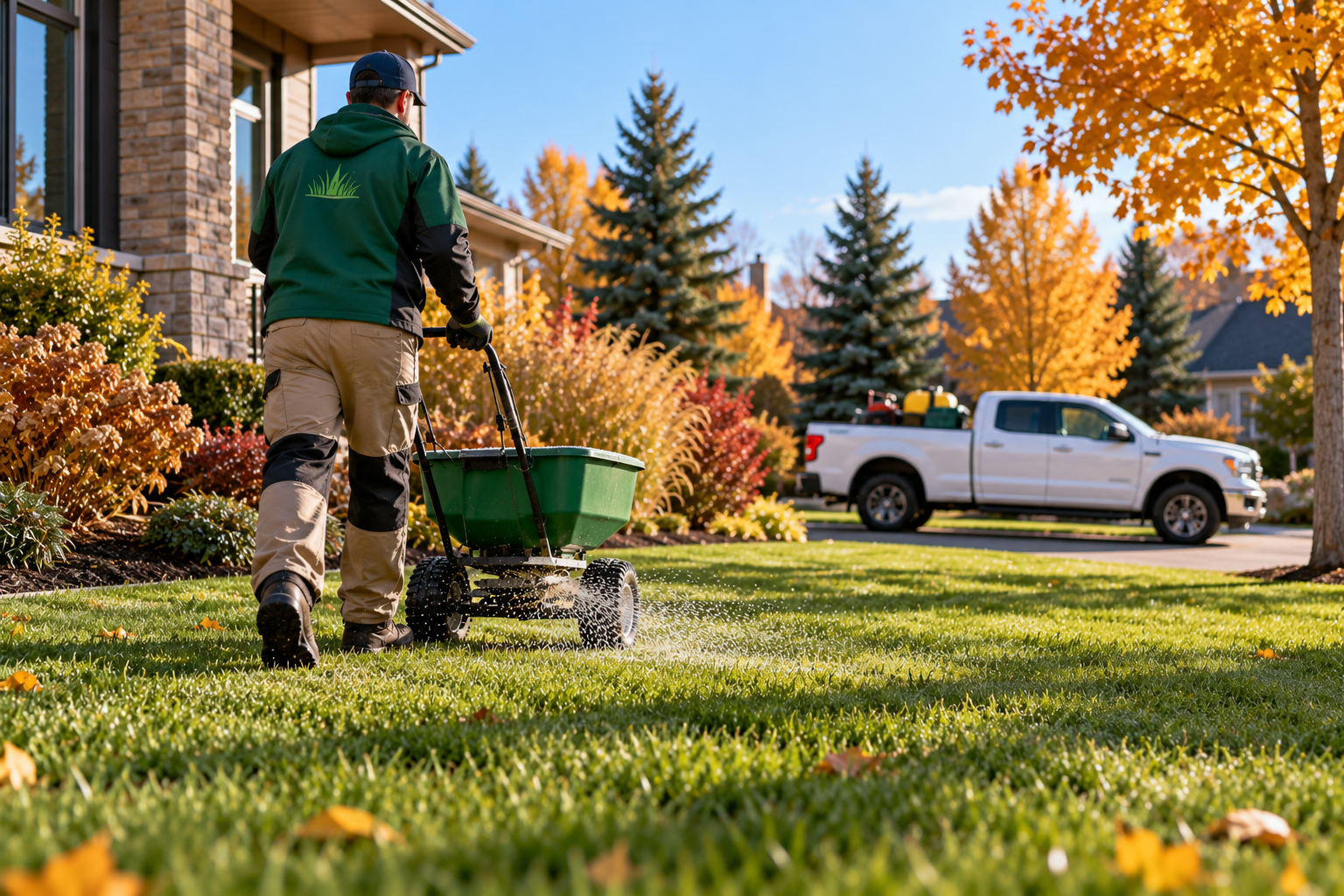
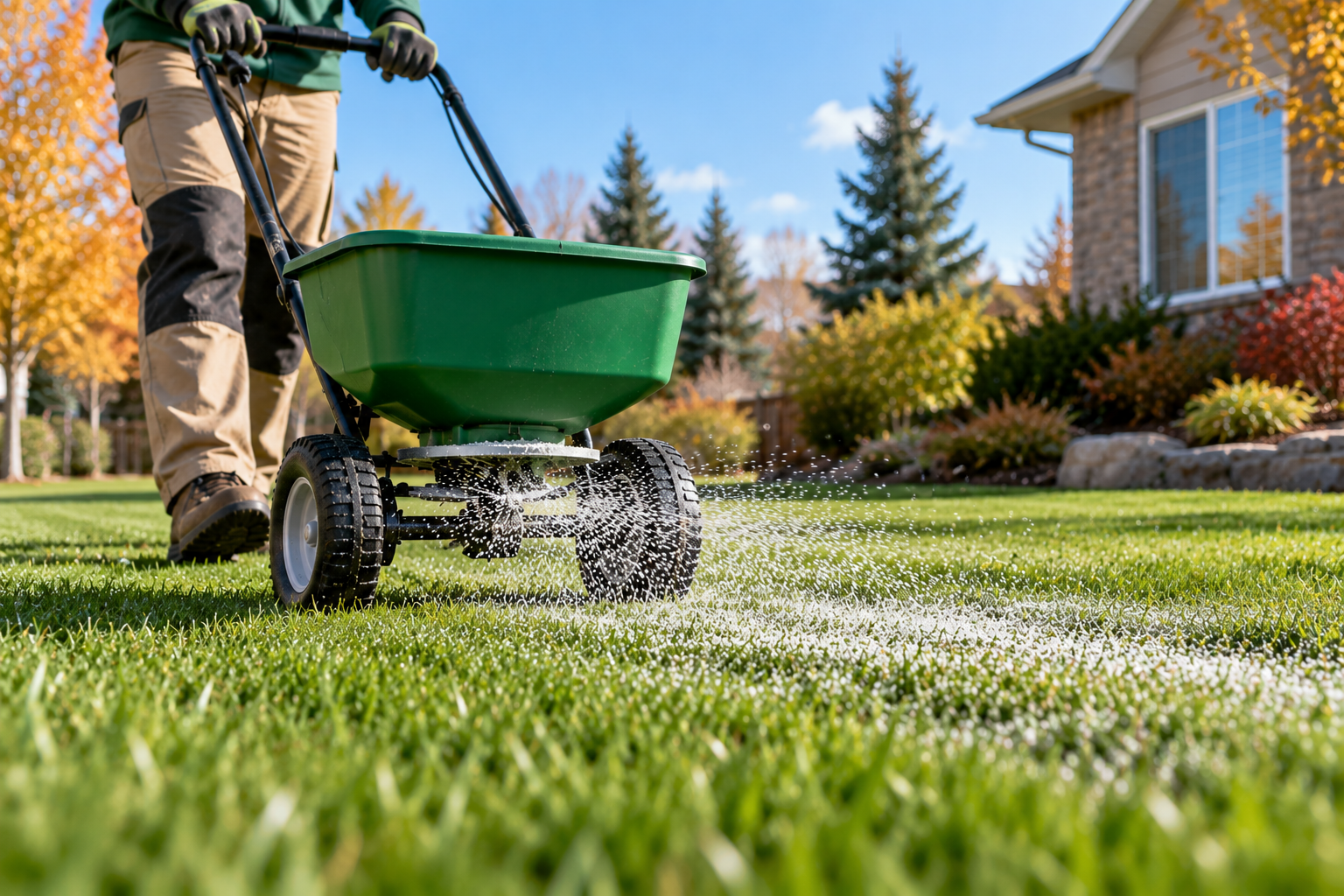
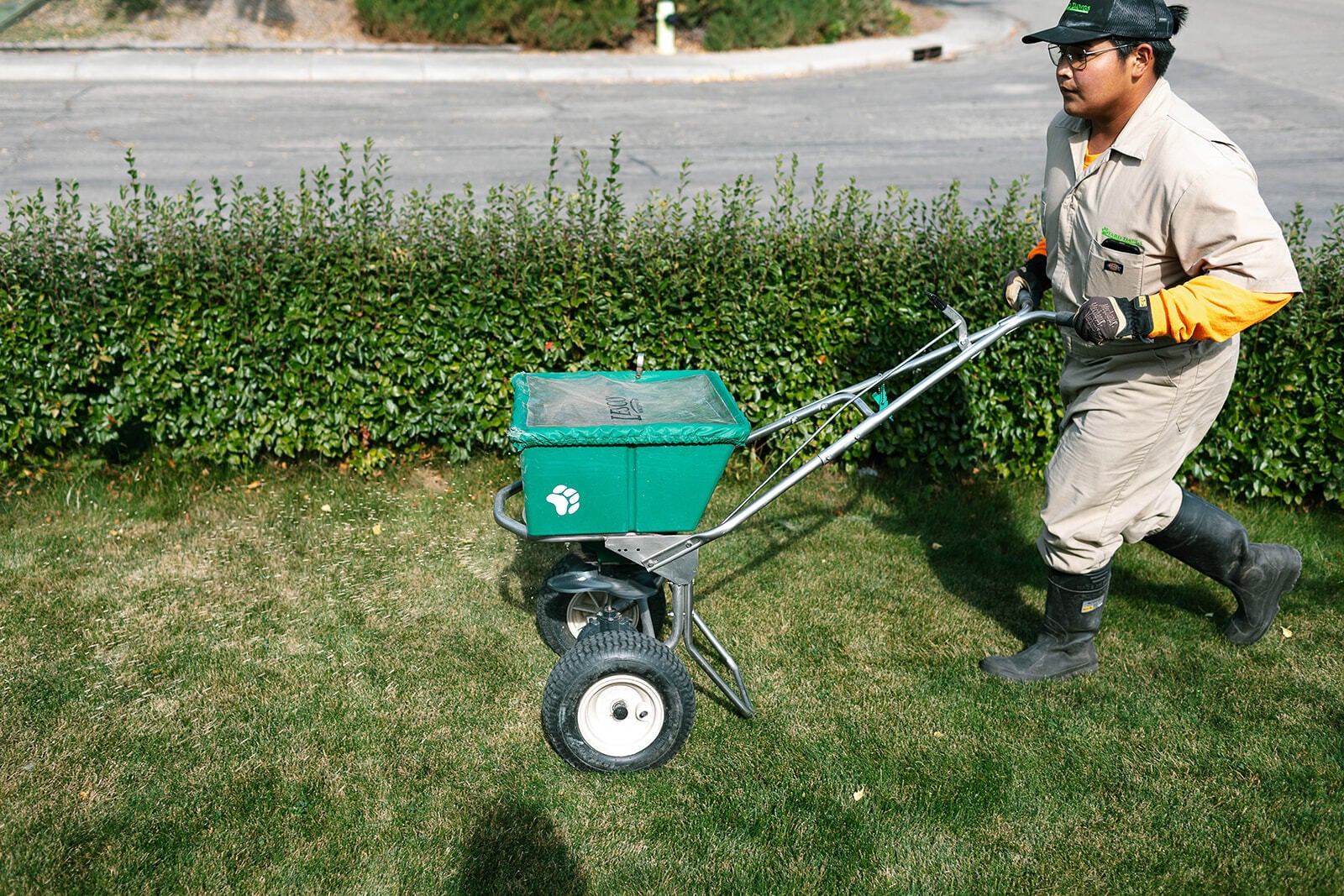
Fertilizer is one option to consider as part of a fall lawn care plan. If your lawn needs nutrients, a properly timed fertilizer treatment can support healthy turf going into the colder months. Yard Dawgs provides fertilizer treatments as part of its lawn care services.
Fall can also be a useful time to address weeds that are still actively growing. Yard Dawgs offers weed control to help keep unwanted plants from competing with your lawn.
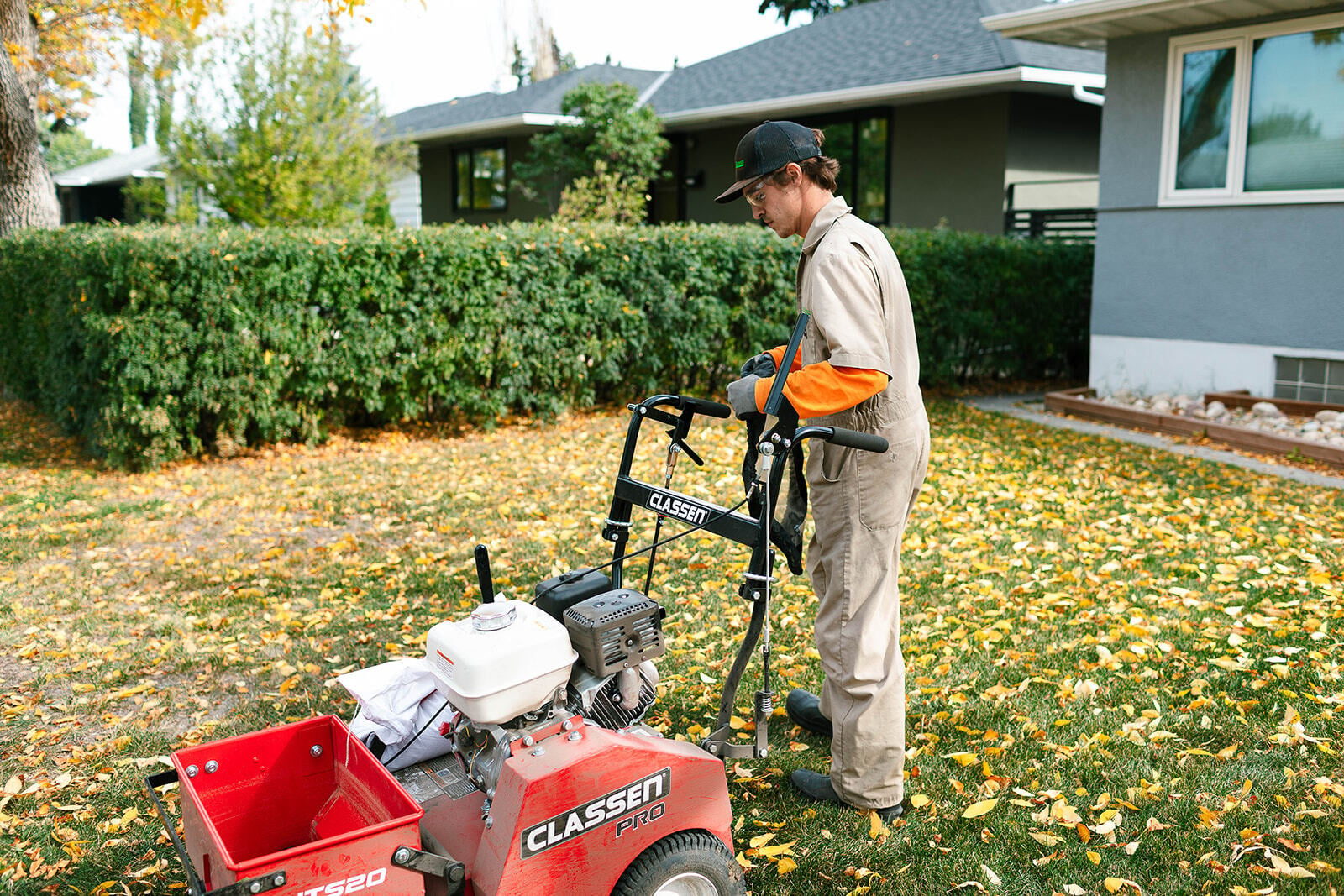
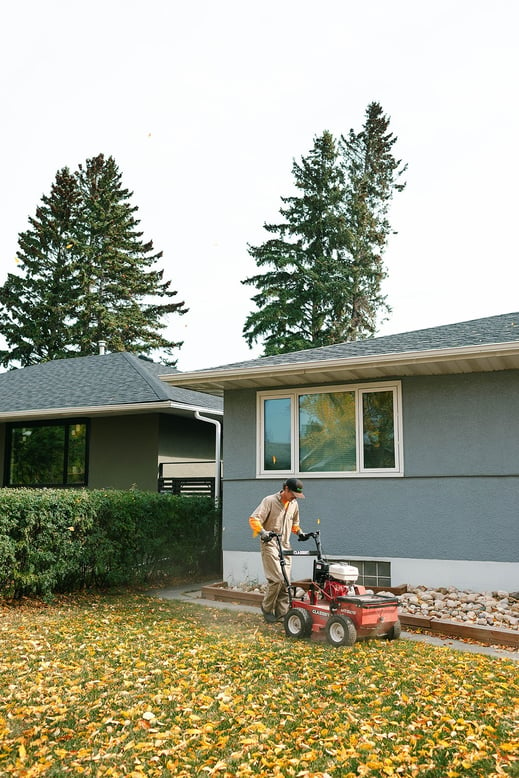
If your soil is compacted, aeration may also be worth considering before winter. Mechanical aeration creates openings in the soil that can improve the movement of air, water, and nutrients toward the roots. Yard Dawgs offers mechanical aeration for lawns that need this type of treatment.
A simple pre-winter lawn review can include:
- Checking for thin or bare areas
- Looking for active weeds
- Assessing whether the soil appears compacted
- Considering whether the lawn needs fertilizer
- Planning any slit-seeding before conditions become too cold
Should You Mow After the First Frost?
It is best to avoid mowing when grass is covered in frost or has frozen.
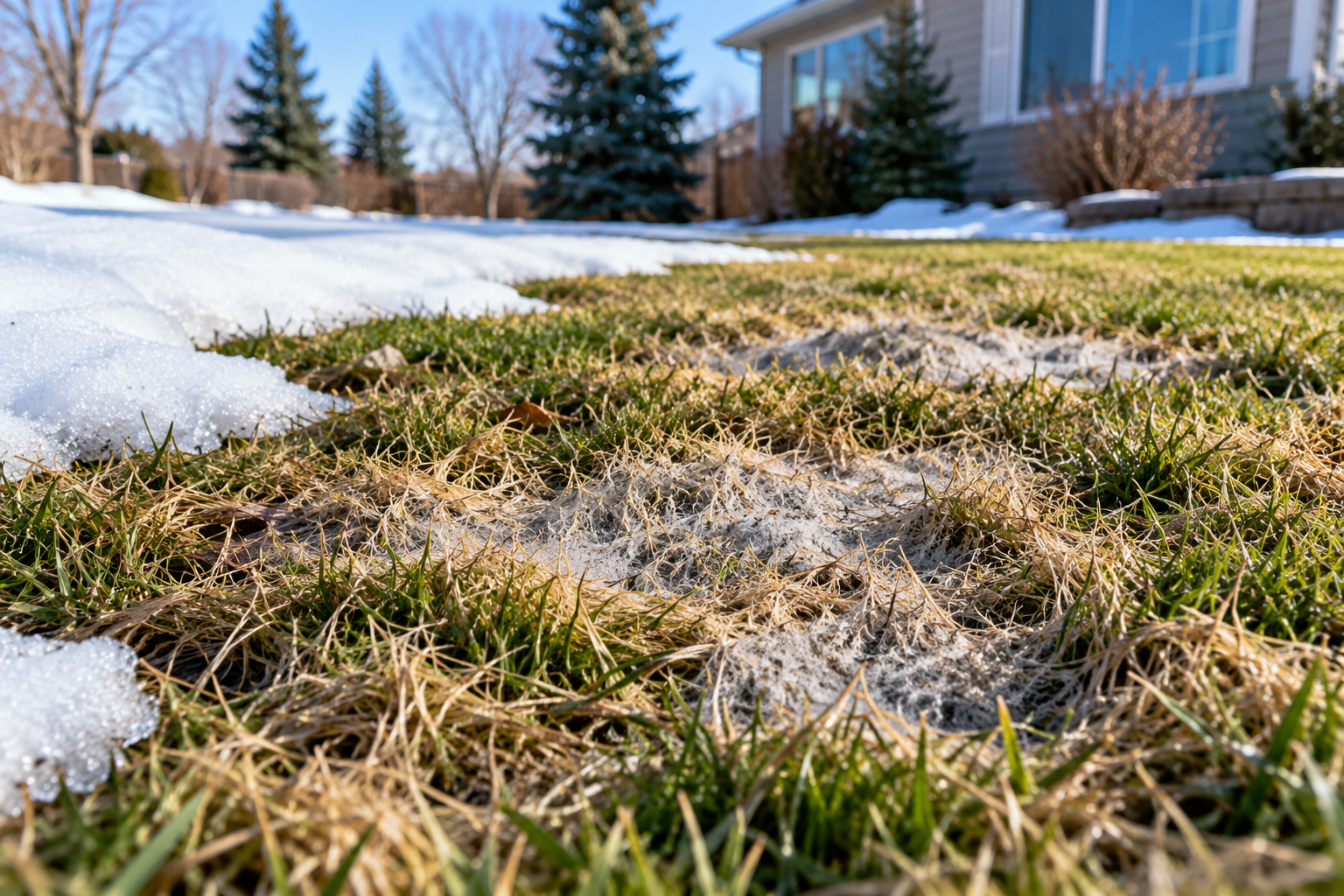
Frozen grass blades are more brittle and can be damaged by mowing. Walking or driving heavy equipment across frozen or very wet turf can also put unnecessary stress on the lawn.
If a light frost appears overnight but temperatures rise and the grass completely thaws and dries, you may still have an opportunity to mow if the lawn is actively growing. The important thing is not to treat the first chilly morning as an automatic signal to mow or to keep mowing.
Before mowing after a light frost, check that:
- The grass has completely thawed.
- The lawn surface is dry enough to avoid ruts or soil compaction.
- The grass is still growing enough to require a cut.
- The forecast does not call for immediate freezing conditions.
- The mower will not leave clumps or damage the turf.
Once the lawn has largely stopped growing and winter weather is settling in, the mowing season is coming to an end.
What If Your Lawn Is Thin or Has Bare Spots?
Fall is also a valuable window for addressing thin areas before winter. If your lawn has bare or weak patches, slit-seeding can help introduce new grass seed into the existing turf.
Yard Dawgs offers Aeration Plus, making it an option for lawns that need help becoming thicker and more consistent.
The important thing is to address these problems while conditions still allow the lawn to establish before winter. Waiting until the ground is frozen will obviously be too late for fall lawn work.
Signs that your lawn may benefit from slit-seeding include:
- Bare patches that remain after summer
- Thin grass in high-traffic areas
- Uneven coverage across the yard
- Areas where grass has struggled to recover
- Soil that is visible through the turf
A Simple Fall Mowing Checklist
Before putting the mower away for the season, take a moment to check your lawn and the weather.
- Check the grass. If it is still growing actively, continue mowing as needed.
- Watch the forecast. Plan the final cut before regular frost and freezing conditions arrive.
- Use the right height. Avoid scalping the lawn or removing more than one-third of the blade.
- Choose the right conditions. Mow only when the grass is dry, thawed, and firm enough to support equipment.
- Inspect the final cut. Look for clumps, uneven areas, or signs that the mower is tearing the grass.
- Review the lawn afterward. Check for bare spots, weeds, and areas that may need fall treatment.
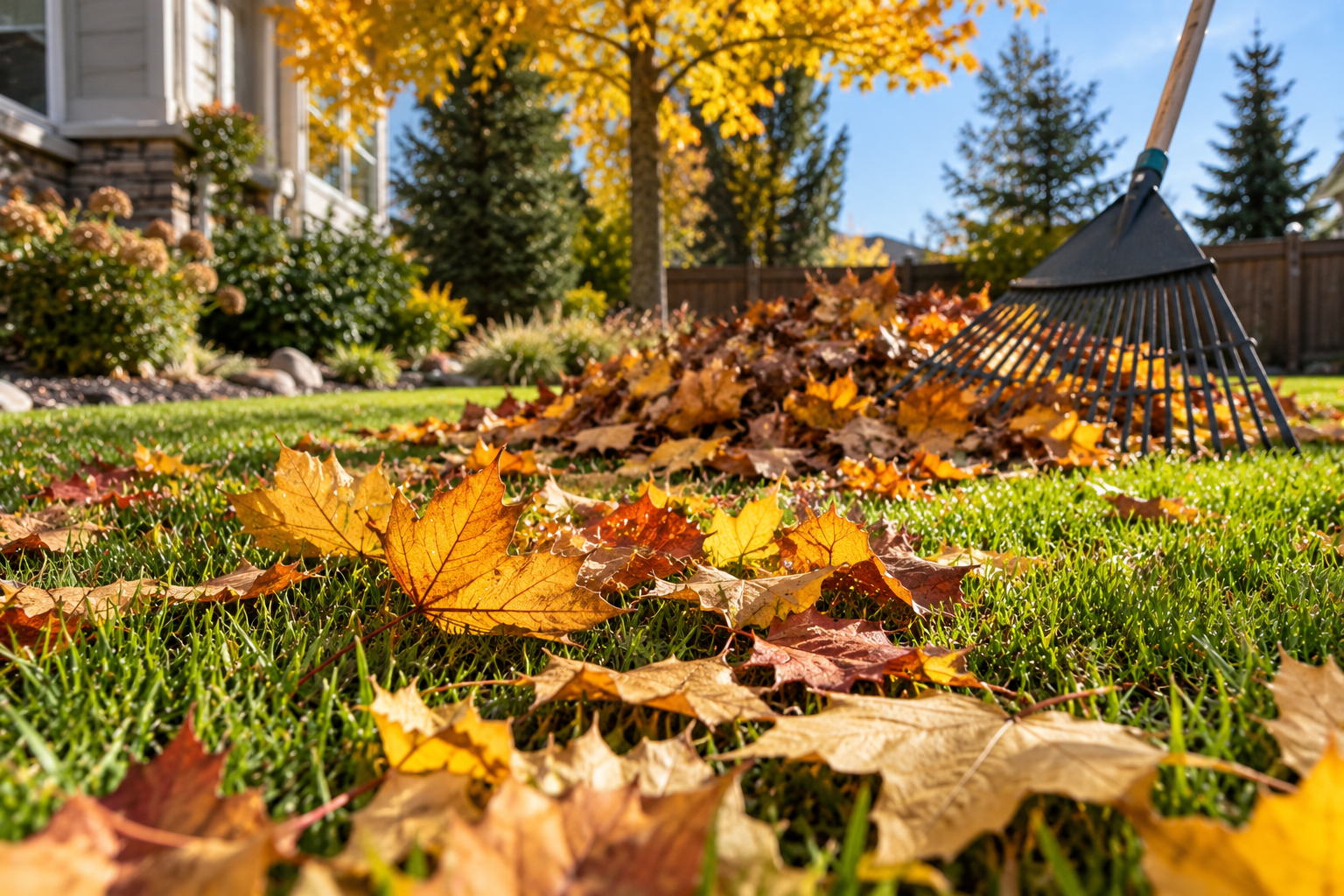
After the final cut, keep an eye on the lawn through the rest of fall. Leaves and other debris should not be allowed to sit heavily on the turf for long periods, particularly when wet.
When Should You Stop Mowing Lawn for Good?
The right answer depends on your lawn, not just the date.
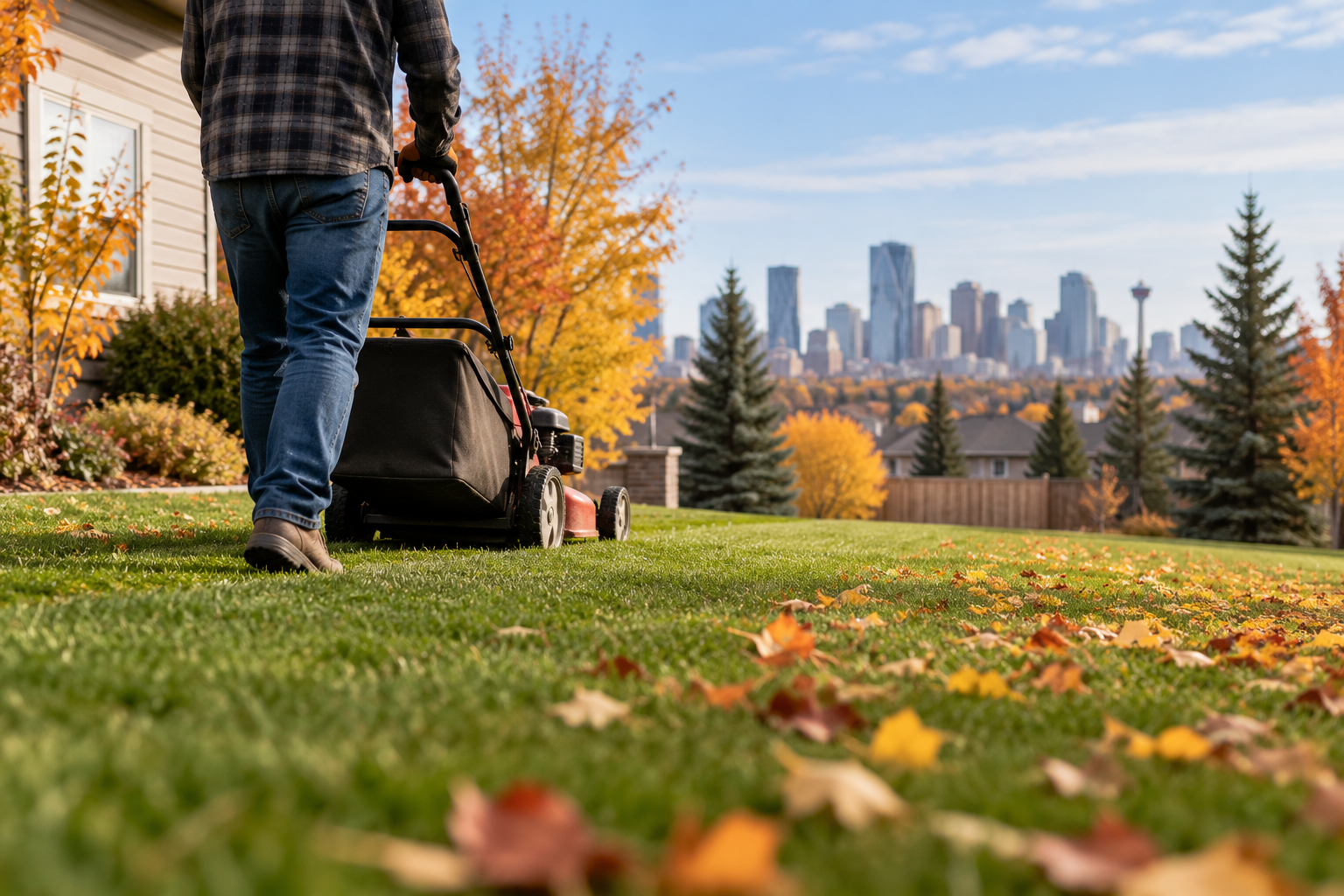
For many Calgary and Edmonton lawns, the final mow will happen around late September or October. But a warm fall can extend grass growth, while an early cold snap can shorten the season. Long-term climate averages show that first fall frost varies by location, which is another reason to watch local conditions instead of following a rigid calendar date.
Use this quick decision guide:
- Grass is still growing quickly: Continue mowing as needed.
- Growth has slowed but the lawn is still dry and active: Plan one or two final cuts.
- Growth has nearly stopped and frost is becoming regular: Prepare for the final mow.
- The lawn is frozen, wet, or covered in frost: Wait and avoid mowing.
- Winter conditions have settled in: Put the mower away for the season.
Once growth has slowed considerably, the lawn is approaching dormancy, and frost is becoming regular, you can make your final cut and let the grass settle in for winter.
And if your lawn needs more than mowing before winter, Yard Dawgs can help with the treatments and services that support its health through the changing seasons. Whether you need lawn care in Calgary or lawn care in Edmonton, the goal is the same: give your lawn the care it needs now so it can come back looking its best next spring.