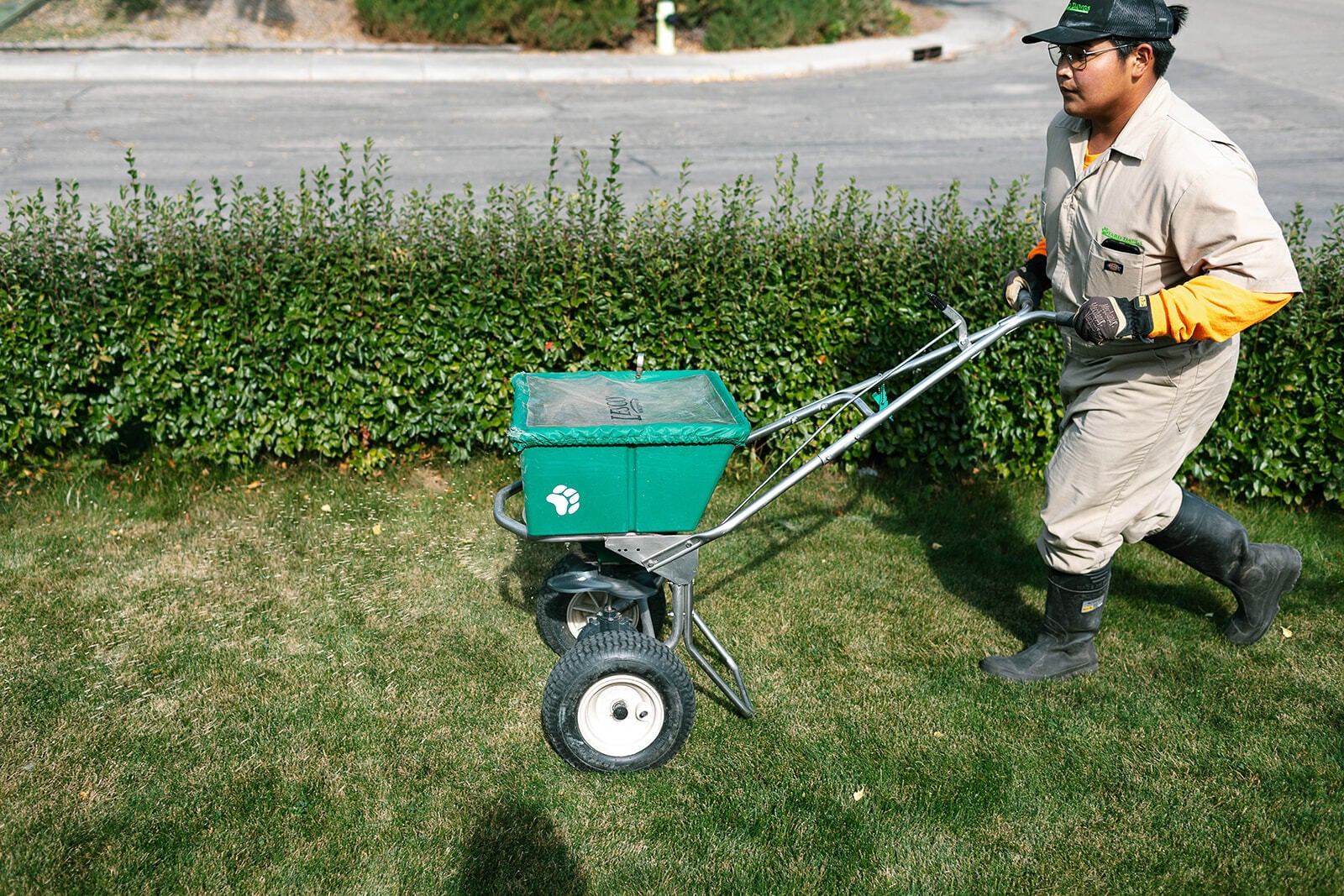


A healthy lawn depends on more than regular watering, mowing, and fertilizing. Soil pH also affects how well grass can access and use nutrients. When soil becomes too acidic, nutrients may be present but less available to the grass roots. This can contribute to weak growth, poor colour, and a lawn that does not respond as expected to fertilizer.
That is where lime can help. Lime is a soil amendment that raises soil pH and reduces acidity. However, not every Alberta lawn needs lime. Applying it without testing your soil can create another problem by making the soil too alkaline.
For Alberta homeowners, the best approach is straightforward: test your soil first, then decide whether lime is appropriate.

Limited spots available!
Transform your lawn today

Limited spots available!
Transform your lawn today
What Does Lime Do for Your Lawn?
Lime is made from limestone and is commonly used to increase soil pH. In acidic soil, it can help create conditions where important nutrients are more available to grass.
Most lawn grasses perform best when the soil is slightly acidic to neutral. If the pH drops too low, grass may struggle to use nutrients such as nitrogen, phosphorus, and potassium effectively. This can affect root development, colour, density, and overall lawn performance.
Lime for lawn applications is therefore less about directly feeding grass and more about improving the soil environment around the roots. It does not work like fertilizer, and it should not be treated as a universal solution for every lawn problem.
If your soil pH is already in a suitable range, adding more lime is unlikely to improve your lawn. In fact, excessive lime can push the soil toward an overly alkaline condition, which may also interfere with nutrient availability.
How Do You Know If You Need Lime for Your Lawn?
The most reliable way to determine whether your lawn needs lime is to test the soil. A soil test can show the current pH and provide information about whether an amendment is needed. It may also help determine how much lime would be appropriate based on your soil type and condition.
Grass that looks yellow, thin, or unhealthy does not automatically need lime. Similar symptoms can result from several different causes, including nutrient deficiencies, compacted soil, drought stress, insects, disease, or poor drainage.
Before applying lime for lawns, consider:
- Your soil’s current pH
- The type of soil on your property
- The grass species growing in the lawn
- The soil test’s recommendation for lime
- Whether another lawn treatment would better address the problem
A proper soil test is especially useful if your lawn has not responded as expected to regular fertilizer treatments. Testing helps you avoid guessing and prevents unnecessary applications.
Why Soil pH Matters in Alberta Lawns
Soil pH affects nutrient availability in the root zone. When soil is too acidic, grass may have a harder time accessing nutrients that support healthy growth. Adding more fertilizer is not always the answer if the soil conditions are preventing the grass from using those nutrients effectively.
This is one reason it is important to look at the lawn as a complete system. Fertilizer provides nutrients, while soil conditions influence how effectively those nutrients can be used. Water, air movement, root development, and microbial activity are also affected by the condition of the soil.
Alberta lawns can face additional stress from short growing seasons, winter damage, drought, temperature swings, and heavy foot traffic. These factors can make it tempting to apply several products at once. However, treating symptoms without identifying the cause may waste time and money.
For lawns that need nutritional support, we offer fertilizer treatments. Our lawn care programs are designed around ongoing treatment rather than a one-time visit, and we continue treatment until your lawn is performing at its best.
When Is the Best Time to Apply Lime?
Fall is often considered a convenient time for soil amendments because lime works gradually. Applying it well before the next growing season gives it time to begin changing soil pH.
However, the right timing depends on your soil condition, the type of lime being used, and the recommendation from your soil test. There is no benefit to applying lime simply because it is spring or fall if your lawn does not actually need it.
Alberta’s changing weather also makes it important to consider the condition of the lawn and soil rather than relying on a fixed calendar date. Lime should be applied according to the product label and soil test recommendations.
If a soil test shows that your lawn needs lime, follow the recommended application rate. Do not assume that applying more will produce faster results. Lime works over time, and excessive application can create an imbalance that is difficult to correct.
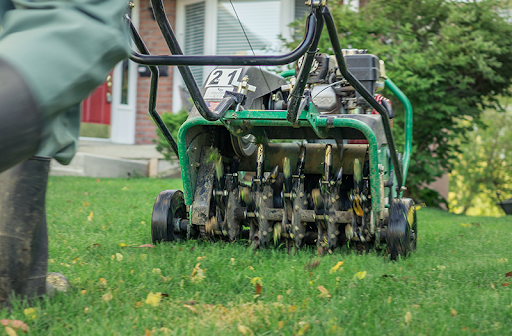
Can Aeration Help When Applying Lime?
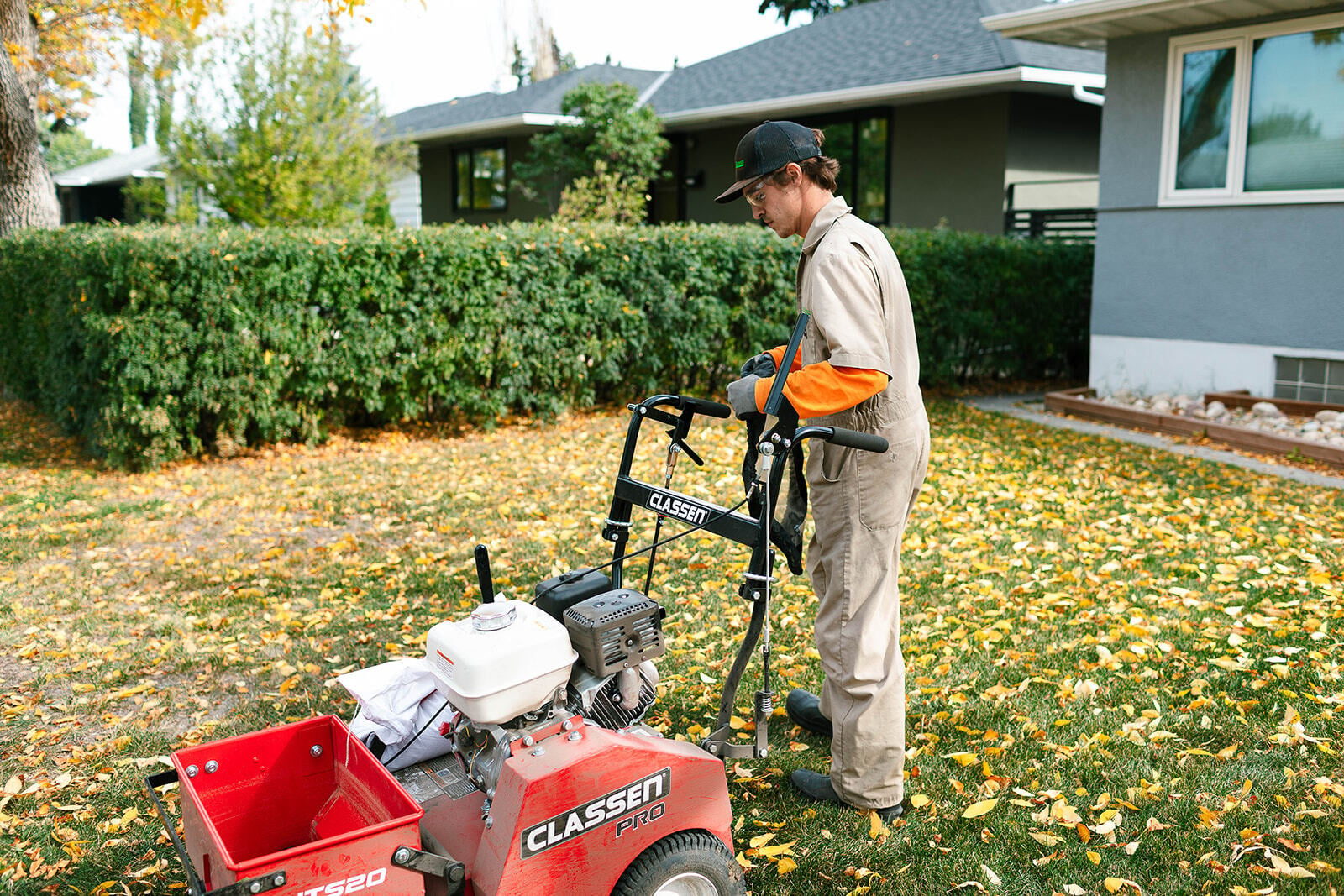
Soil compaction can make it more difficult for water, air, and amendments to move through the soil. Mechanical aeration removes small plugs of soil from the lawn, helping open compacted areas and improve conditions around the grass roots.
However, aeration and liming serve different purposes. Aeration addresses soil compaction, while lime addresses soil acidity. One does not automatically replace the other.
If your lawn would benefit from improved soil access, we offer mechanical aeration. This service can be part of a broader lawn care approach when compacted soil is affecting lawn performance.
Aeration may be particularly helpful in areas that receive heavy foot traffic, have dense clay soil, or drain poorly. The key is to identify what your lawn actually needs before adding another treatment.
How Much Lime Should You Apply?
There is no universal amount of lime that works for every lawn. The correct application rate depends on several factors:
- Your current soil pH
- The type and texture of your soil
- The size of the lawn
- The type of lime product being used
- The product’s neutralizing value
- The recommendation provided by your soil test
Soil test recommendations are much more useful than generic application rates. Lime products can also differ in their effectiveness. Product labels may provide a calcium carbonate equivalent, or CCE, which indicates the neutralizing capacity of the material.
If your soil test recommends lime, use that recommendation together with the product information to determine the appropriate amount. Applying too much lime can raise soil pH beyond the range your grass needs. That is why testing before treatment is so important.
What If Your Lawn Needs More Than Lime?
Lime only addresses soil acidity. Your lawn may have other needs at the same time. A lawn with poor colour or weak growth may benefit from fertilizer if nutrients are lacking. A compacted lawn may benefit from mechanical aeration. Other lawn problems may require weed or pest control.
We offer several lawn care treatments that address different needs:
|
Lawn concern |
Our service |
|
Nutrient needs |
|
|
Lawn weeds |
|
|
Compacted soil |
|
|
Hardscape weeds |
|
|
Lawn nutrient support |
|
|
Soil and lawn support |
|
|
Chinch bug problems |
|
|
Soil compaction and related lawn conditions |
The important distinction is that lime is not one of our listed services. If a soil test indicates that your lawn needs lime, the appropriate next step is to use a qualified provider for that treatment while addressing other lawn needs separately.
For additional nutritional support, we also offer Super Juice as part of our available lawn care services.
Lime vs. Fertilizer: What Is the Difference?
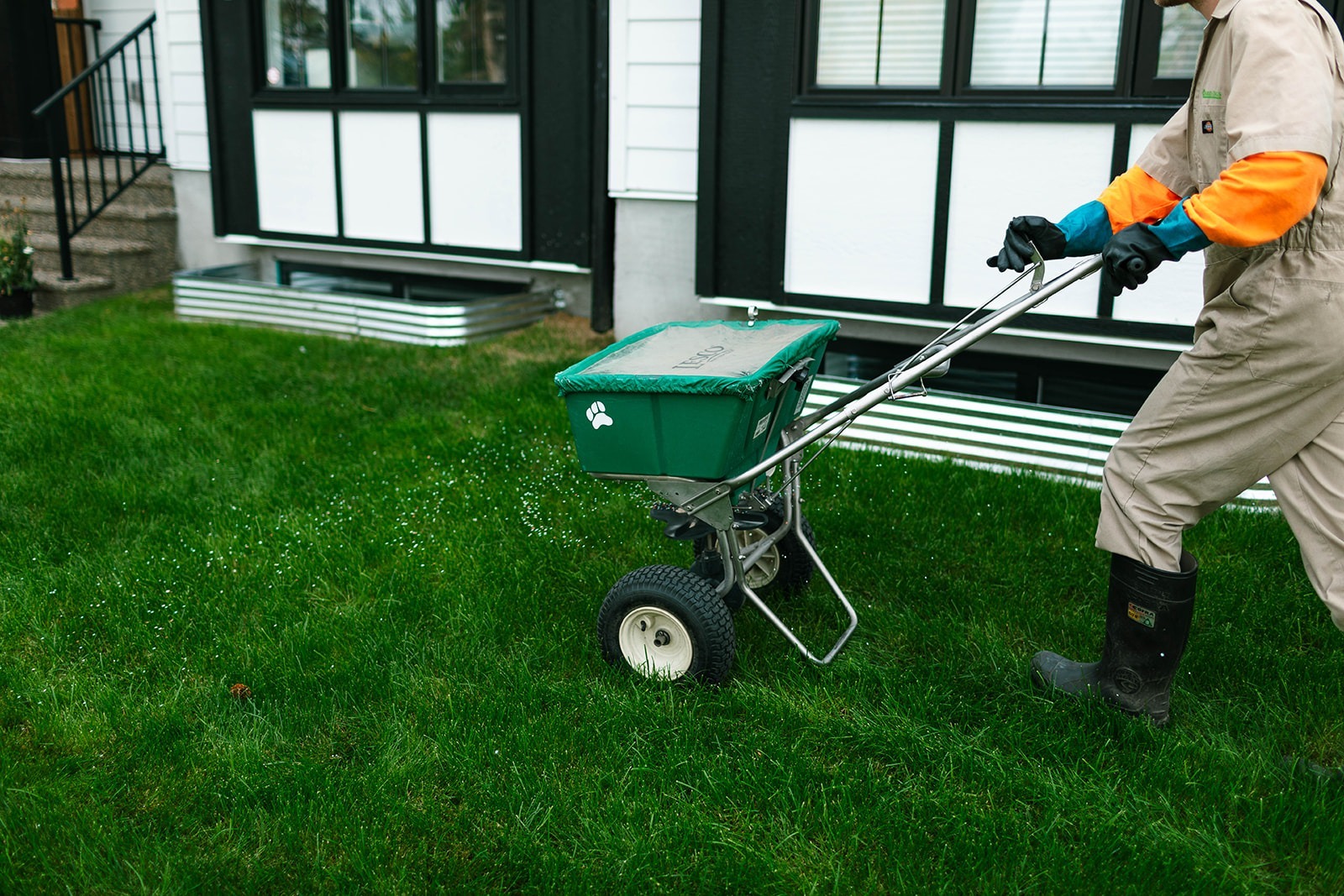
Lime and fertilizer have different jobs. Fertilizer supplies nutrients that grass needs for growth. Lime changes soil pH, which can improve nutrient availability when the soil is too acidic.
Lime should not be viewed as a replacement for fertilizer. In some cases, a lawn may need both. In other cases, it may need neither. A soil test can help determine whether low pH is contributing to poor lawn performance.
Understanding the difference can prevent a common mistake: applying more fertilizer when the real issue is soil acidity. It can also prevent unnecessary liming when the lawn’s pH is already suitable.
How Often Should You Apply Lime?
Lime does not usually need to be applied on a fixed annual schedule. Because it works gradually, applying it repeatedly without testing can eventually make the soil too alkaline.
Once the soil reaches an appropriate pH, additional lime may not be necessary for some time. Instead of treating lime as a routine yearly application, monitor your soil and follow updated test recommendations.
For ongoing lawn support, we provide continuous lawn care service, and you can cancel at any time. We also emphasize keeping the same skilled team assigned to your property for more personalized care.
Should You Use Lime for Your Lawn?
If your soil test shows that your lawn is too acidic, lime may be an appropriate way to raise the soil pH. If the soil is already within a suitable range, there is no reason to add lime simply as a general lawn treatment.
The best approach is to test first and treat based on what the soil actually needs. This avoids unnecessary applications and gives your lawn a better chance to use available nutrients effectively.
If your lawn needs ongoing support beyond soil pH management, we offer lawn care services in Calgary, Edmonton, Red Deer, and Saskatoon. Our services at Yard Dawgs include fertilizer, weed control, mechanical aeration, hardscape weed control, super juice, sea kelp, chinch bug treatment, and liquid aeration.