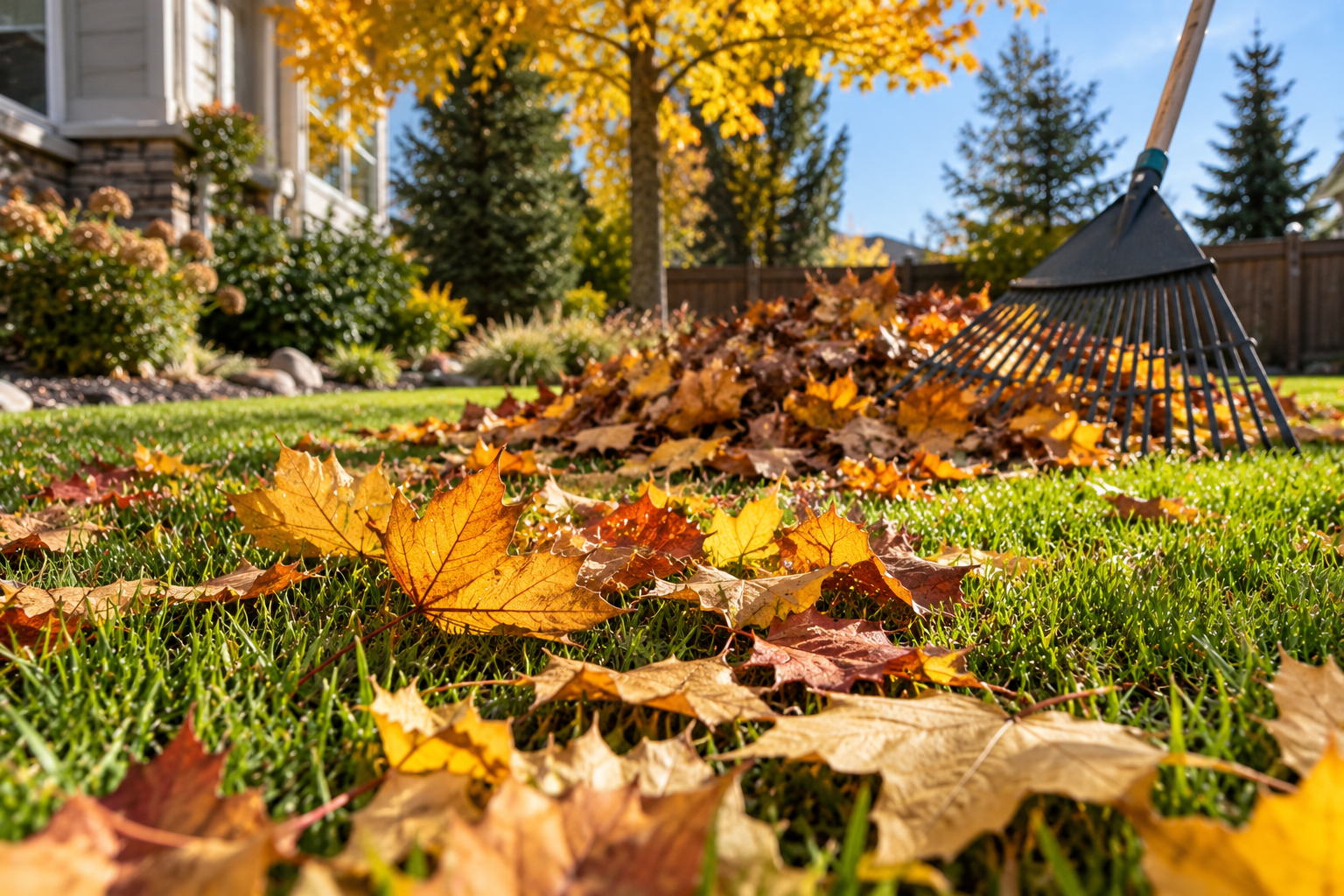


Prairie winters are no joke. Temperatures can swing from mild fall afternoons to deep freezes within days, and snow cover can last for months at a time. That kind of extreme shift puts real stress on grass, which is why knowing how to prepare your lawn for winter matters more here than in most other parts of the country. A little effort in the fall can be the difference between a lawn that bounces back thick and green in spring and one that struggles for months afterward.

Limited spots available!
Transform your lawn today

Limited spots available!
Transform your lawn today
Why Winter Prep Really Matters
Grass doesn't stop working just because the temperature drops. Underneath the surface, it's storing energy and getting ready to survive months of cold, snow, and freeze thaw cycles. A lawn that goes into winter unprepared can face several problems, including:
- Patchy or uneven growth once the snow melts
- Winterkill in areas hit hardest by cold and wind
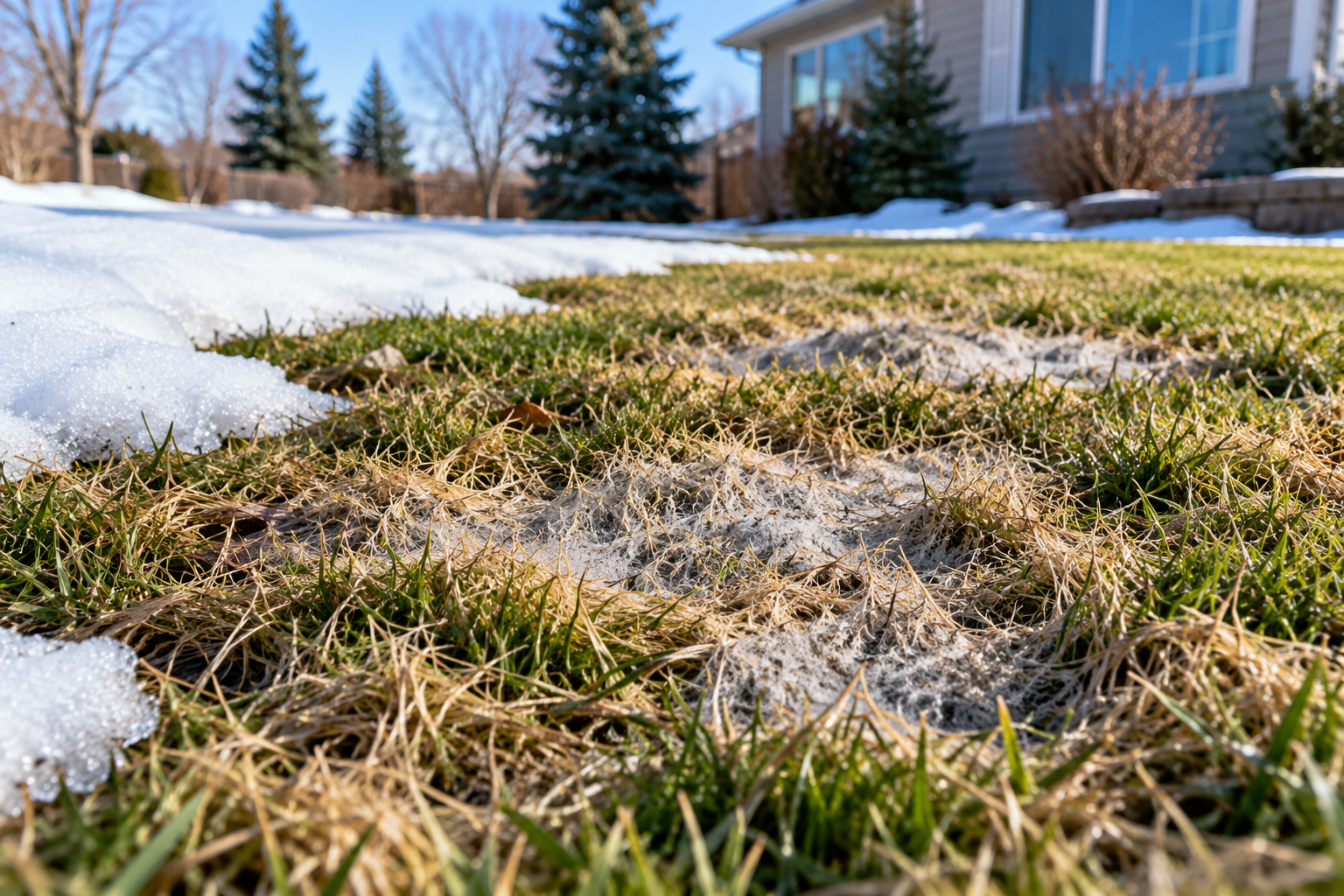
- Fungal issues like snow mold under matted, long grass
- Slow, weak greening that takes weeks longer than it should
Understanding how to prepare the lawn for winter isn't about doing something dramatic. It's about a handful of simple, well timed steps that give your grass its best shot at surviving the season.
Feed the Lawn Before the Freeze
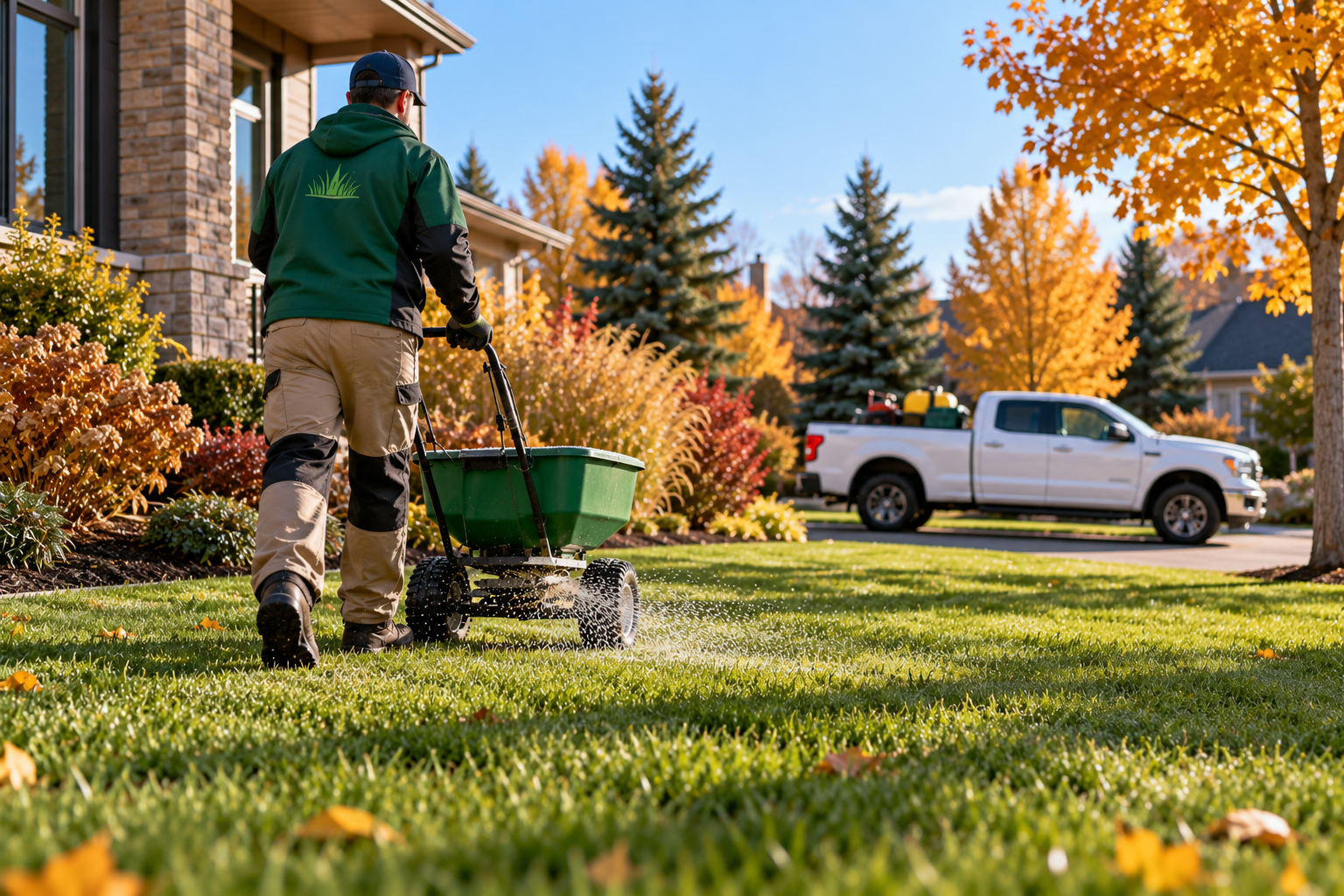
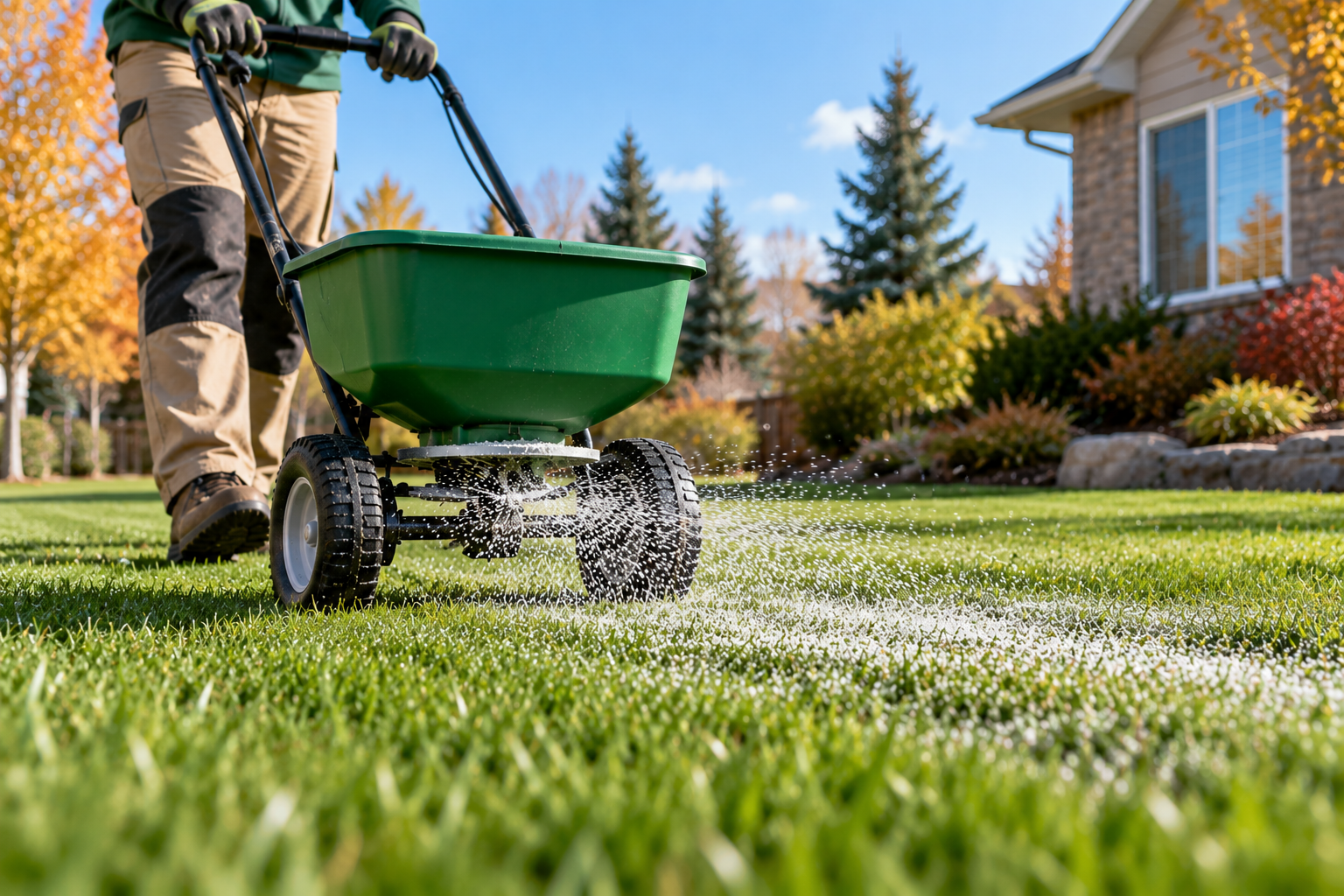
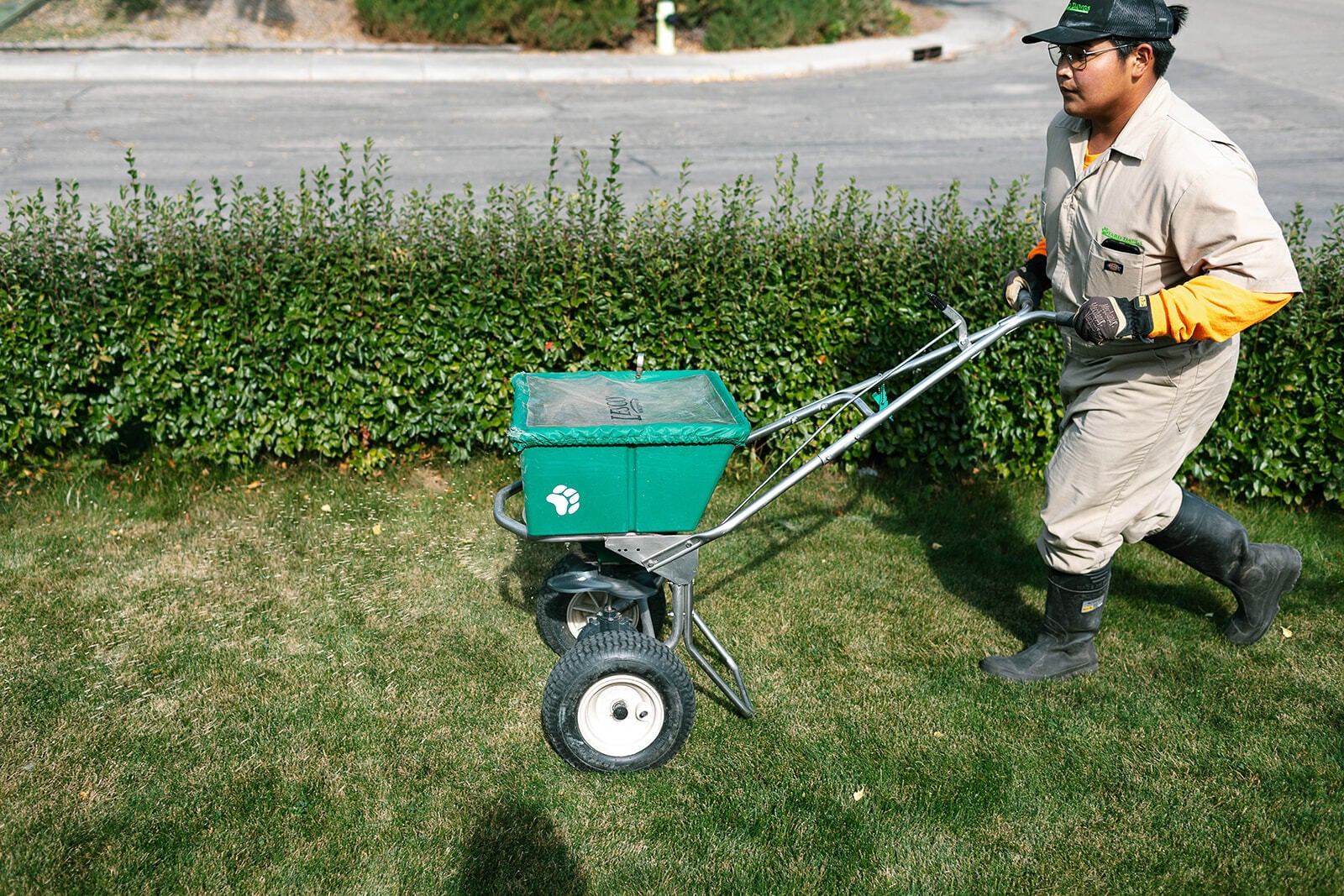
One of the most valuable things you can do before winter sets in is apply a proper fall fertilizer treatment. This helps grass build up the energy reserves it needs to survive dormancy and come back strong once the snow melts. A balanced fertilizer application in the fall supports root strength without encouraging excess top growth right before the cold hits, which is exactly the kind of growth that becomes vulnerable to disease and stress under snow cover.
Timing matters here. Fertilizing too late in the season can push tender new growth that has no time to harden off before frost.
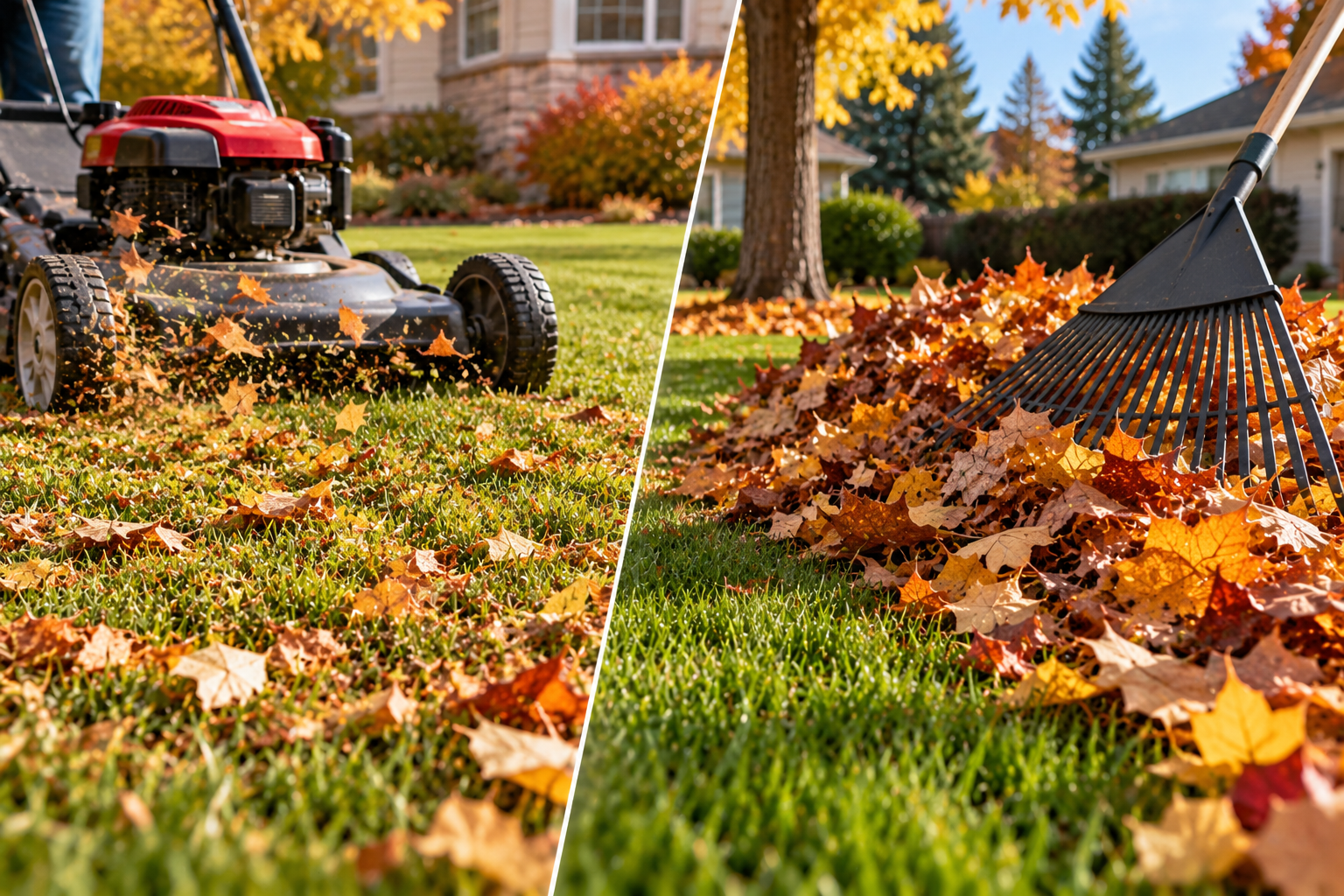
Give Your Lawn a Proper Last Mow
The final cut of the season sets the tone for how your lawn handles winter. Long grass tends to mat down under snow, which creates the damp, dark conditions that fungal issues like snow mold thrive in.
A few things to keep in mind for your last mow:
- Lower the mower deck slightly for the final cut or two of the season
- Keep the blade sharp so grass is cut cleanly instead of torn
- Continue mowing until growth has fully stopped for the year
- Avoid cutting frosty or frozen grass, since this can damage the blades
Aerate to Relieve Compaction
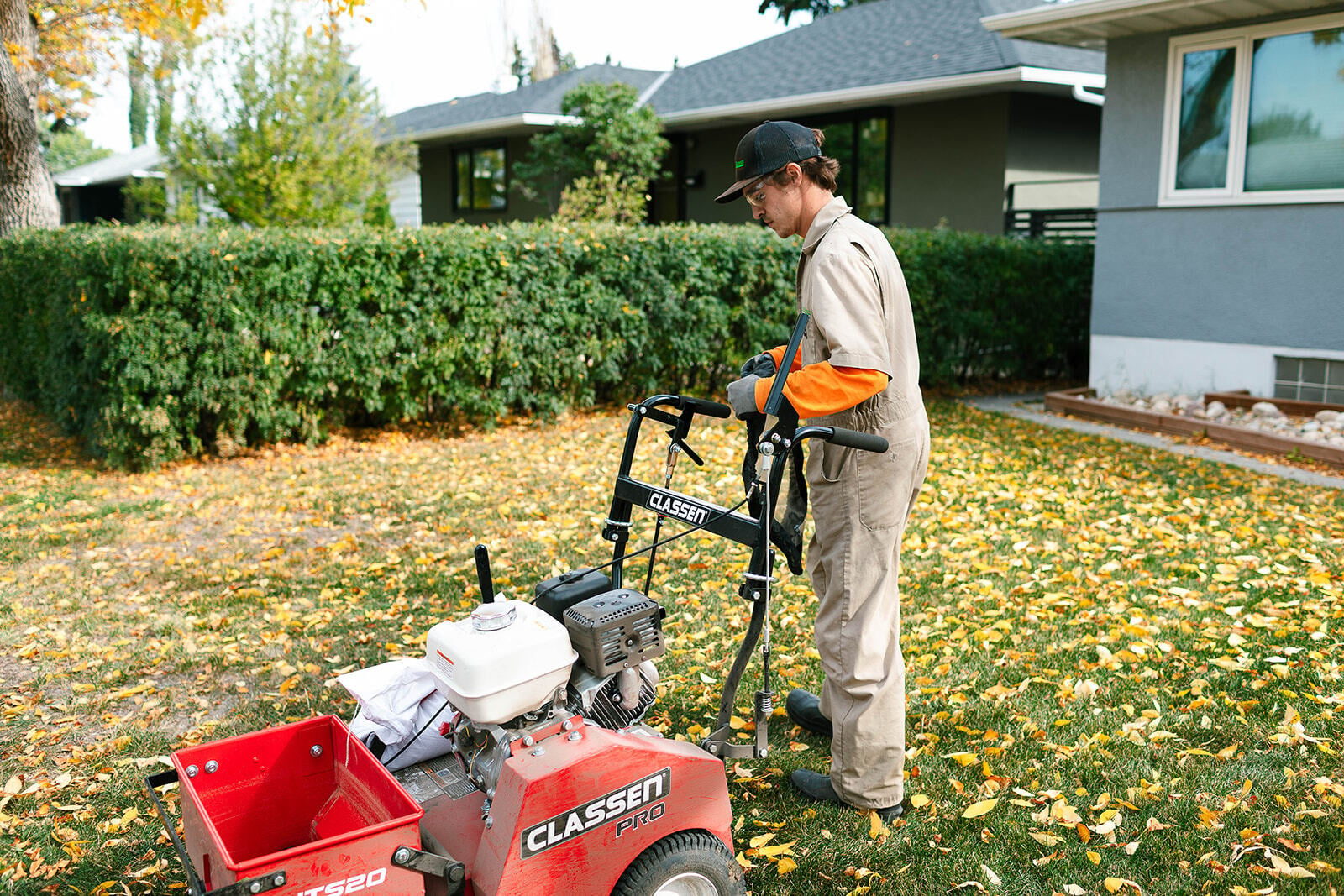
Summer brings a lot of foot traffic, and that traffic compacts soil over time. Compacted soil makes it harder for water, air, and nutrients to reach the roots, which weakens the lawn right when it needs strength the most. Mechanical aeration breaks up that compaction and opens the soil back up before winter locks everything in place.
For lawns dealing with heavier compaction or thicker thatch, a more thorough treatment like aeration plus combines aeration with additional soil support to help roots recover faster and handle the season ahead.
Don't Skip Fall Weed Control
Weeds don't disappear just because the weather cools down. In fact, many broadleaf weeds are actively pulling nutrients down into their root systems in the fall, which makes this an ideal window for weed control treatments to be especially effective. Tackling weeds before winter pays off in a few ways:
- Less competition for water and nutrients heading into spring
- Fewer weeds re-establishing themselves once the snow melts
- Thicker, healthier turf with more room to fill in bare spots
- A stronger head start before the next growing season begins
Boost Root Strength With Sea Kelp
Grass roots that go into winter strong tend to come out the other side in much better shape. A sea kelp treatment supplies micronutrients that support the lawn through the toughest part of the year, including:
- Stronger, deeper root development going into dormancy
- Better resilience against cold stress and freeze thaw cycles
- Improved nutrient uptake alongside fall fertilizer treatments
- Faster, more even greening once temperatures rise in spring
For lawns that have struggled with slow spring recovery in past years, this kind of extra nutritional support in the fall can make a noticeable difference by the time the snow melts.
How to Prepare a Lawn Mower for Winter
While your lawn care team handles the grass itself, it's worth taking a few minutes to prepare your own equipment for storage too. Knowing how to prepare a lawn mower for winter helps avoid frustrating startup problems come spring.
|
Task |
Why It Matters |
|
Drain or stabilize the fuel |
Old fuel left sitting all winter can gum up the engine |
|
Clean off grass clippings and debris |
Prevents rust and buildup on the deck and blades |
|
Sharpen or replace the blade |
Ensures a clean first cut once mowing season returns |
|
Check and change the oil |
Keeps the engine running smoothly after storage |
|
Store in a dry, covered space |
Protects against moisture damage and rust |
A little mower maintenance now saves a lot of hassle later.
Regional Differences Across the Prairies
Knowing how to prepare lawn for winter Canada wide looks a little different depending on where you live:
- Alberta and Saskatchewan: Earlier frosts and longer stretches of snow cover mean fall prep needs to happen sooner rather than later
- Winnipeg: Homeowners here often deal with heavier, wetter snowfall, so drainage and snow mold prevention deserve extra attention given how long snow can sit on the ground
- Lethbridge: Chinook winds bring more frequent freeze thaw cycles, which puts a different kind of stress on grass throughout the winter months
No matter where your property sits, the fundamentals stay the same. Feed the lawn, mow it properly, relieve compaction, and clear away weeds before the snow arrives.
Let Us Handle the Details
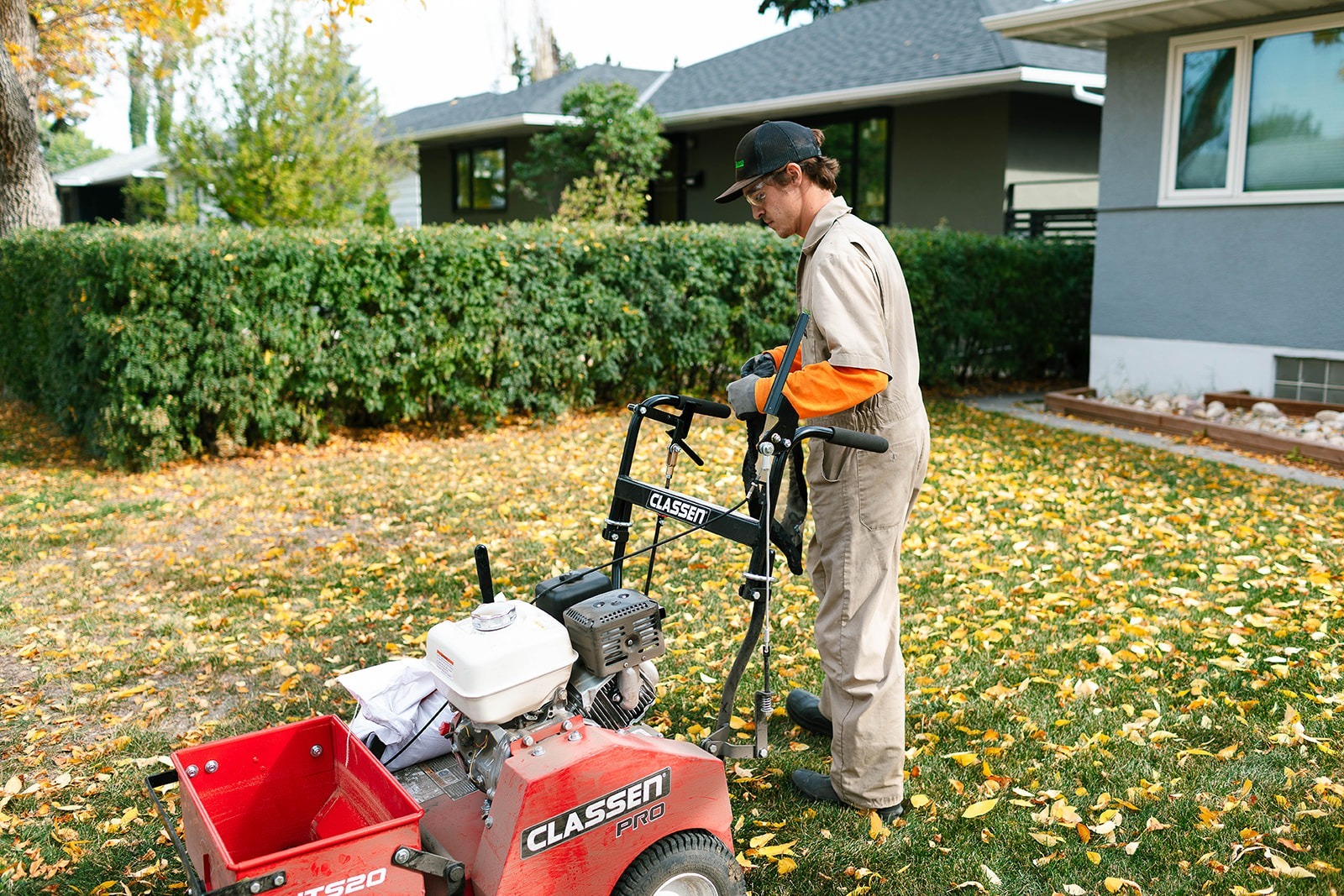
Figuring out exactly how to prepare your lawn for winter can feel like a lot to manage on top of everything else in the fall. That's where having a dedicated team who already knows your property makes things easier. As a trusted lawn care company, we assign the same skilled team to your property every season, so nothing gets lost between visits and every treatment builds on the last.
Whether you need to adjust your lawn care plan before winter or just have questions about timing, our support team is always ready to help with whatever comes up. We stand fully behind our lawn care services, and if something isn't quite right, we'll make it right until your lawn looks its best.
A Little Prep Now Pays Off in Spring
Winter is tough on Prairie lawns, but it doesn't have to leave lasting damage. A proper fall routine, from fertilizing and mowing to aerating and clearing weeds, gives your grass everything it needs to survive the cold and come back strong. Put in the effort now, and you'll be rewarded with a lawn that's ready to thrive the moment the snow finally melts.